Avalanche Blockchain Powers New Loan Tokenization Platform by FIS and Intain
Financial technology firm FIS and structured finance platform Intain are launching a blockchain-powered marketplace on Avalanche (AVAX) designed to help regional and community banks securitize and sell their loan portfolios directly to institutional investors.
The initiative, called Digital Liquidity Gateway, aims to modernize the traditionally slow and costly world of asset-backed finance by leveraging blockchain tokenization and stablecoin settlement.
The new platform allows banks to convert loan portfolios into non-fungible tokens (NFTs) representing ownership and data rights, automating transactions and reducing reliance on intermediaries that typically dominate the securitization process.
The companies said that the system is already onboarding both banks and institutional buyers, with hundreds of millions of dollars in transactions expected by year-end, beginning with loan pools tied to commercial real estate and aviation finance.
Streamlining Asset-Backed Finance Through Blockchain
Digital Liquidity Gateway integrates directly with FIS’s core banking software, which services over 20,000 financial institutions globally, enabling participants to manage loan data and token issuance within their existing infrastructure. Settlement can occur through stablecoins such as USDC, further speeding up transaction finalization and reducing counterparty risk.
By operating on Avalanche, a high-speed and low-cost blockchain, the platform aims to address one of the biggest bottlenecks in structured finance — the inefficiencies caused by multiple layers of brokers, custodians, and clearing agents. Removing these intermediaries not only cuts costs but also reduces the time it takes to bring new asset-backed securities to market.
John Omahen, head of digital assets at FIS, said the initiative was designed with smaller financial institutions in mind — banks that often struggle to access capital markets.
“These small banks are remote from most capital markets flows,†he explained. “They originate loans and sit on them. They don’t have the expertise to structure deals or reach investors. What we’re doing is creating a place where those assets can meet demand, and capital can move more efficiently.â€
Empowering Community Banks Through Tokenization
The partnership between FIS and Intain targets the “long tail†of community and regional banks, which play a vital role in small business lending but rarely have the infrastructure or investor networks to participate in securitization markets.
By tokenizing loans, these banks can transform illiquid balance sheet assets into tradable instruments, increasing liquidity and enabling further lending within local economies.
The move also fits within a broader industry trend toward tokenizing real-world assets (RWAs) — a process by which physical or financial assets like bonds, real estate, or loans are represented on blockchain networks.
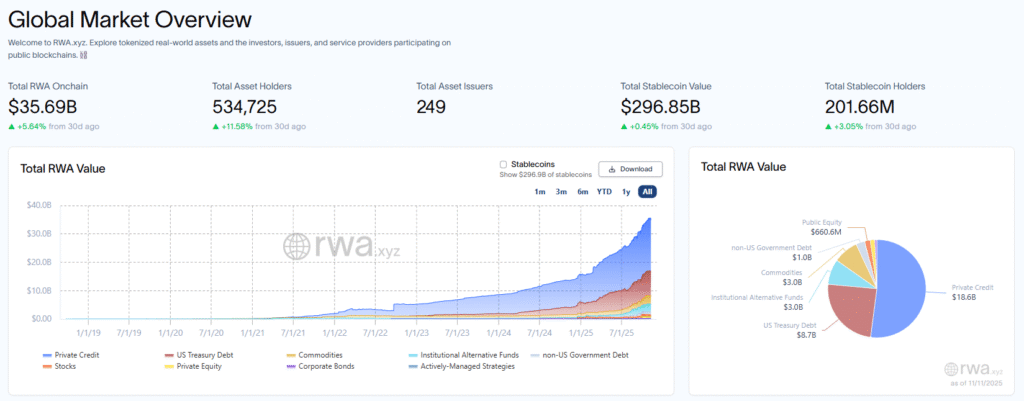
Tokenization market (Source: RWA.xyz)
Tokenization is increasingly being embraced by asset managers, banks, and fintechs seeking to bring greater efficiency and transparency to traditional finance.
For regional banks, Digital Liquidity Gateway offers an entry point into this emerging ecosystem without the need for advanced technical capabilities or major regulatory restructuring. The integration with FIS’s existing systems means that banks can participate using familiar workflows while benefiting from the security and traceability that blockchain provides.
Enhancing Transparency and Reducing Risk
One of the key innovations of the Digital Liquidity Gateway is the use of NFTs to represent each individual loan within a securitized pool. Each NFT is backed by verified loan documentation, metadata from FIS’s systems, and third-party validation. Before an NFT is created, Intain’s AI-driven engine cross-references and reconciles data to ensure its accuracy, minimizing the risk of duplicate entries or fraudulent claims.
Siddhartha, CEO of Intain, described the impact of this approach on investor confidence: “Suddenly, what was an off-chain asset, untraceable, is now onchain. That means if I’m an investor in a tokenized asset-backed security, I can zoom in and see the hundreds of individual loans that back it, with the assurance that they’re recorded onchain and can’t be double pledged.â€
This on-chain transparency directly addresses issues that have plagued the structured finance industry in recent years. High-profile cases such as the failures of auto lender Tricolor and car parts manufacturer First Brands have underscored how weak data oversight can lead to double-pledging, mispricing, and investor losses.
By digitizing and verifying every step of the process, the FIS–Intain platform offers a layer of data integrity not possible in traditional loan tracking systems.
A Bridge Between TradFi and DeFi
For FIS, the Digital Liquidity Gateway represents a major step in bridging traditional finance (TradFi) with decentralized finance (DeFi) principles. As a leading provider of banking and payments infrastructure, the company sees blockchain as a tool to unlock new efficiencies, expand liquidity access, and create interoperable markets that link institutional investors with smaller lenders.
“Asset-backed finance is about capital flows,†Omahen said. “This platform helps banks unlock balance sheet capacity so they can make more loans and serve their communities better.â€
The use of stablecoin settlement and automated smart contracts also reduces friction in cross-border transactions, a benefit that could prove particularly valuable for asset classes like aviation finance, which often involve international buyers and financiers.


