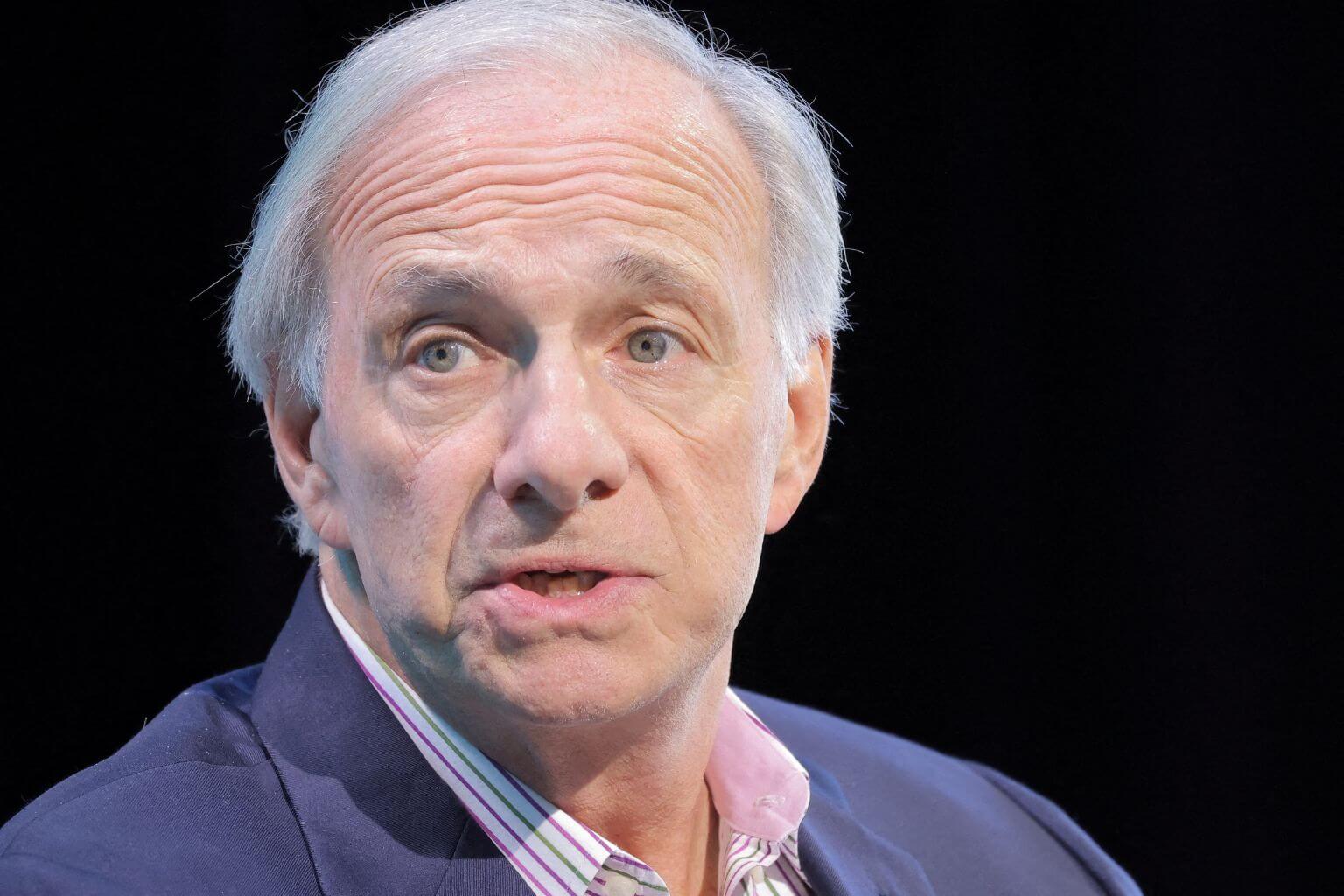
Ray Dalio Says the CBDC Future Is Near—But It Comes With Risks
Billionaire hedge fund manager Ray Dalio has cautioned that central bank digital currencies (CBDCs) are likely to become a reality, offering faster and more convenient payments while also giving governments unprecedented visibility and control over financial activity.
Speaking in a wide-ranging interview on the Tucker Carlson Show on Monday, Dalio discussed the future of digital money alongside broader concerns about the U.S. debt trajectory, geopolitical tensions, and the role of hard assets such as gold.
The Bridgewater Associates founder argued that the transition toward state-issued digital currencies appears inevitable.
“I think it will be done,†Dalio said, referring to CBDCs. While he acknowledged their potential benefits, he also warned about the trade-offs that could come with a fully programmable form of government-issued money.
Dalio, who founded Bridgewater in 1975 and has served as co-chief investment officer since the mid-1980s, described CBDCs as appealing from a convenience standpoint. He compared their functionality to money market funds, suggesting they could offer seamless, low-friction transactions for both individuals and businesses.
However, he expressed skepticism about their usefulness as long-term stores of value. According to Dalio, most CBDCs are unlikely to pay interest, which means holders could see their purchasing power erode over time due to inflation or currency depreciation.
He said that there will be a debate, adding that CBDCs “probably won’t†provide interest, making them less attractive vehicles for savings compared with other assets.
Concerns Over Privacy and Control
Beyond the question of returns, Dalio’s biggest concerns centered on privacy and state oversight.
He warned that transactions conducted through CBDCs would be fully visible to authorities, creating a powerful tool for monitoring financial activity.
While such transparency could help combat criminal behavior and tax evasion, Dalio said it also raises significant civil-liberty questions.
“There will be no privacy,†he said, describing CBDCs as “a very effective controlling mechanism by the government.â€
According to Dalio, programmable digital currencies could enable authorities to impose direct taxation, freeze accounts, or implement foreign exchange controls with far greater precision than is possible today. Governments could, in theory, restrict access to funds or block transactions for individuals or groups deemed politically or economically undesirable.
He added that such controls could be particularly significant for foreign users holding a country’s digital currency, as governments would have the technical ability to seize or restrict those funds in response to sanctions or political disputes.
Dalio also warned that individuals who fall out of political favor could potentially be cut off from the financial system entirely if CBDCs become the dominant form of money.
U.S. CBDC Unlikely in Near Term
Despite his expectation that CBDCs will ultimately emerge, Dalio suggested that a U.S. version may not arrive anytime soon. President Donald Trump has repeatedly voiced opposition to the concept.
Shortly after returning to office in January 2025, Trump signed an executive order banning the “establishment, issuance, circulation, and use†of a U.S. central bank digital currency, effectively halting federal efforts to develop one for the time being.
Global CBDC Race Accelerates
While the United States remains on the sidelines, several countries are moving forward with their own digital currency initiatives.
Data from the Atlantic Council’s CBDC tracker shows that only three countries—Nigeria, Jamaica, and The Bahamas—have fully launched national digital currencies so far. However, experimentation is expanding rapidly across the globe.
According to the tracker, 49 countries are currently running pilot programs, including major economies such as China, Russia, India, and Brazil. Another 20 nations are actively developing CBDCs, while 36 more are in the research stage.
India’s central bank reportedly proposed a new initiative in January to link CBDCs among BRICS nations, aiming to streamline cross-border payments for trade and tourism. Such projects highlight the growing interest in digital sovereign currencies as tools for international settlement and financial integration.
As global adoption accelerates, Dalio’s comments reflect a broader debate over the balance between efficiency and personal freedom in the future of money—one that is likely to intensify as more governments move from pilot programs to full-scale deployments.


