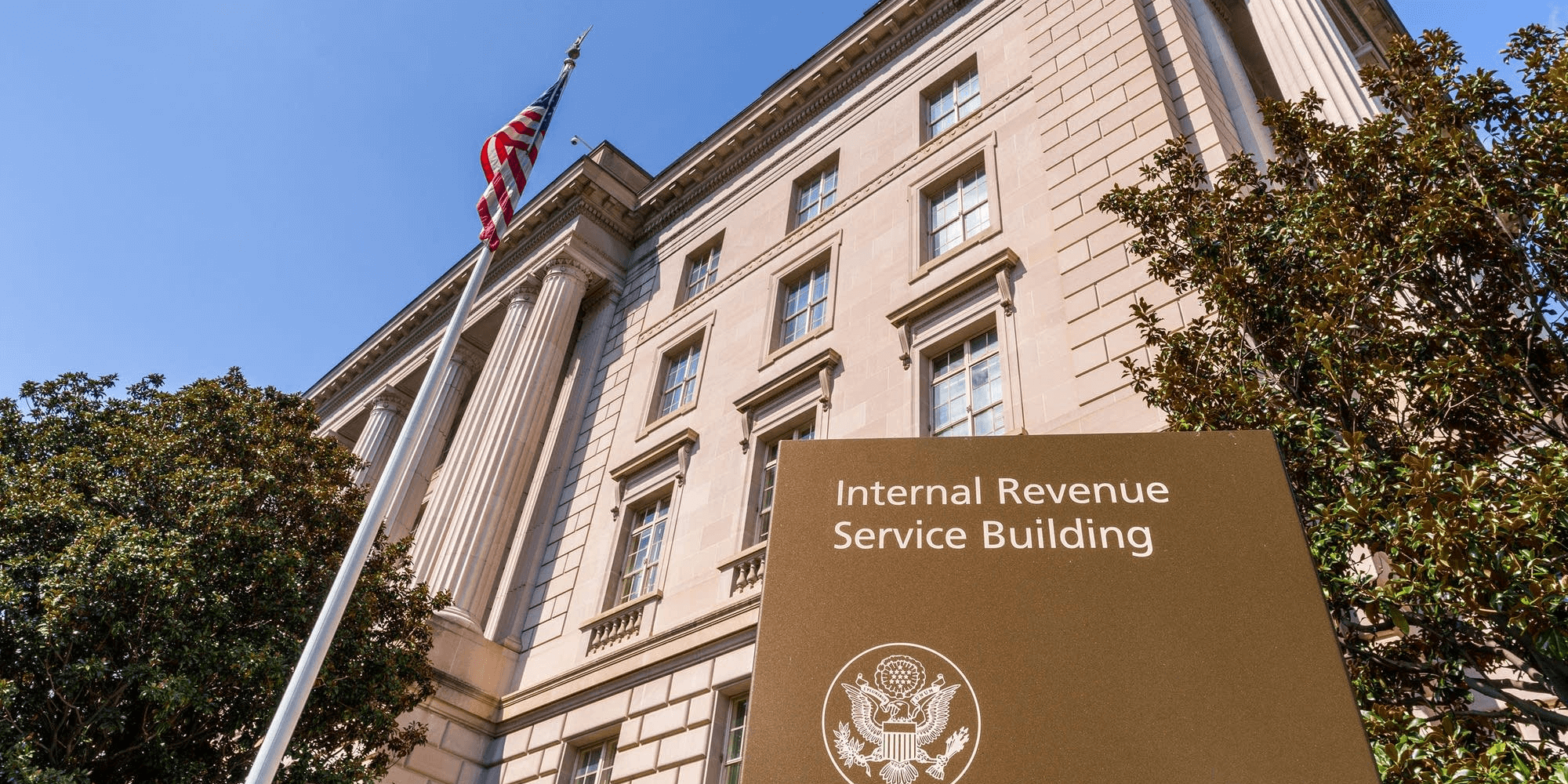
IRS Eyes Foreign Crypto Data Access in Push for Global Tax Transparency
The White House is reviewing a sweeping Internal Revenue Service (IRS) proposal that would integrate the United States into the global Crypto-Asset Reporting Framework (CARF), a move that would give the IRS access to detailed information about Americans’ foreign crypto accounts and dramatically reshape the government’s ability to track digital asset activity across borders.
The proposal — formally titled Broker Digital Transaction Reporting — was submitted to the White House last Friday and, if approved, would align the U.S. with 72 countries that have already committed to implementing CARF by 2028.
Although the rule wasn’t categorized as “economically significant,†its policy impact could be profound, introducing rigorous new reporting obligations for American taxpayers who trade or store crypto assets offshore.
According to the IRS, adopting CARF would close a widening information gap that currently allows U.S. taxpayers to shift digital assets to foreign platforms with minimal oversight.
The White House’s own crypto policy report, published in late July, suggested that integrating CARF would prevent Americans from exploiting jurisdictional loopholes and ensure domestic exchanges are not put at a competitive disadvantage compared with offshore venues.
A Global Push Toward Unified Crypto Oversight
CARF, established by the Organization for Economic Cooperation and Development in late 2022, is designed to help member nations share cryptocurrency transaction data to combat international tax evasion — a challenge regulators have struggled to contain as digital assets move effortlessly across borders.
The framework is expected to roll out in 2027 with 50 early-adopting countries, including Brazil, Indonesia, Italy, Spain, Mexico and the United Kingdom. A further 23 countries — among them the United States — have signaled that they will follow by 2028, placing more than one-third of the world under a shared crypto-data reporting standard.
Crypto’s borderless nature makes such cooperation increasingly essential for tax authorities. Users can transfer assets globally within seconds, operate outside the banking system through self-custody wallets, and transact pseudonymously — all of which complicate enforcement and obscure taxable activity.
U.S. Moves Toward Domestic Tightening Ahead of CARF
While CARF represents the international dimension of the IRS’s new direction, the U.S. is also preparing its own sweeping domestic reporting regime. Beginning in January 2026, all U.S.-based crypto exchanges will be required to file 1099-DA forms, which will capture detailed transaction data for both inbound and outbound transfers. This includes information that exchanges have historically not been required to report, effectively giving the IRS a more holistic view of user activity.
Crypto tax attorney Clinton Donnelly described the measure as a turning point for digital asset oversight, arguing in a post on X that it marks “the beginning of the end of crypto anonymity.â€
“Right now, the IRS doesn’t have instant visibility into everything you’re doing on the blockchain. However, that’s about to change,†Donnelly wrote. As reporting standards tighten and analytical tools improve, he added, the agency will eventually “scan blockchain networks at scale to identify major non-reporters, and target them for audits.â€
Other regulatory experts say CARF will accelerate that shift far beyond the U.S. tax system. Max Bernt, Global Head of Regulatory Affairs & Managing Director at Taxbit Europe, said in an email to Ecoinimist that CARF introduces a level of standardization that could transform how governments investigate illicit activity.
“CARF will be a game changer for financial crime investigation. Up until now, the biggest challenge that law enforcement bodies, financial crime units, and police have is linking KYC data with all the addresses. With the implementation of CARF, there is now a common standard for how off-chain data will be reported to the government, which potentially also can be leveraged for financial crime investigations, depending on how individual countries decide to use that data.â€
Building on that point, Colby Mangels, Global Head of Government Solutions at TaxBit and former advisor at the OECD, cautioned that governments will need to understand how to apply this new data effectively.
“Educating regulators and AML authorities on CARF and how it will be of use to broader government uses is essential. Each jurisdiction has its own conditions and limitations for how information can be used, but it is worth thinking about how an authority running an investigation can utilize this information.â€
A New Era of Transparency for the U.S. Crypto Sector
If the White House approves the Broker Digital Transaction Reporting proposal, the United States would be taking one of its most significant steps yet toward integrating crypto into the global tax information-sharing infrastructure.
Investors who have relied on foreign platforms or complex cross-border strategies may face tighter scrutiny, while domestic exchanges — long burdened with heavier compliance obligations than many offshore competitors — would gain a more level playing field internationally.
The IRS has repeatedly stressed that its goal is not to hinder innovation but to ensure fair and consistent tax compliance. Critics, however, argue that expanding government visibility into crypto transactions risks undermining user privacy and could push some activity deeper into decentralized or unregulated channels.
Regardless of the political debate, the momentum behind CARF and the impending rollout of 1099-DA reporting suggest that the era of crypto’s tax-reporting gray zones is rapidly closing. For millions of American crypto holders, the upcoming regulatory shift and inclusion of the IRS may redefine what it means to transact in digital assets — at home and abroad — in the years ahead.


