Institutional Investors Turn to Crypto for Diversification, Sygnum Report Shows
Institutional investors are shifting their approach to digital assets, signaling a maturing crypto market that is moving beyond speculation and toward strategic diversification, according to Sygnum’s Future Finance 2025 global institutional investor report.
The Swiss digital asset bank found that more than 60% of institutional and professional investors plan to increase their crypto exposure, while just 4% intend to reduce it. The report—based on a late third-quarter survey of over 1,000 investors across 43 countries—marks the first time that portfolio diversification (57%) has overtaken short-term return potential (53%) as the main reason to invest in crypto assets.
Fabian Dori, Sygnum’s Chief Investment Officer, said in a recent interview that the results reflect how “crypto assets are growing into a strategic, long-term asset class, with unique value drivers and risk factors.â€
Market Uncertainty Shapes Institutional Investor Sentiment
Despite the strong long-term outlook, sentiment remains dependent on catalysts expected in the final quarter of 2025.
Investors are closely watching potential ETF approvals, pending U.S. market structure legislation, and broader fiscal instability. Recent market liquidations and delayed policy decisions have tempered earlier optimism, leading many institutions to adopt a cautious stance.
Lucas Schweiger, the report’s lead author, described 2025’s investment landscape as one defined by “measured risk, pending regulatory decisions and powerful demand catalysts against a backdrop of fiscal and geopolitical pressures.â€
Active Management Replacing Passive Exposure
Sygnum’s report highlights a clear evolution in investment strategies, with institutional investors increasingly favoring active management over passive exposure. Investors are diversifying into tokenized money market funds, stablecoins, and multi-asset exchange-traded products (ETPs), seeking flexibility and balance.
More than 70% of respondents said they would increase allocations if staking were permitted within ETFs—underscoring the growing sophistication of institutional engagement.
Crypto Integration in Traditional Finance
The study also reveals growing acceptance of digital assets in mainstream finance. Over 80% of investors now view Bitcoin as a legitimate treasury reserve asset, while 70% believe that holding cash instead of Bitcoin represents a significant opportunity cost over the next five years.
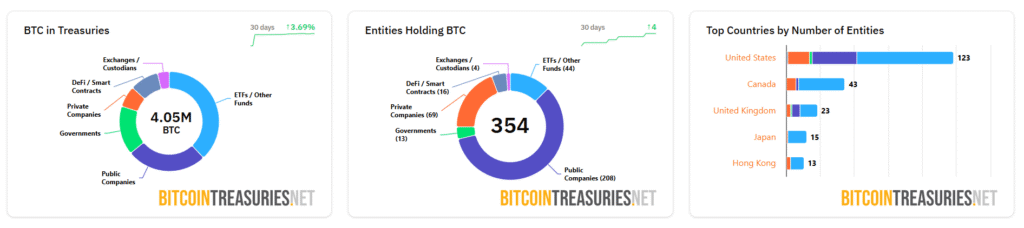
BTC treasury statistics (Source: Bitcoin Treasuries)
However, regulatory uncertainty and custody risks remain the biggest barriers to wider adoption. This year’s participants ranked unclear legislation higher than volatility as their main concern.
Sygnum analysts noted that regions with clearer regulatory frameworks, such as Switzerland and parts of Europe under MiCA, are already seeing stronger institutional confidence, while Asia-Pacific markets continue to grapple with tighter restrictions.
“Regulatory concerns are more visible among APAC investors, where progress and pushback coexist,†Dori said, adding that he expects the environment to “drastically improve over the year,†especially after the passage of the U.S. GENIUS Act and growing participation from traditional financial institutions.
Bitcoin as a Long-Term Hedge
Among high-net-worth individuals (HNWIs), 91% said crypto is now central to long-term wealth preservation strategies, particularly as fiat currencies face mounting inflationary pressures. The report also noted heightened interest in ETFs beyond Bitcoin and Ethereum, especially if staking capabilities were added.
Dori emphasized that Bitcoin’s appeal as a hedge against currency debasement continues to strengthen.
“The trend is heavily tied to the dollar, but also to the euro’s poor performance,†he said, noting that HNWIs are increasingly focused on long-term investment horizons. Bitcoin’s volatility, he added, “has structurally declined over the years,†while the asset “continues to outperform as purchasing power in the dollar declines.â€
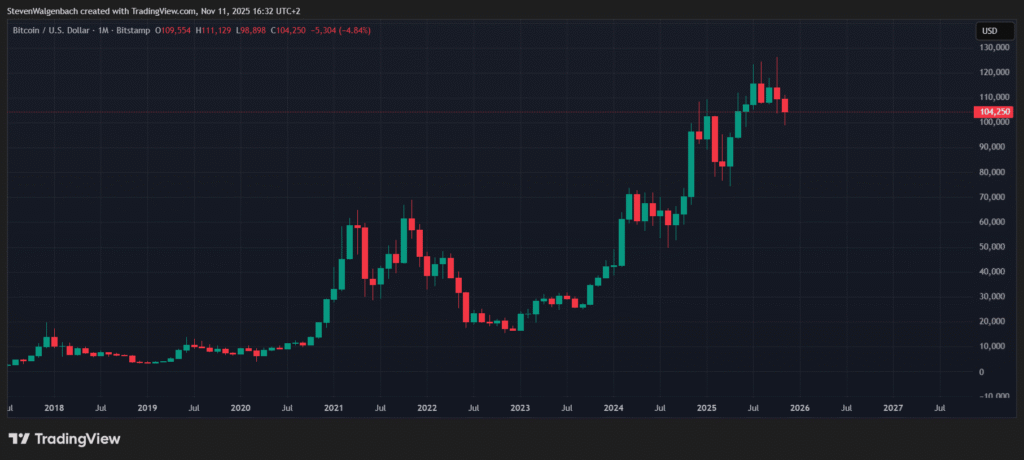
Bitcoin price to the US dollar (Source: TradingView)
As trust in traditional monetary systems wanes and Western fiscal pressures intensify, Sygnum’s findings suggest that digital assets are no longer viewed primarily as speculative instruments—but as essential components of a diversified, resilient portfolio.


