
Sequans Sells 30% of Its Bitcoin Reserve — A Turning Point for Crypto Treasuries?
Sequans Communications, a fabless semiconductor company that adopted Bitcoin (BTC) as a reserve asset earlier this year, has sold 30% of its holdings to reduce convertible debt — becoming the first digital asset treasury (DAT) firm to partially liquidate its Bitcoin reserves.
The company disclosed the sale in its preliminary financial results for the third quarter of 2025, revealing that it had sold 970 Bitcoins to pay down half of its $189 million convertible debt issued in July.
Following the sale, Sequans now holds 2,264 BTC, valued at around $230 million at current market prices.
Despite the reduction, CEO Dr. Georges Karam emphasized that the company remains committed to its Bitcoin strategy, calling the move a disciplined effort to strengthen its balance sheet.
“Sequans has taken a proactive and disciplined approach to managing its balance sheet and reducing half of its debt by opportunistically leveraging a portion of its Bitcoin holdings,†Karam said. “This initiative has enhanced our financial flexibility, meaningfully reduced our debt-to-NAV ratio, and boosted our ability to execute our buyback program, while still preserving long-term Bitcoin treasury optionality.â€
Financial Strain Behind the Decision
Sequans’ decision comes amid growing financial pressure. For the third quarter, the company reported an operating loss of $20.4 million and a net loss of $6.7 million. Revenue fell to $4.3 million, down 47.3% from the previous quarter and 57.5% year-over-year.
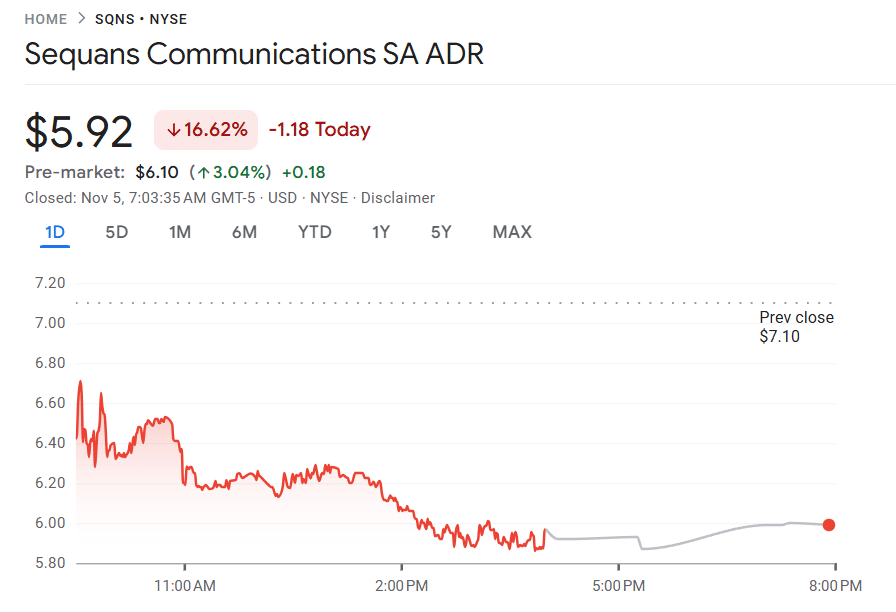
Sequans share price (Source: Google Finance)
The firm also recorded an $8.2 million unrealized impairment loss on the value of its Bitcoin investment, citing the asset’s decline during the quarter.
In this environment, analysts suggest the sale was likely motivated by both liquidity needs and a desire to reduce leverage ahead of an uncertain market outlook.
Market Impact and Treasury Risks
Sequans’ move has sparked wider discussion among analysts about the risks of corporate Bitcoin treasuries. The sale marks a critical test for the so-called digital asset treasury model, which gained popularity among firms seeking to hedge inflation or diversify away from fiat assets.
Analyst Nic Carter suggested that companies like Sequans may feel increasing pressure to sell Bitcoin for U.S. dollars as the dollar strengthens and Bitcoin prices weaken.
A broader wave of selling by DAT firms could, according to market watchers, inject additional Bitcoin supply into the market and deepen ongoing price corrections.
Could Bigger Players Follow?
For now, Sequans remains the only digital asset treasury to have sold part of its Bitcoin holdings. However, the move raises speculation about whether other major corporate holders could follow suit if market conditions worsen.
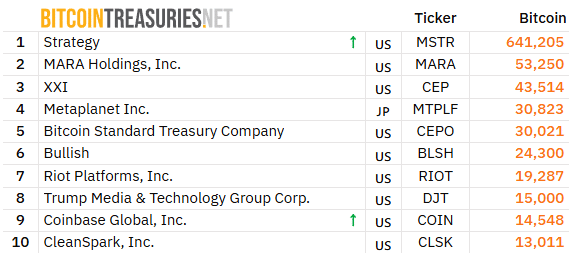
Top 10 largest corporate BTC holders (Source: Bitcoin Treasuries)
Some analysts downplay that risk, arguing that established firms like Strategy (MSTR) are structured to weather market volatility.
“It would take one hell of a sustained bear market to see any liquidation from Strategy,†analyst The Bitcoin Therapist said. “Bitcoin would have to perform horribly.â€
Still, industry observers warn that Sequans’ situation could serve as a cautionary tale for smaller firms that adopted Bitcoin as a reserve asset during its recent highs but may now face operational or market stress.
A Turning Point for Corporate Bitcoin Treasuries
Sequans’ sale highlights the growing tension between long-term conviction in Bitcoin and short-term corporate realities. As profits tighten and debt burdens rise, companies may be forced to treat Bitcoin less as a sacred reserve and more as a financial instrument — to be used or sold as circumstances demand.
While Sequans insists its commitment to Bitcoin remains intact, its decision underscores that even believers in the digital asset are not immune to balance-sheet pressures.
The episode could mark the beginning of a new phase for corporate Bitcoin adoption — one where holding BTC is not just a statement of belief, but also a strategic variable in managing debt, liquidity, and investor expectations.


