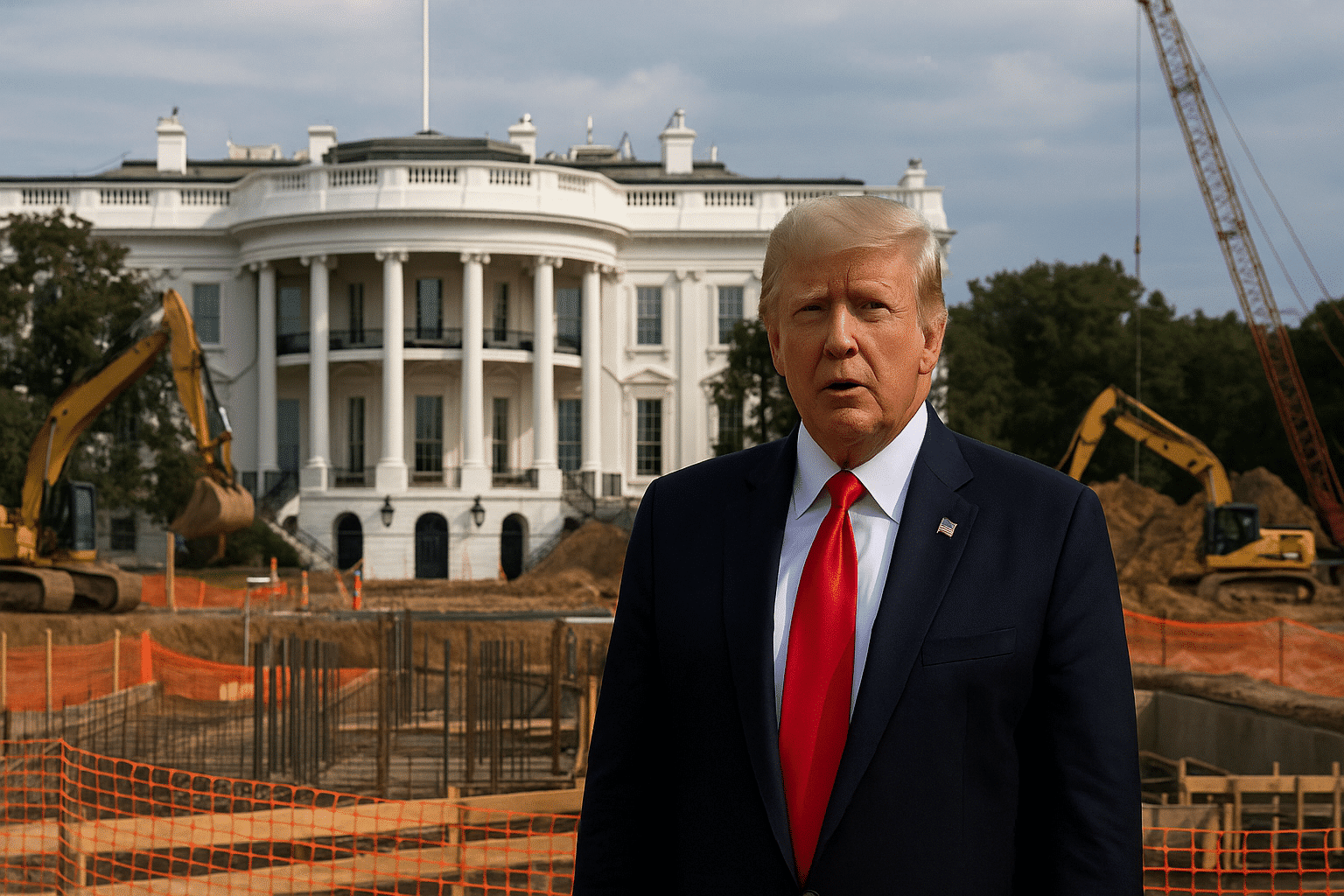
Ripple, Coinbase, and Tether Back Trump’s Lavish $300M White House Ballroom
A growing list of major cryptocurrency and technology companies have been revealed as donors to President Donald Trump’s new ballroom at the White House.
The 90,000-square-foot addition — estimated to cost around $300 million — replaces the East Wing and has become one of the most controversial architectural undertakings in modern U.S. political history.
According to multiple reports, donors include crypto heavyweights such as Ripple, Coinbase, and Tether, along with Gemini founders Cameron and Tyler Winklevoss.
Tech giants Apple, Google, Microsoft, and Comcast are also said to have contributed. While the total amount from each donor remains undisclosed, the list signals the deepening influence of digital-asset firms and big tech within the Trump administration.
A Ballroom Fit for Power
Announced in July, the ballroom is described as a privately funded project capable of seating up to 650 guests. Construction began in September 2025 and required the demolition of the East Wing — a move that immediately sparked outrage among preservationists and critics who questioned how the process was managed.

The East Wing of the White House getting demolished (Source: New York Times)
The White House has defended the project as a “visionary addition†to the nation’s most iconic residence.
In a statement this week, officials dismissed criticism as “manufactured outrage,†arguing that the expansion will serve as a grand venue for state dinners, diplomatic events, and official ceremonies.
Crypto’s Expanding Political Footprint
The ballroom’s crypto-backed donor list shows how deeply the industry has embedded itself in Washington’s power circles. President Trump’s relationship with the crypto sector has strengthened significantly since his return to the White House.
Earlier this year, the Winklevoss twins donated 18 bitcoins — worth several million dollars — to a pro-Trump political action committee. Circle, Ripple, and Coinbase also contributed to Trump’s inaugural committee in January.
During the 2024 election cycle, crypto super PACs like Fairshake poured over $200 million into key races. That influx of funds helped usher in what many now call the most pro-crypto Congress in history, giving the industry its strongest foothold yet in shaping U.S. digital-asset policy.
A Symbol of Influence and Access
Critics argue that the ballroom’s donor roster reflects growing concerns about influence and access in Washington. With several of the contributing crypto firms actively engaged in ongoing regulatory discussions — including stablecoin legislation and securities classification — questions are mounting about whether such donations could grant these companies a closer seat to policymakers.
Still, for Trump and his supporters, the project represents both symbolism and legacy: a permanent architectural stamp that blends private capital with presidential grandeur.
A Divisive Addition to the White House
Public reaction to the ballroom has been mixed.
Supporters hail it as an example of Trump’s ability to mobilize private funding for state projects without burdening taxpayers. Detractors view it as an unnecessary vanity project that disrupts the historic balance of the White House grounds.
Preservation advocates have also raised red flags about the demolition of the East Wing, calling it one of the most significant structural changes to the White House in nearly a century.
Crypto, Politics, and Power
The convergence of digital-asset donors and political architecture marks a new phase in crypto’s influence on Washington. The ballroom may become more than a symbol of luxury — it represents the tangible merging of finance, technology, and governance.
For the crypto sector, the ballroom’s donor list is both a milestone and a spotlight. It signals growing political legitimacy but also invites deeper scrutiny from regulators, ethics watchdogs, and the public alike.


