Is Yield Farming Still Profitable?
Yield farming took the crypto world by storm during DeFi Summer 2020, when people were earning eye-popping returns by staking and lending their crypto assets.
Fast forward to today, and the question on every investor’s mind is: Is yield farming still profitable today?
In this comprehensive guide, we’ll break down what yield farming means in simple terms, analyze current profitability with up-to-date data, explore the latest DeFi trends influencing returns, discuss the risks and benefits, and provide practical tips for anyone considering yield farming. We’ll also compare average yields across different DeFi strategies and answer common questions. Let’s dive in!
What is Yield Farming? (In Simple Terms)
Yield farming (also called liquidity mining) is a decentralized finance (DeFi) strategy where you stake or lend your cryptocurrency on DeFi platforms to earn rewards.
In plainer terms, think of it like depositing money in a high-yield savings account – but instead of a bank, you’re using crypto protocols, and instead of earning a fixed interest rate, you earn crypto rewards. These rewards come from things like interest payments, a share of transaction fees, or extra tokens that the platform gives you for providing liquidity.
Here’s a simple example: Suppose you have some Ethereum (ETH) or stablecoins (like USDC). You can deposit these into a liquidity pool on platforms such as Aave, Uniswap, or Compound. When you do this, you’re helping those platforms facilitate loans or trades.
In return, you earn a percentage yield – often quoted as APY (annual percentage yield) – on your deposited assets. The platform might pay you interest in the same asset (e.g., more ETH), fees from trades, or even additional bonus tokens (governance tokens) as extra rewards for participating.
Your crypto stays in the pool (which you can usually withdraw anytime), and as long as it’s there, it’s “farming†more tokens for you.
To put it simply, yield farming is a way to make your crypto work for you. Instead of just holding coins in your wallet, you deploy them in DeFi protocols that pay you for your contribution.Â
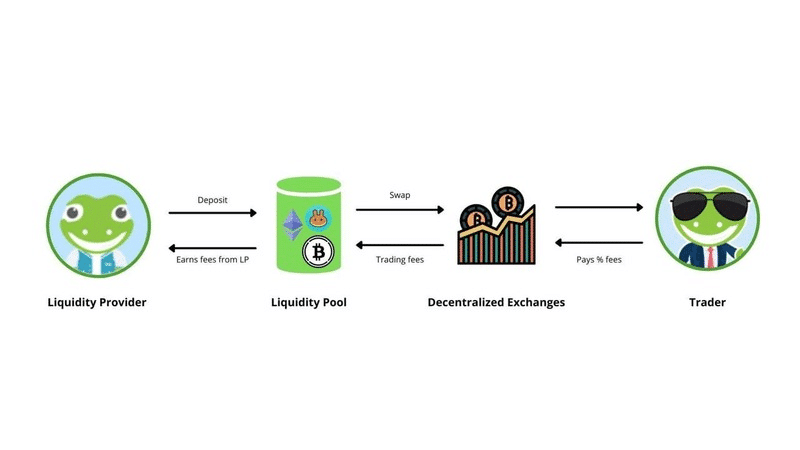
High level overview of yield farming.
It’s like earning rent on property or interest on a savings account – except the returns in DeFi have historically been much higher than traditional banks (often several times higher). However, as we’ll discuss, these high returns come with higher risks and complexities compared to traditional finance.
Yield Farming Profitability: Current State
Is yield farming still profitable? Yes, but the game has changed.
In the early days of DeFi, yield farmers could chase triple-digit or even thousand-percent APYs, because many new protocols were giving out huge amounts of their tokens as incentives. Those days of eye-watering “moon†yields have largely passed. Today, yields have normalized to more sustainable levels as the market matured and more capital poured into these farms.
As of 2025, the typical yield farming returns you can expect are more modest but still attractive relative to traditional finance. Many conservative yield farming strategies yield in the single to low double digits (APY).
For example, stablecoin farming – providing liquidity or lending with stablecoins like USDC or DAI – often earns around 5% to 15% APY on major platforms. This is a far cry from the 100%+ APYs of 2020, but consider that a traditional bank savings account might only pay ~1% or less. Earning, say, 8% on a dollar-pegged stablecoin is still quite profitable compared to traditional investments.
If you’re willing to take on a bit more risk, yield farming with volatile crypto pairs can offer higher returns. Providing liquidity on decentralized exchanges for popular token pairs (e.g., ETH/USDC or other altcoin pairs) might get you on the order of 10%–30% APY, sometimes more, especially if the pool is incentivized with extra token rewards.
However, those higher yields aren’t “free money†– they often come with the risk of impermanent loss (we’ll explain this risk shortly) and larger swings in reward rates.
Meanwhile, simply lending out your crypto on DeFi lending platforms like Aave or Compound can still be profitable, though typically on the lower end of yields. For instance, lending out stablecoins on Aave in 2025 might yield roughly 5–10% APY (safer but lower returns, as one DeFi enthusiast puts it).
Lending major assets like ETH or BTC usually offers a bit less interest (often just a few percent APY) since these assets are in high supply and lower demand to borrow. Still, these rates beat most traditional alternatives – for example, US government bonds or bank deposits – and they make yield farming an appealing passive income strategy for crypto holders.
It’s important to note that yield farming returns today are more consistent and “normal†than the wild west days, but they can still fluctuate with market conditions. During periods of high trading volume or volatility, liquidity providers might earn more fee revenue (spiking APYs temporarily), whereas during market lulls, yields can dip.
Also, many protocols now optimize for sustainability: rather than printing endless reward tokens (which used to crash in value), they’ve cut down on emissions. So, yield farming today is profitable but not a get-rich-quick scheme. In fact, it’s often described as moving from a gold rush to a steady mining operation – you can earn a solid yield, but it requires knowledge and active management to avoid pitfalls.
Real-time data check: Recent data and platform stats confirm this moderated profitability. For example, Aave’s USDC lending pool was around ~4-5% APY in early September 2025, and MakerDAO’s DAI Savings Rate (a kind of “yield farming lite†for holding DAI stablecoin) has been offering about 5-8% APY – essentially a crypto savings account yield.
On the other hand, innovative strategies like Pendle’s yield tokenization can lock in fixed yields above 10% (Pendle was offering ~13.5% fixed APY on certain yield tokens), showing that opportunities for double-digit returns still exist for those who seek them.
Overall, yield farming remains profitable; it’s just more streamlined and competitive, with most “easy†farms yielding in the single or low-double digits. Next, let’s look at the trends shaping these returns.
Latest Trends in DeFi Affecting Yield Farming Returns
The DeFi landscape never stands still. Several new trends are impacting how yield farming works and how much you can earn:
From Sky-High APYs to Real Yield: One major shift is a movement away from the unsustainable, inflation-driven APYs of the past toward “real yield†models.
In the DeFi boom, many farms paid crazy high APYs by simply minting new tokens as rewards – effectively diluting their value (the classic “farm and dump†scenario). This often led to a “death spiralâ€: high APYs attracted capital, token price crashed from sell pressure, and then yields evaporated.
Today, successful protocols focus on paying yields out of actual revenue, like trading fees or interest, rather than just token inflation. This means yields are lower but more sustainable. Investors are increasingly favoring protocols that share real profits (for example, platforms that distribute exchange fees or lending interest to liquidity providers) over purely inflationary reward tokens.
The result is that yield farming returns are more dependable and less of a rollercoaster – you won’t often see 1,000% APY anymore, but a solid 10% from real revenue can actually be more profitable long-term if the reward token holds its value.
- Rise of Real World Assets (RWA) in DeFi: A big trend is the tokenization of real-world yields. DeFi is no longer just about crypto-on-crypto yields; platforms are bringing in real world assets like private credit, real estate loans, and other off-chain investments into the crypto space. Why does this matter? These RWA-based platforms offer yields that don’t depend on crypto market cycles or liquidity mining incentives. For example, platforms like Kasu, Goldfinch, Maple, and others are enabling crypto investors to earn yields from things like business loans and credit markets. Some of these yields are quite attractive – up to ~25% APY in certain cases – and they’re not fueled by token emissions or volatile LP rewards.
Essentially, you’re lending to real businesses (via crypto rails) and earning interest, which can be more stable. This trend provides an alternative for yield farmers seeking more “boring but reliable†returns when crypto markets are choppy. However, RWAs come with their own considerations, like trusting that the off-chain borrowers repay and that the platform’s legal setup is solid. It’s a space gaining momentum as even traditional finance giants (like BlackRock’s CEO) have shown interest in tokenized RWAs, indicating this could be a significant part of DeFi’s future.
- Liquid Staking Derivatives (LSDs) and Staking Yields: Another trend boosting yield opportunities is the popularity of staking, especially with major blockchains like Ethereum moving to Proof-of-Stake. Liquid Staking Derivatives (LSDs) are tokens you receive when you stake assets (like stETH from staking ETH via Lido) that continue to earn staking rewards (around 4-7% APY) but can also be used in DeFi.
Yield farmers often take those LSD tokens and deploy them in yield farms – effectively stacking yield on top of yield. For example, you might stake ETH and get stETH (earning ~5% from Ethereum’s consensus rewards), then deposit that stETH into a lending protocol or liquidity pool to earn additional yield. This trend has opened up new strategies where you don’t have to choose between staking vs. DeFi – you can do both. It’s also contributed to making yield farming a bit more conservative; staking yields are relatively stable (tied to network rewards), so using LSDs can anchor a yield farming portfolio with a lower-risk return.
- Layer 2s and Multi-Chain Yield Hunting: High Ethereum gas fees used to eat heavily into yield farming profits, especially for smaller portfolios. Today, the proliferation of Layer 2 networks (L2s) like Arbitrum, Optimism, and others, as well as yield opportunities on alternative Layer 1 blockchains (Polygon, Avalanche, Solana, etc.), has made yield farming more accessible and cost-effective.
Farmers are hopping across chains to find the best yields, and using bridges or omnichain liquidity protocols. The average DeFi user today might farm on multiple chains: for example, providing liquidity on an Optimism DEX for low fees, or lending on a Solana-based protocol for a specific yield. This multi-chain environment means more opportunities (and some complex strategy for those who want to optimize across ecosystems).
Additionally, many yield aggregators and dashboards (like DefiLlama’s yield tracker) now aggregate data across chains, making it easier to compare APYs and find where the grass is greener in real time.
- Increased Regulatory Scrutiny and Best Practices: With DeFi’s growth, regulators around the world have started paying more attention. While global accessibility remains a hallmark of DeFi, some platforms have begun geo-fencing or implementing compliance measures. How does this affect yield farming returns?
In the short term, there’s a bit more uncertainty – e.g. certain high-yield protocols might block US users or face crackdowns, which could shift where capital flows. In the long term, however, regulatory clarity could bring more institutional money into yield farming (demand for yields) while also forcing out some of the scammier, unsustainable schemes.
On the user side, serious yield farmers are more diligent about security and audits – checking if a protocol has been audited, using smart contract insurance, and avoiding anonymous teams with overly high promises. The space is maturing, and although that can slightly reduce the Wild West APYs, it likely improves the risk-adjusted profitability for yield farmers who stick to reputable projects.
Risks of Yield Farming
Yield farming can be lucrative, but it’s definitely not risk-free. Any investor considering it today should be aware of the key risks involved:
- Impermanent Loss (IL): If you provide liquidity to a pool of two tokens, and those tokens change in price relative to each other, you could end up with less value than if you just held them separately. This effect, known as impermanent loss, can wipe out your gains from yield farming if one token’s price pumps or dumps significantly. Stablecoin-only pools largely avoid this (since $1 is $1), but whenever you farm with volatile assets, IL is a serious risk. It’s “impermanent†because if prices revert to the original ratio, the loss diminishes – but in practice, price divergences are often permanent. Yield farmers mitigate IL by sticking to pairs of similar assets (e.g., two stablecoins, or ETH/stETH) or accepting that the high yield earned might offset the IL over time. Tools and calculators are available to estimate IL, and it’s crucial to understand this risk before depositing into volatile pairs.
- Smart Contract Hacks and Exploits: DeFi protocols are essentially code (smart contracts) managing funds, and unfortunately, bugs or vulnerabilities in that code can and have led to hacks. If a yield farm’s contract is exploited, liquidity providers can lose some or all of their funds in that pool. We’ve seen examples in the past where even big protocols faced issues (for instance, a major exploit in 2023 on a DeFi protocol due to a bug in a programming language).
Using audited, well-tested protocols and not going all-in on a single platform can reduce risk, but smart contract risk is always present. Many investors also consider buying DeFi insurance from services like Nexus Mutual or others to protect against this risk for key platforms.
- Rug Pulls and Scams: In the more shadowy corners of yield farming, some anonymous developers create new farming dApps that promise unbelievably high APYs to lure deposits – only to rug pull (drain the funds) or see the reward token’s price collapse to zero. The first wave of yield farming had plenty of these Ponzi-like schemes.
While the community has gotten savvier, and such blatant scams are easier to spot now, they haven’t disappeared completely. If a yield farming opportunity sounds too good to be true (like a brand-new token offering 1,000% APY with no clear revenue model), be extremely cautious. Stick to known platforms or at least do thorough research on the team and code before risking funds.
- Market Volatility & Liquidation Risk: Some advanced yield farming strategies involve borrowing (for example, depositing one asset to borrow another and farm with it). These can amplify returns but also expose you to liquidation risk if markets move against you. Even without borrowing, the value of the tokens you’re farming can fluctuate wildly. If you’re farming a volatile token and its price crashes, the high APY won’t comfort you much – you’ve lost value overall. Yield farming works best as a long-term strategy in a relatively stable or rising market for the assets involved. In a severe bear market, many yield farmers see diminishing returns (both because APYs often go down as capital leaves, and the token prices drop).
- Regulatory and Tax Risks: As mentioned, regulators are eyeing DeFi. There’s a risk (albeit hard to quantify) that new laws or enforcement could impact certain yield farming platforms or your ability to use them. Additionally, tax compliance is an often overlooked risk – not in the sense of losing money directly, but in the complexity it introduces. Yield farming can trigger taxable events (each reward token you receive might be taxable income, and swapping assets can incur capital gains taxes). Failing to report these properly could lead to penalties in some jurisdictions. We’ll touch more on taxes in the FAQ, but from a risk perspective, understand that yield farming may require keeping careful records and possibly facing tax obligations, which is a “cost†to factor in.
- Opportunity Cost and Complexity: Finally, there’s the softer risk of complexity. Yield farming isn’t a set-and-forget savings account. It demands time and attention – you need to monitor APYs (they can change daily), move funds if a pool is no longer attractive, and stay alert for any news (like a potential exploit or a project’s token economics change). The opportunity cost here is your time and the potential that you might make a mistake with complicated transactions. For new investors, sending funds to the wrong address or messing up a contract interaction can result in loss. As such, one risk is simply operational risk – making an error in the complex DeFi maze. This risk can be mitigated by starting small, practicing on testnets, and gradually getting familiar with how to use wallets and DeFi platforms safely before scaling up.
Benefits of Yield Farming
On the flip side, yield farming offers several attractive benefits that explain why many investors (from crypto novices to institutions) are still engaged in it today:
- High Returns vs Traditional Investments: Even with more moderate rates, yield farming yields often outperform traditional investment yields by a wide margin. Earning 5-15% APY on stablecoins or 10%+ on blue-chip crypto is a strong return compared to <1% bank interest rates or typical bond yields. This potential for high passive returns is the number one draw. Essentially, yield farming lets you tap into the growth and activity of the crypto market to earn yield that would be impossible in legacy finance without taking on major risk.
- Passive Income & Compound Interest: Yield farming is a way to generate passive income on assets that might otherwise sit idle in your wallet. Many strategies allow (or automatically perform) compounding, meaning the rewards you earn can be reinvested to generate even more yield. Platforms called yield aggregators (like Yearn Finance) exemplify this by auto-compounding yields – turning even a 10% APY into a higher effective return over time. For investors who plan to “HODL†their crypto long-term, farming offers a way to make money while you hold, effectively reducing the opportunity cost of holding. As one commenter aptly put it, if you’re going to hold an asset, you might as well farm with it if you can do so safely – earning, say, 10% extra with “no risk on an asset you’re planning to hold†(their words, though we know there’s always some risk).
- Diverse Strategies for Different Risk Levels: The yield farming ecosystem has evolved to offer something for everyone. If you’re risk-averse, you can stick to conservative strategies like lending stablecoins or using major protocols – a bit like a fixed-income investment in crypto. If you have a higher risk appetite, you can explore aggressive strategies on new protocols or volatile token pairs that might yield much more. There are also strategies in between (moderate risk) that involve good projects with enhanced yields (for example, liquidity pools boosted by protocol incentive programs). This flexibility means investors can tailor a yield farming approach that fits their risk/return profile, much like constructing a portfolio. It’s not all or nothing – many farmers diversify across a spectrum of strategies.
- Liquidity and Control: Unlike a long-term locked investment, many yield farming positions are relatively liquid. You can usually withdraw your funds from a liquidity pool or lending protocol at any time (barring some with lock-up periods). This means you maintain control of your assets – you’re not handing them to a fund manager for years. With a few clicks (and transaction confirmations), you can move your crypto from one farm to another. This flexibility is a benefit not to be overlooked: if one opportunity dries up or becomes too risky, you can pivot to another. Additionally, because you are interacting through your own wallet (self-custody), you have more control compared to, say, leaving assets on an exchange.
- Participation in Governance and Early Opportunities: Yield farming often involves earning governance tokens as rewards (e.g., UNI from Uniswap, COMP from Compound). Beyond their monetary value, holding these tokens can give you a say in the protocol’s future – you become a stakeholder who can vote on proposals. For those interested in the growth of DeFi, this is a way to be actively involved. Also, yield farming can sometimes get you in early on promising projects. For example, providing liquidity to a brand-new protocol might grant you its tokens before they list on major markets – if the project succeeds, those tokens’ value could moon (this is essentially how many got big gains in 2020). While chasing new farms is riskier now, the principle of being rewarded for being an early adopter still exists. Thus, yield farming can be not just income, but a way to build a diversified set of crypto holdings.
- Innovative Earning Opportunities: Lastly, yield farming in 2025 is at the intersection of fintech innovation. New concepts like fixed-yield DeFi products (e.g., Pendle Finance offering fixed yield bonds), insurance mining, NFT staking rewards, and cross-chain arbitrage are emerging. For the savvy investor, yield farming is a playground of financial innovation where one can find creative ways to earn. It’s intellectually engaging and can be rewarding to those who learn the ropes. In summary, yield farming provides a way to maximize the utility of crypto assets, turning idle holdings into an active, yield-generating part of your portfolio.
Comparing Yields Across DeFi Strategies
Not all yield farming is created equal.
Different DeFi strategies offer different typical yield ranges and come with varying levels of risk. The table below summarizes average APYs in 2025 for a few major categories of DeFi yield strategies, along with some notes on each:
Note: The APY ranges above are approximate averages in 2025 for illustrative purposes. Actual yields can vary with market conditions, protocol incentives, and the specific pool or asset. Always check real-time data on a platform (tools like DefiLlama Yields are great for this) before committing funds. Also, remember that higher APY usually means higher risk – sometimes a simple 8% APY on a stablecoin lending pool can deliver better risk-adjusted returns than a flashy 80% APY farm that might collapse next week.
Practical Tips for Yield Farming in the Current Market
If you’re considering trying yield farming, here are some best practices and tips to help you navigate the space safely and effectively:
- Do Your Homework (DYOR): Research any platform or pool before depositing funds. Check if the protocol has been audited, how long it’s been around, and if there have been any past security incidents. A quick community check (on forums, Twitter, etc.) can reveal if a project is reputable or if there are red flags. Never aping in blindly to a high-APY farm without understanding how it generates yield – if you can’t tell where the rewards are coming from, assume it might be unsustainable or risky.
- Start Small & Learn: If you’re new to DeFi, start with a small amount of money that you can afford to lose. Use that to learn the mechanics: how to connect your wallet, deposit into a pool, withdraw liquidity, etc. This learning phase is crucial because mistakes can be costly. Starting small also lets you gauge how volatile the yields and values can be without heavy consequences. As you become comfortable, you can scale up your positions gradually.
- Diversify Your Yield Farming: The old adage “don’t put all your eggs in one basket†applies here. Spread your capital across multiple protocols or multiple pools instead of one single farm. For instance, you might put some funds in a stablecoin lending strategy, some in an ETH staking or ETH/Stable LP, and maybe a small portion in a higher-risk farm. Diversification helps manage risk – if one platform has an issue or one strategy underperforms, your whole portfolio won’t tank. Most seasoned yield farmers maintain a portfolio of positions, balancing higher-risk, higher-reward plays with more stable ones.
- Monitor Your Positions Regularly: Yield farming isn’t completely passive. Yields can change quickly – if a liquidity mining program ends, your APY could plummet, or if a lot of capital floods into a pool, the yield will drop. Check on your farms periodically (daily or weekly) to ensure the returns are still worth it and the platform health is good. Also monitor for impermanent loss if you’re in volatile pairs; if one token’s price moves a lot, you might decide to pull out or rebalance. Set alerts or use dashboards to track your positions. In 2025, there are many portfolio tools that can show your current APYs and even IL estimates in one place.
- Be Wary of “Too Good to Be True†APYs: Yields much higher than the market norm (say, thousands of percent APY) are usually unsustainable promotions or outright scams. They might be okay for a quick gamble if you’re very experienced, but they often come down rapidly or end in losses. A common strategy by dubious projects is to lure people in with triple-digit APY, only to have the token price dump and negate those gains. So, approach super-high yields with caution. A good rule of thumb: if you don’t understand why a yield is, say, 200% – and the only answer is “because they mint a lot of tokens†– you might want to skip it. Sustainable yields tend to be in a realistic range (like those listed in our table above).
- Consider Layer-2 Networks to Save Fees: If you have a smaller portfolio (or even a big one – nobody likes wasting money on fees), try using yield farms on Layer 2 solutions or other low-fee chains. Ethereum mainnet gas fees can eat into profits, especially if you’re frequently moving funds. Protocols on Arbitrum, Optimism, Polygon, and others offer similar yield opportunities with negligible fees. Just be mindful of the bridging process (use official bridges or well-known ones to avoid bridge hacks). Saving on fees means more net yield for you, which can be the difference between profit and loss for small farmers.
- Use Reliable Tools and Automation: Keeping up with yield farming manually can be daunting. Luckily, there are tools to help. Yield aggregators like Yearn can automatically move your funds to the highest yield opportunities and compound your returns. This is great if you prefer a more hands-off approach (though remember, aggregators take a small fee, and you’re adding one more layer of smart contract risk). Analytics dashboards (e.g., DefiLlama, Zapper, Debank) can help you compare APYs and track your portfolio performance in one place. Using these resources can greatly simplify decision-making and ensure you don’t miss better opportunities. Some farmers even use bots or alerts to notify them of big changes in yield or pool conditions.
- Stay Informed and Adaptable: Crypto moves fast. New protocols and strategies emerge, and what’s best today might be outdated next month. Follow DeFi news, join communities (Twitter/Discord/Reddit) of yield farmers, and keep learning. If a major exploit happens on a platform you use, be ready to act (e.g., withdraw funds if needed). If a new, safer opportunity arises (say a big name launches a yield program), evaluate if it’s better than your current ones. The most successful yield farmers treat it as an ongoing process – almost like running a little investment business – where they periodically rebalance and rotate into the best risk-adjusted yields. It doesn’t have to consume your life, but set aside time to review your strategy, especially as market conditions change.
- Security First: Last but certainly not least, practice good security hygiene. Use a secure wallet (hardware wallets are strongly recommended) to interact with DeFi. Beware of phishing scams – always double-check you’re on the correct website (bookmark the legit sites). Keep your seed phrase safe (offline, never give it out). Interact with smart contracts using a wallet address that doesn’t hold all your funds (you might have a separate vault wallet and a hot wallet for farming). By minimizing security risks on your end, you protect those hard-earned yields from being stolen by an opportunistic hacker or malware.
By following these tips, you can greatly enhance your yield farming experience and mitigate some of the risks. Yield farming can be complex, but with a cautious and informed approach, it remains a viable way to earn passive crypto income.
Disclaimer: The information provided in this article is for educational and informational purposes only. It does not constitute financial advice, investment advice, or trading advice. Ecoinimist is not responsible for any financial losses incurred as a result of trading or investing based on the information provided. Always conduct your own research and consult with a licensed financial advisor before making investment decisions.
Frequently Asked Questions
Is yield farming safe?
Yield farming carries significant risks, and it is not as safe as keeping money in a bank. While you can earn high returns, you must remember you’re often dealing with experimental technology and volatile assets. Smart contract bugs or hacks can lead to loss of funds, and there’s no FDIC insurance in DeFi. Additionally, impermanent loss can eat into your profits when providing liquidity, and token prices can be very volatile.
As one crypto observer wryly noted, “farming still works, but it’s not exactly stress-free these days. However, you can take steps to improve safety: stick to well-known, audited protocols, diversify across platforms, and maybe even use insurance for big deposits. Ultimately, only invest what you can afford to lose, and treat the super-high yields with skepticism. Yield farming isn’t a scam, but it’s not a sure thing either – it’s a high-reward, high-risk strategy.
How do taxes work on yield farming?
Tax treatment for yield farming can be complex and varies by country, but generally yield farming returns are taxable under existing crypto tax rules (even if specific “yield farming†laws don’t exist yet). Broadly, there are two types of taxable events to consider:
- Income Tax: When you receive new tokens or coins as yield (for example, you farm COMP tokens by lending on Compound), most tax authorities view that as income – similar to earning interest or getting a bonus in crypto. You’d owe income tax on the fair market value of those tokens at the time you received them.
- Capital Gains Tax: Many yield farming activities involve swapping or selling assets. For instance, when you deposit into a liquidity pool, you often receive an LP token – that might be seen as trading one asset for another. Later, when you withdraw, you might trade that LP token back for your original tokens. These are considered disposals of assets, meaning capital gains rules could apply. If the tokens you get back have increased in value from when you originally deposited, that gain could be taxed as a capital gain. Likewise, selling reward tokens for cash or another crypto is a taxable event.
In short, yield farming can trigger many taxable events: earning rewards (income) and exchanging assets (gains/losses). It’s wise to keep detailed records of your transactions. Many investors use crypto tax software to track this. Always check your local tax regulations or consult a tax professional, because rules differ by jurisdiction. The bottom line is, just because it’s decentralized doesn’t mean it’s tax-free – governments are increasingly aware of DeFi, and you are responsible for reporting your crypto earnings.
What are the best yield farming strategies in 2025?
The “best†strategy depends on your goals and risk tolerance, but a common theme in 2025 is diversification and balance. Many experienced yield farmers are finding that a mix of stable, moderate, and a touch of high-risk strategies works well. For example, one might allocate:
- A portion of their portfolio to stablecoin lending or farming (e.g., supplying USDC to Aave, or farming on Curve’s stablecoin pool) for a reliable ~5-10% APY. This is relatively low risk and provides a steady base.
- Another portion to staking blue chips like ETH. Staking ETH (directly or via Lido for liquid staking) yields ~4-5%. It’s not high, but it’s quite safe and gives you long-term exposure to ETH’s upside. Think of this as a crypto equivalent of a dividend stock – lower yield but solid.
- A portion to liquidity pools or yield aggregator vaults for higher yields. For instance, providing liquidity on a DEX for a major pair or using Yearn/Curve boosted pools can yield in the teens or higher. These carry more risk (IL or smart contract risk), but by limiting your allocation, you cap potential losses. Target well-established pools – “blue-chip†farms – for this part.
- If you’re more adventurous, a small slice (maybe 10-20% of the farming portfolio) can go into newer opportunities or thematic plays. In 2025, that might include things like RWA platforms (as a hedge for stability and high yield), experimental protocols on Layer 2s, or participating in launch pools of new projects. These can sometimes give great returns or token drops, but they are riskier, so keep the size appropriate.
The key is not chasing only the highest APY but rather the best risk-adjusted yield. A strategy that consistently earns 10% without major incidents is better than one that promises 100% but might rug or implode. As an example guideline, one source suggests beginners might do a portfolio like 70% in stablecoin and major asset farms (conservative) and 30% in more aggressive strategies.
As you gain experience, you can adjust those ratios. Also, “best†strategies can change with the market – during a bull run, it might be providing liquidity for hot tokens; during a bear, it might be parking in stablecoin yields and staking. So stay flexible. Remember, diversification and continuous learning are your friends. By spreading across different types of yield opportunities, you can capture upside from various areas (DEXs, lending, staking, etc.) while buffering any single point of failure.
In summary, the best strategy is a thoughtful mix: secure base yields, some growth-oriented pools, and careful forays into new trends – all while managing risk and not over-leveraging. Yield farming isn’t one-size-fits-all, but with a balanced approach, it can still be a profitable component of a crypto investment strategy.


