
BlackRock Explores Tokenizing ETFs After Bitcoin Fund Success
BlackRock, the world’s largest asset manager, is reportedly exploring how to tokenize exchange-traded funds (ETFs) on the blockchain, according to Bloomberg.
The discussions come on the heels of the strong performance of the firm’s spot Bitcoin ETFs, which have drawn billions in inflows since their launch.
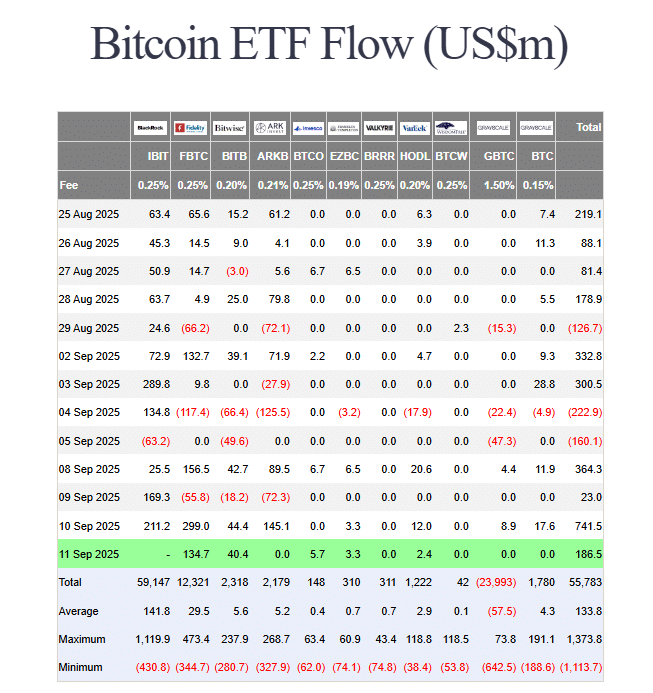
US Bitcoin ETF flows (Source: Farside Investors)
BlackRock’s Next Move Into Tokenization
Citing sources familiar with the matter, Bloomberg reported Thursday that BlackRock is weighing tokenizing funds with exposure to real-world assets (RWA).
Tokenized ETFs could unlock several benefits, including the ability to trade beyond traditional market hours and use shares as collateral in decentralized finance (DeFi) applications. However, any such initiative would still face regulatory hurdles before becoming reality.
ETFs are now among the most widely used investment vehicles, even outnumbering publicly listed stocks, according to Morningstar. BlackRock’s potential push to bring ETFs on-chain could mark a pivotal moment in merging traditional finance with blockchain technology.
Building on BUIDL’s Momentum
This is not BlackRock’s first step into tokenization. The firm already manages the world’s largest tokenized money market fund, the BlackRock USD Institutional Digital Liquidity Fund (BUIDL), which has amassed $2.2 billion in assets across blockchains such as Ethereum, Avalanche, Aptos, and Polygon.
JPMorgan has described tokenization as a “significant leap†for the $7 trillion money market fund industry. BlackRock’s efforts come alongside similar initiatives by Goldman Sachs and Bank of New York Mellon (BNY). Under a new collaboration, BNY clients will gain access to tokenized money market funds with ownership registered directly on Goldman Sachs’ private blockchain.
TradFi Pushes Back Against Stablecoin Competition
The rise of tokenized money market funds is occurring against the backdrop of stablecoin growth. Analysts warn that yield-bearing stablecoins could siphon liquidity from traditional banks. Earlier this year, the U.S. banking lobby pushed back against such tokens, which were notably excluded from the country’s first comprehensive stablecoin legislation, the GENIUS Act.
In June, JPMorgan strategist Teresa Ho said tokenized funds could help preserve the role of cash in financial markets. By allowing investors to post tokenized money market shares as collateral, they can retain interest income rather than forgoing it by posting cash or Treasurys.
The Bigger Picture for BlackRock
BlackRock’s consideration of tokenized ETFs signals the growing trend of real-world asset tokenization as a bridge between traditional finance and blockchain-based markets. While stablecoin adoption continues to accelerate, clearer regulations under the GENIUS Act are expected to support broader tokenization efforts.
If BlackRock moves forward, it could reshape not only ETF trading but also how these funds interact with emerging DeFi ecosystems — positioning the firm at the forefront of financial innovation.


