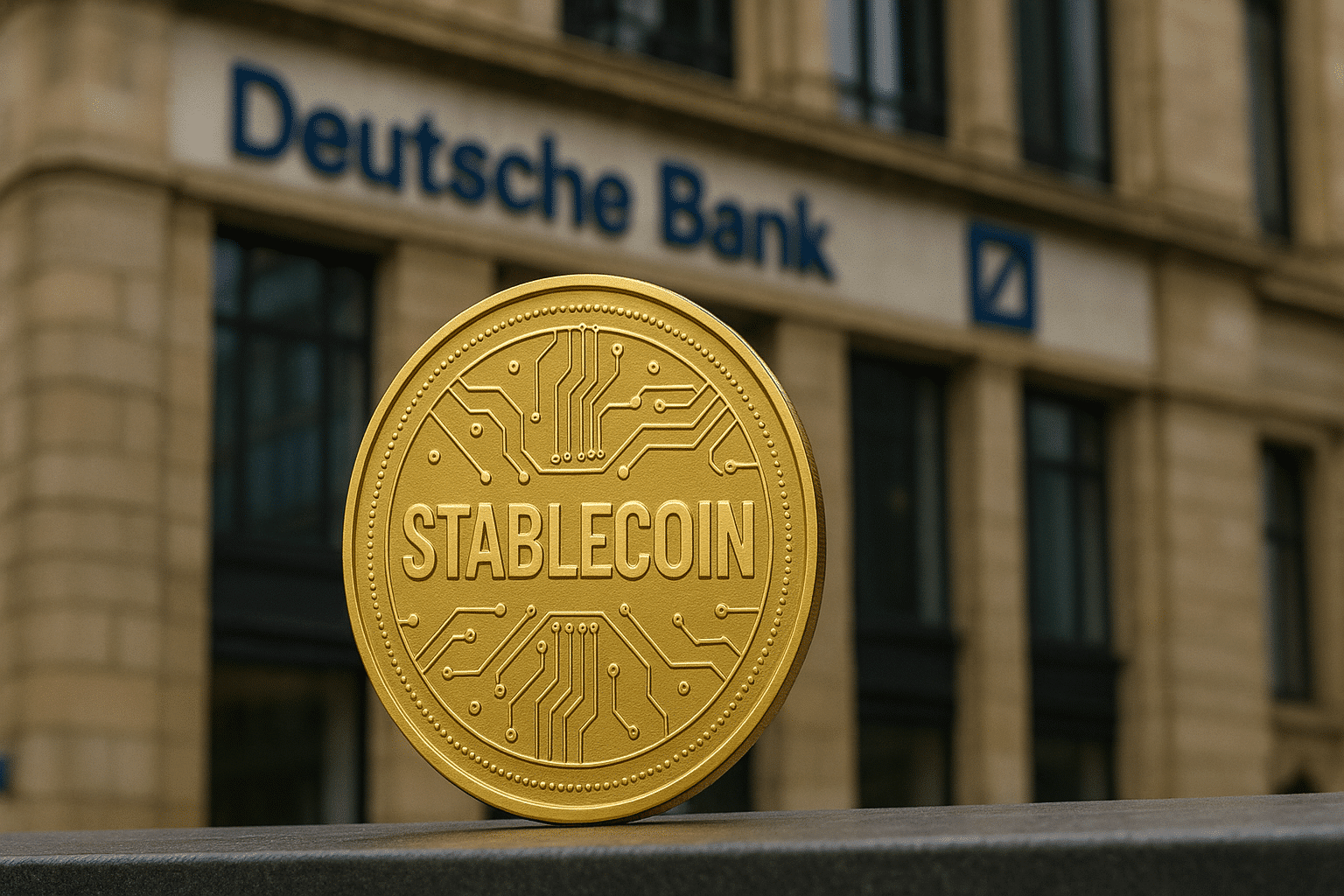
Deutsche Bank Eyes Stablecoins and Tokenized Deposits in Digital Payments Push
In a move that echoes the broader shift of traditional finance into the crypto frontier, Deutsche Bank is taking a hard look at stablecoins and tokenized deposits as part of its expanding digital asset strategy.
According to a new Bloomberg report, the German banking giant is exploring whether to issue its own stablecoin or join forces with a broader industry-led initiative.
Sabih Behzad, the bank’s head of digital assets and currencies transformation, shared that Deutsche Bank is also assessing the development of a tokenized deposit system—essentially a blockchain-powered way to make payments smoother, faster, and cheaper.
This puts Deutsche Bank squarely in step with a growing club of heavyweight banks—including JPMorgan, Bank of America, Citigroup, and Wells Fargo—that are reportedly considering launching a joint stablecoin effort to keep up with rapid advances in crypto-native payment systems.

From Research to Reality
The pivot toward stablecoins isn’t just exploratory. Deutsche Bank has already noted in its research that stablecoins are “on the verge of mainstream adoption,†thanks in large part to increased regulatory clarity.
The Trump administration’s forward motion on crypto legislation in the U.S., along with the EU’s recently finalized Markets in Crypto-Assets (MiCA) framework, has provided just the kind of structure big banks have been waiting for.
Behzad explained that financial institutions are no longer limited to watching from the sidelines. They now have real options: from acting as reserve custodians for existing stablecoins to issuing their own digital tokens that function as programmable money.
Not Just Talk—Deutsche Bank Is Already Plugged In
This isn’t Deutsche Bank’s first foray into the blockchain space. It’s already made a strategic investment in Partior, a blockchain-based cross-border payments firm backed by DBS Bank, JPMorgan, and Temasek. The bank has also joined Project Agorá, a collaborative effort between private institutions and central banks aimed at designing and testing wholesale tokenized payments systems.
That tells us something important: Deutsche Bank isn’t just studying these technologies. It’s actively laying the foundation to be a part of the infrastructure that could redefine how money moves around the globe.
The Bigger Picture
As crypto matures, traditional banks aren’t content to simply compete—they’re integrating. Whether through proprietary digital currencies, tokenized bank deposits, or partnerships with blockchain-native firms, banks like Deutsche are positioning themselves to remain relevant in a digital-first financial ecosystem.
And with stablecoins proving to be one of the most practical, institution-friendly applications of blockchain technology, it’s no surprise that they’re becoming the testing ground for the next phase of financial innovation.


