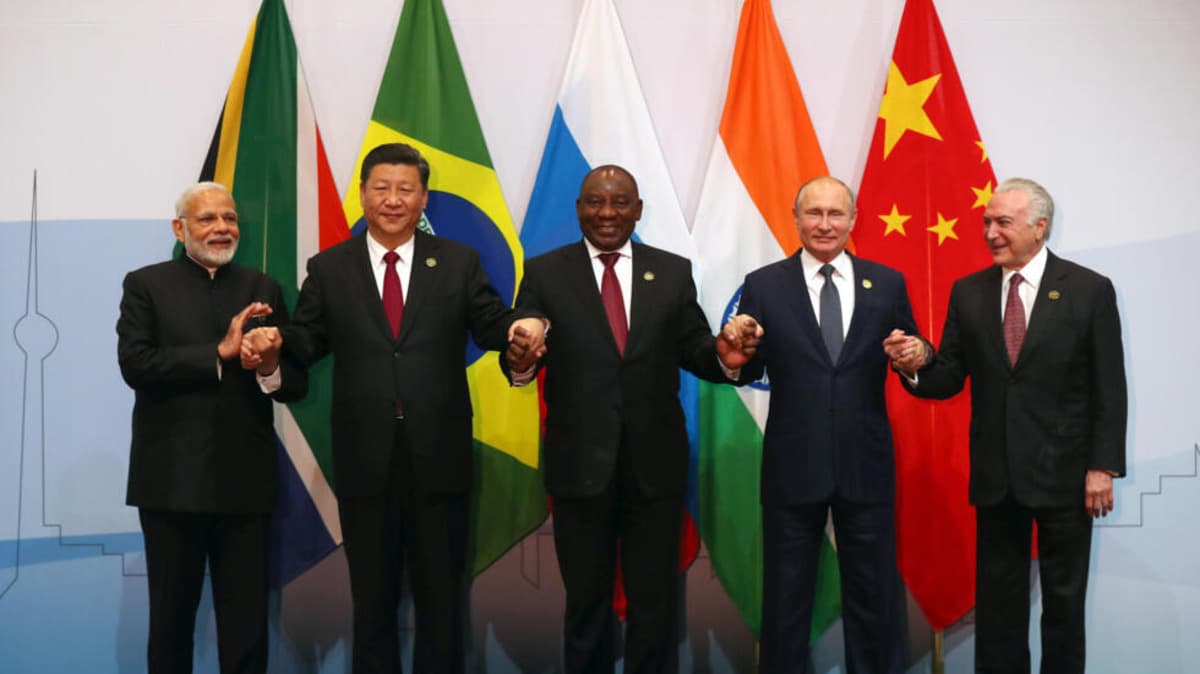
BRICS Moves Beyond the Dollar as Geopolitical Tensions Escalate
The BRICS alliance—Brazil, Russia, India, China, and South Africa, alongside new members Egypt, Ethiopia, Iran, the UAE, and Indonesia—is moving toward adopting domestic currencies for trade, which could reduce the US dollar’s share to as low as one-third.

Local Currencies Surge in BRICS Deals
Reports show that around 65% of BRICS trade now uses local currencies. Russian Foreign Minister Sergey Lavrov, in an April 28, 2025, interview, stated that 90% of Russia’s 2024 BRICS trade settlements used national currencies, per TASS.
With the 2025 trade statistics and data unavailable, the 65% figure appears to be an estimate based on past years.
Also read: De-Dollarization Isn’t Just Talk Anymore — The Numbers Are Showing It
The change is supported by initiatives like the 2024 Kazan Summit’s Trans-Border Payment Initiative, towards payments resilient to systemic crises. Brazil’s 2025 BRICS presidency is centered around economic integration
With plans for digital currency launches by Russia in 2025, China and India are expected to further reduce reliance on the dollar-based SWIFT system.
Trump’s Tariffs Threaten BRICS’ Bold Move
Geopolitical tensions, specifically Western sanctions against Russia, are a key driver of this de-dollarization effort, as detailed in a December 2023 Carnegie Endowment report.
The US dollar, which is used in 88% of global transactions in 2022 as stated by the Bank of International Settlements, now faces growing challenges as it’s being pushed aside.
Yet, internal divisions remain, which could affect the proposed transition, with India’s Reserve Bank Governor Shaktikanta Das stating in January 2024 that India is not pursuing de-dollarization. External factors, including US President Trump’s January 2025 threat of 100% tariffs on BRICS nations exploring alternatives, further complicate the decision.
Also read: As Wall Street Burns, Bitcoin Soars — Is Crypto the New Safe Haven?
The Peterson Institute for International Economics (March 2025) projects that such tariffs could reduce global growth and increase inflation across the globe.
BRICS Pay: A Step Toward Trade Revolution?
Economic differences and rivalries, such as the China-India tensions, negatively affect progress. Brazil also rejected a shared BRICS currency in February 2025, favoring local currency payments.
Despite these challenges, initiatives like BRICS Pay show sustained efforts and commitment.
While de-dollarization could potentially remodel global trade, its success depends on overcoming internal tensions and external pressures.


