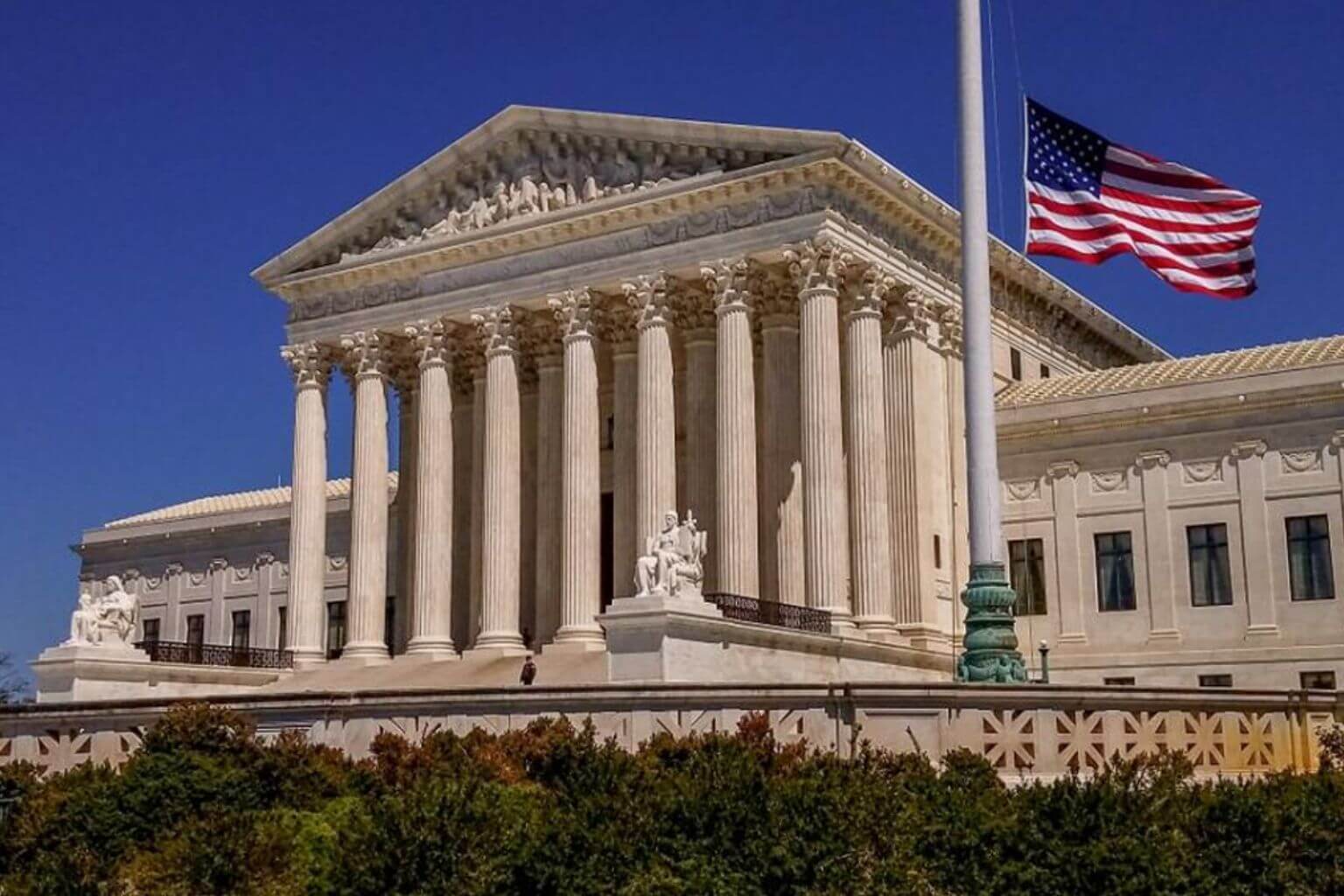
After Weeks of Silence, Supreme Court Could Rule on Trump Tariffs Today
The US Supreme Court is scheduled to return to the bench Friday at 10 a.m. ET, and financial markets are on alert for a ruling on the Trump tariffs that could redefine the legal boundaries of presidential tariff authority.
The case drawing attention, Learning Resources, Inc. v. Trump, challenges whether President Donald Trump lawfully relied on the International Emergency Economic Powers Act (IEEPA) to impose sweeping import duties tied to declared economic emergencies. The outcome could affect a tariff framework that has shaped US trade policy for more than a year.
Decision Timing Still Uncertain
Although Friday is one of the Court’s designated opinion days, the justices do not disclose in advance which rulings will be issued. Additional decision dates are slated for early next week, including Tuesday — the same day as President Trump’s State of the Union address — and Wednesday, Feb. 25.
That uncertainty has kept investors cautious since late last year, when the case first moved toward a decision. Market participants broadly expect volatility, regardless of which direction the Court ultimately takes.
Strategists at JPMorgan outlined several potential paths: a full endorsement of the administration’s tariff authority, a sweeping rejection, or a more nuanced ruling that could delay practical consequences until after the midterm elections.
According to their analysis, the S&P 500 could move sharply in either direction — potentially falling 1% or rising as much as 2% — depending on the details.
Billions In Tariff Revenue Hang In The Balance
The stakes extend well beyond short-term market moves. Since the start of 2025, the federal government has collected more than $260 billion in tariff revenue. The Tax Foundation estimates that roughly 55% — about $130 billion — stems from the tariffs now under scrutiny.
If the Supreme Court determines that the administration exceeded its authority and mandates refunds, businesses that paid those duties could face significant accounting and operational disruptions.
During oral arguments, Justice Amy Coney Barrett acknowledged the complexity of unraveling such payments, noting that the process “could be a mess.”
However, the Court also has the option to invalidate the tariffs going forward without requiring repayment, or to leave the existing framework intact.
President Trump has signaled that he would pursue alternative legal tools if the ruling limits his current approach. In recent remarks, he said his administration would “figure something out” should the decision go against it, though he suggested any replacement strategy might lack the appeal of the present system.
Constitutional Questions At The Core
At the heart of the dispute is whether IEEPA — a statute traditionally used to restrict financial transactions and freeze assets during national emergencies — authorizes the imposition of broad import taxes.
Several justices appeared doubtful during arguments that the law stretches that far. Chief Justice John Roberts underscored that tariffs function as taxes imposed on Americans, historically an area reserved for Congress.
He questioned whether executive emergency powers could override what he described as a foundational legislative authority: the power to tax.
Observers remain divided over how the Court will reconcile those constitutional considerations with the economic consequences of its ruling. Amy Howe of SCOTUSblog suggested the delay in issuing a decision could indicate ongoing deliberations over the scope of the opinion, including whether to address refund obligations or defer that issue to lower courts.
“The court acts on its own timeline,” Howe wrote, noting that complex cases often require extended drafting and internal negotiation.
Trade Policy’s Next Chapter
Even once the Court speaks, the debate over executive trade powers is unlikely to end. With midterm elections approaching and tariff policy already evolving in recent months, Congress could reassert itself, or the administration could pivot to different statutory authorities.
For now, companies, policymakers and investors remain focused on the immediate question: whether the legal foundation supporting a major portion of US tariff revenue will stand — or be reshaped by the nation’s highest court.
Whatever the outcome, analysts agree on one point: markets are poised to react swiftly.