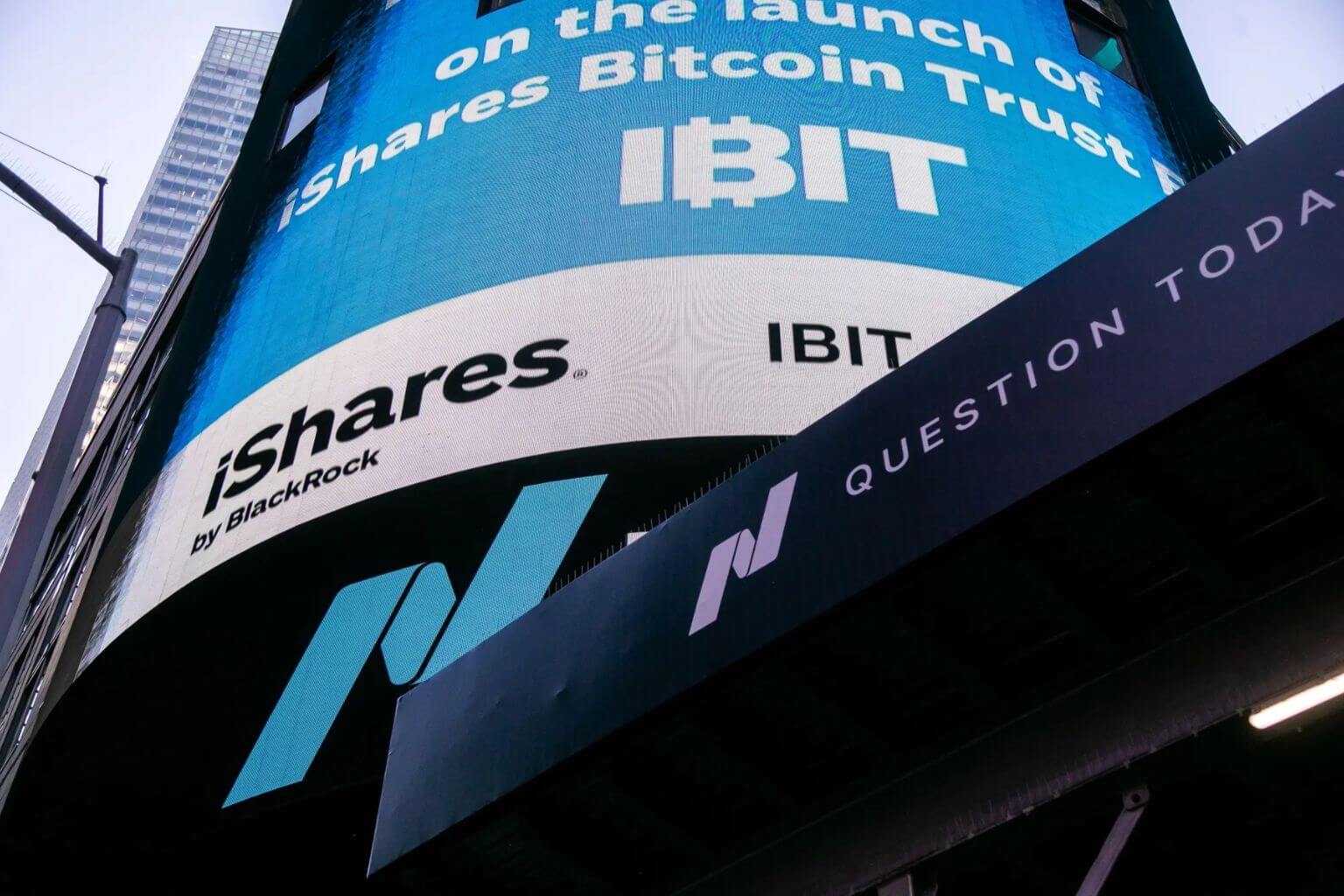
BlackRock’s IBIT Sees $231M Inflow Recovery as “Hedge Fund Blowup” Rumors Swirl
BlackRock’s iShares Bitcoin Trust (IBIT) staged a defiant recovery on Friday, logging $231.6 million in net inflows just 24 hours after a chaotic sell-off that sent Bitcoin’s price reeling to the $60,000 mark.
The rebound follows a grueling 48-hour stretch for the world’s largest spot Bitcoin ETF, which saw a combined $548.7 million exit the fund on Wednesday and Thursday.
As the dust settles on one of the most volatile weeks of 2026, analysts are divided over whether the turbulence was the result of a coordinated market panic or the spectacular collapse of a single massive player.
The Thursday “Crush”
The week reached a fever pitch on Thursday when IBIT “crushed its daily volume record,” according to Bloomberg ETF analyst Eric Balchunas. A staggering $10 billion worth of shares changed hands as the fund’s price plummeted 13%—its second-worst daily performance since its January 2024 inception.
Despite the carnage, institutional appetite appeared to return on Friday. IBIT’s price bounced back by 9.92%, closing at $39.68. This recovery helped anchor a broader industry turnaround, with preliminary Farside data showing total inflows across all nine U.S. spot Bitcoin ETFs reaching $330.7 million.
A “Smoking Gun” or Market Noise?
While the price action was visible to all, the catalyst remains a subject of intense debate in the derivatives market. IBIT options volume exploded to a record 2.33 million contracts during the crash, with buyers paying a historic $900 million in premiums in a single day.
One theory gaining significant traction on social media suggests the volatility wasn’t just “retail panic.” Market analyst Parker, in a post on X, alleged the activity stemmed from a major hedge fund blowup.
“Systematic selling across the majors yesterday [was] probably tied to margin calls, especially in the ETF with the highest crypto exposure, IBIT,” said Shreyas Chari, director of trading at Monarq Asset Management.
“Rumors swirled of a short options entity that had to sell the underlying far more aggressively after $70k and then $65k broke.”
According to this theory, the unnamed fund had used borrowed money to double down on “out of the money” call options. When Bitcoin failed to rally and instead broke key support levels, the fund was allegedly forced to dump massive amounts of spot IBIT shares to meet margin calls, fueling the record-breaking $10 billion volume.
The Counter-Argument: A Messy, Panicked Market
Not everyone is convinced of the “lone fund” narrative. Tony Stewart, founder of Pelion Capital and an options specialist, argues that the data points toward a broader, more decentralized panic.
Citing Amberdata, Stewart noted that while the $900 million in premiums was staggering, at least $150 million of that came from traders desperately buying back “put” options to cut their losses. He characterized the rest of the volume as a collection of smaller, panicked trades rather than a single entity’s liquidation.
“This [theory] is inconclusive from the options standpoint,” Stewart remarked on X. “It also doesn’t seem enough in size.”


