
World’s WLD Jumps 14% After Report Links Project to OpenAI’s Bot-Fighting Plans
World Network’s WLD token surged more than 14% in the past 24 hours after a report linked the crypto project to broader efforts by OpenAI to combat bots and AI-generated accounts online.
The rally briefly pushed WLD ahead of most major cryptocurrencies, underscoring how sensitive the token remains to developments tied to artificial intelligence and digital identity.
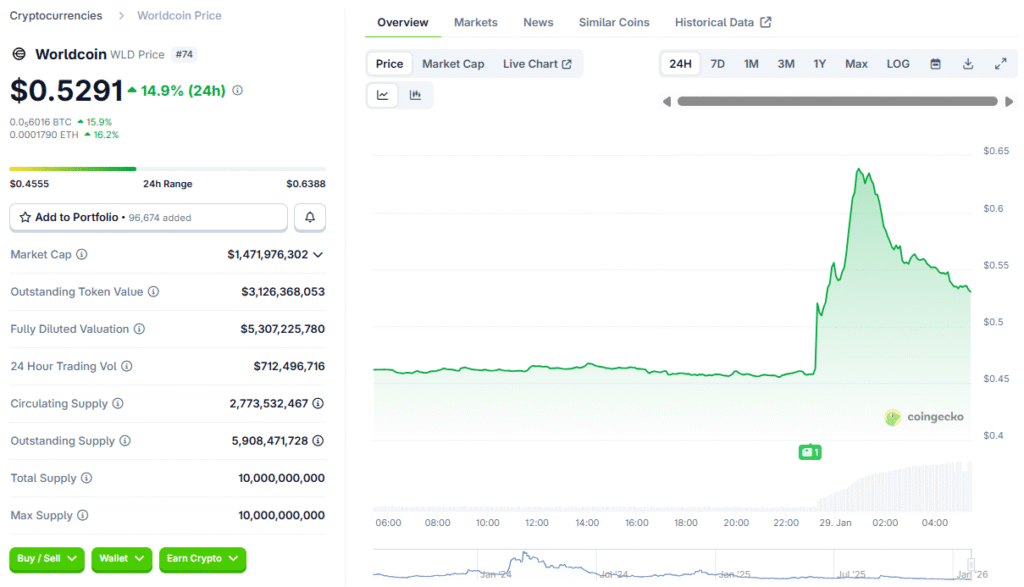
WLD price (Source: CoinGecko)
The price move followed a report by Forbes, which said OpenAI CEO Sam Altman is exploring the idea of a “biometric social network” aimed at helping online platforms verify real human users.
While the article did not confirm any formal collaboration, markets reacted swiftly to the implication that World Network’s technology could align with OpenAI’s long-term goals.
A Push Toward Biometric Verification
According to people familiar with the matter cited by Forbes, OpenAI has considered multiple approaches to human verification, including the use of existing biometric tools such as Apple Face ID, as well as World Network’s Orb device.
The Orb scans a person’s iris to generate a unique identifier intended to distinguish humans from bots without revealing personal details.
The report framed those discussions as exploratory rather than definitive, but the idea of tying biometric verification to online identity resonated with investors.
As generative AI tools increasingly flood social media with spam, impersonation, and synthetic engagement, the challenge of verifying “proof of personhood” has become more urgent for platforms and regulators alike.
World Network’s Origins and Core Technology
World Network, formerly known as Worldcoin, was co-founded by Altman and raised $135 million in a token sale last year backed by venture capital firms including a16z and Bain Capital Crypto.
The project’s central product is World ID, a decentralized identity system designed to confirm that a user is a real, unique human without requiring traditional personal information.
At the center of that system is the Orb, a custom-built biometric device deployed in various regions worldwide. The project says iris scans are converted into cryptographic representations and processed in a privacy-focused manner, allowing users to authenticate across platforms without repeatedly sharing sensitive data.
Regulatory Scrutiny and Ongoing Controversy
Despite its ambitions, World Network has faced sustained criticism and regulatory pushback.
Authorities in Kenya temporarily suspended the project over concerns related to biometric data collection, while regulators in the United Kingdom have questioned how personal data is processed and safeguarded under existing privacy laws.
Privacy advocates have raised alarms about the risks of collecting biometric data at scale, arguing that unlike passwords or emails, biometric identifiers cannot be changed if compromised.
World Network has repeatedly said its system is designed to minimize data retention and centralization, but skepticism remains strong in parts of the crypto and policy communities.
Markets React Before Confirmations
The surge in WLD came despite the absence of any confirmation that OpenAI plans to integrate World Network’s technology into its products or services.
Still, traders appeared to price in the possibility that World ID could play a role in future anti-bot or verification infrastructure, particularly if large platforms adopt stronger identity checks.


