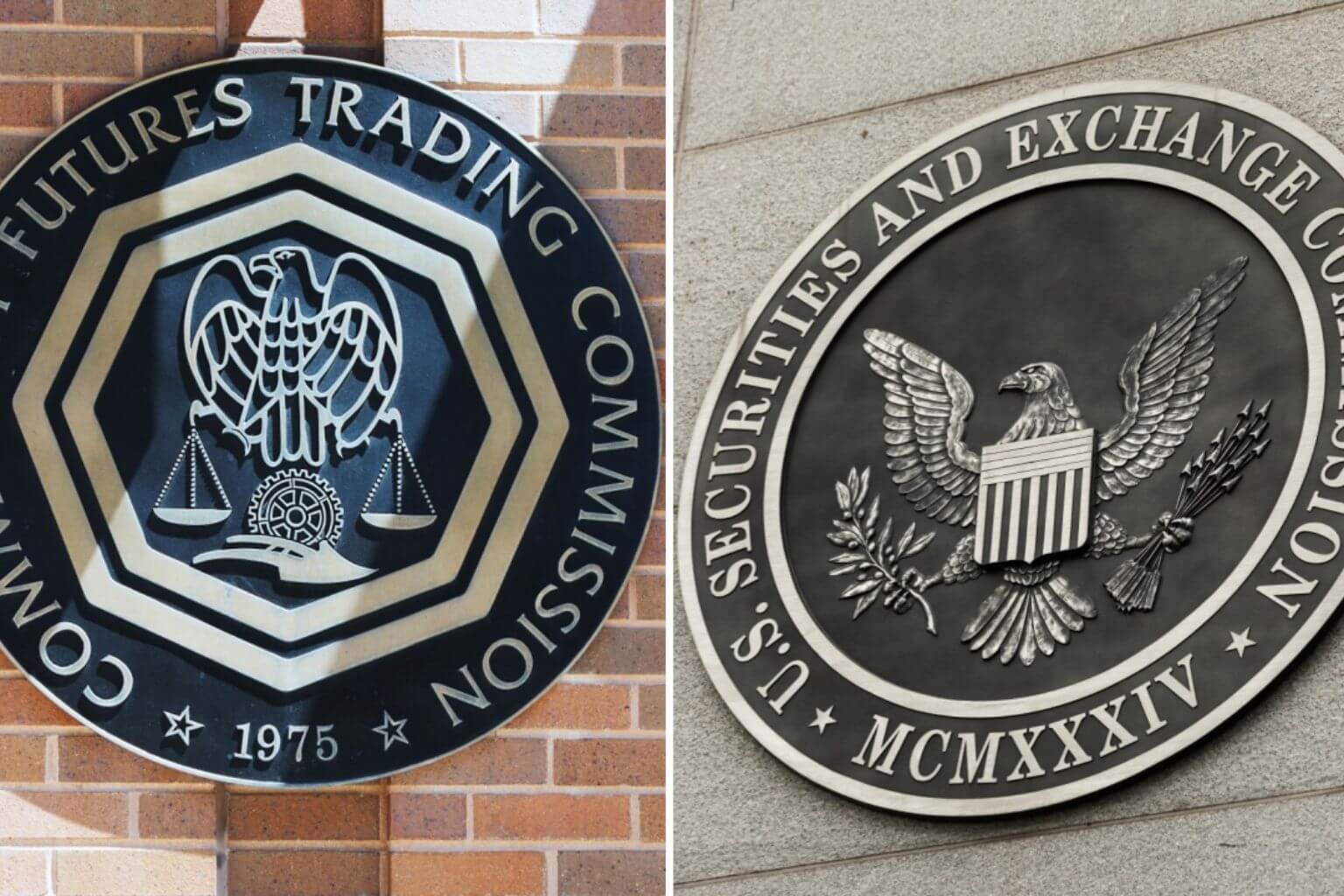
SEC, CFTC Reveal Plan to Clean Up Confusion in U.S. Crypto Regulation
The U.S. Securities and Exchange Commission (SEC) and the Commodity Futures Trading Commission (CFTC) are preparing to present a united regulatory front as they work to advance President Donald Trump’s expansive pro-crypto agenda.
The two agencies announced Thursday that SEC Chair Paul Atkins and newly appointed CFTC Chair Michael Selig will host a joint event on Tuesday to highlight their push toward regulatory “harmonization” — a long-requested shift that could significantly reshape U.S. oversight of digital assets.
Atkins and Selig said the initiative aims to eliminate the maze of overlapping but inconsistently applied rules that have frustrated crypto firms for years.
“For too long, market participants have been forced to navigate regulatory boundaries that are unclear in application and misaligned in design, based solely on legacy jurisdictional silos,” the two chairs said in a joint statement.
They added that the upcoming gathering at CFTC headquarters will build on “broader harmonization efforts to ensure that innovation takes root on American soil, under American law, and in service of American investors, consumers, and economic leadership.”
A New Regulatory Partnership Under New Leadership
Tuesday’s event marks the first major public collaboration between Atkins and Selig since the latter’s elevation to the CFTC’s top job last month.
Selig, previously a senior architect of the SEC’s crypto policy framework, replaced interim chair Caroline Pham after months of internal jockeying and has already unveiled what he calls a “future-proof” digital asset strategy.
The relationship between Atkins and Selig is deeply established — Selig previously served under Atkins at the SEC — and industry analysts say that familiarity may help accelerate the alignment of the two agencies’ historically fragmented approaches.
This will not be the first time the SEC and CFTC have signaled a thaw in their longstanding turf tensions.
Last September, Atkins and Pham jointly declared that the inter-agency infighting had ended, issuing a harmonization statement and holding a roundtable on prediction markets and decentralized finance. But the latest announcement carries far greater weight given the Trump administration’s explicit directive to consolidate U.S. crypto oversight and remove regulatory uncertainty.
Industry Focus Turns to Congress — and the CLARITY Act
While the SEC and CFTC attempt to synchronize their policy machinery, lawmakers in the Senate are racing — slowly — to advance a comprehensive crypto market structure bill that would formally define the roles of both agencies.
The legislation, widely referred to as the CLARITY Act, is considered essential for resolving years of jurisdictional ambiguity that have contributed to enforcement tensions and inhibited domestic innovation.
Yet both Senate Banking and Senate Agriculture Committees have struggled to move their respective drafts toward markup, as bipartisan negotiations repeatedly stall.
Earlier this month, a Senate Banking draft rattled the industry when it introduced new restrictions on stablecoin yields and decentralized finance, prompting Coinbase — one of the country’s most influential crypto lobbyists — to withdraw its support.
That decision forced the committee to delay its markup, adding another complication to an already fraught legislative calendar.
Senate Agriculture Republicans released their own draft on Wednesday in advance of a planned markup next Tuesday, but the proposal did not secure backing from committee Democrats, signaling further revisions ahead.
Both committees must ultimately pass versions of the bill before the legislation moves to the Senate floor, where the texts will be merged and put to a final vote.
Trump’s Expansive Crypto Mandate Looms Large
Behind the scenes, the SEC and CFTC are each working to implement Trump’s sweeping vision for U.S. digital asset regulation — a vision that includes stronger legal clarity, incentives for domestic crypto development, and a reversal of several enforcement-heavy precedents set during previous administrations.
Tuesday’s event is expected to begin at 10 a.m. Eastern with introductory statements from both chairs, followed by a joint panel discussion that will outline priorities for cross-agency alignment and the steps needed to support innovation without compromising investor protection.
As Congress struggles to finalize legislation and industry pressure mounts for clearer rules, Atkins and Selig are positioning their partnership as a cornerstone of America’s new digital asset era. Whether harmonization will arrive quickly — and whether it will meet industry expectations — remains an open question. But for the first time in years, the two most powerful market regulators in Washington appear ready to walk in lockstep toward a unified crypto framework.