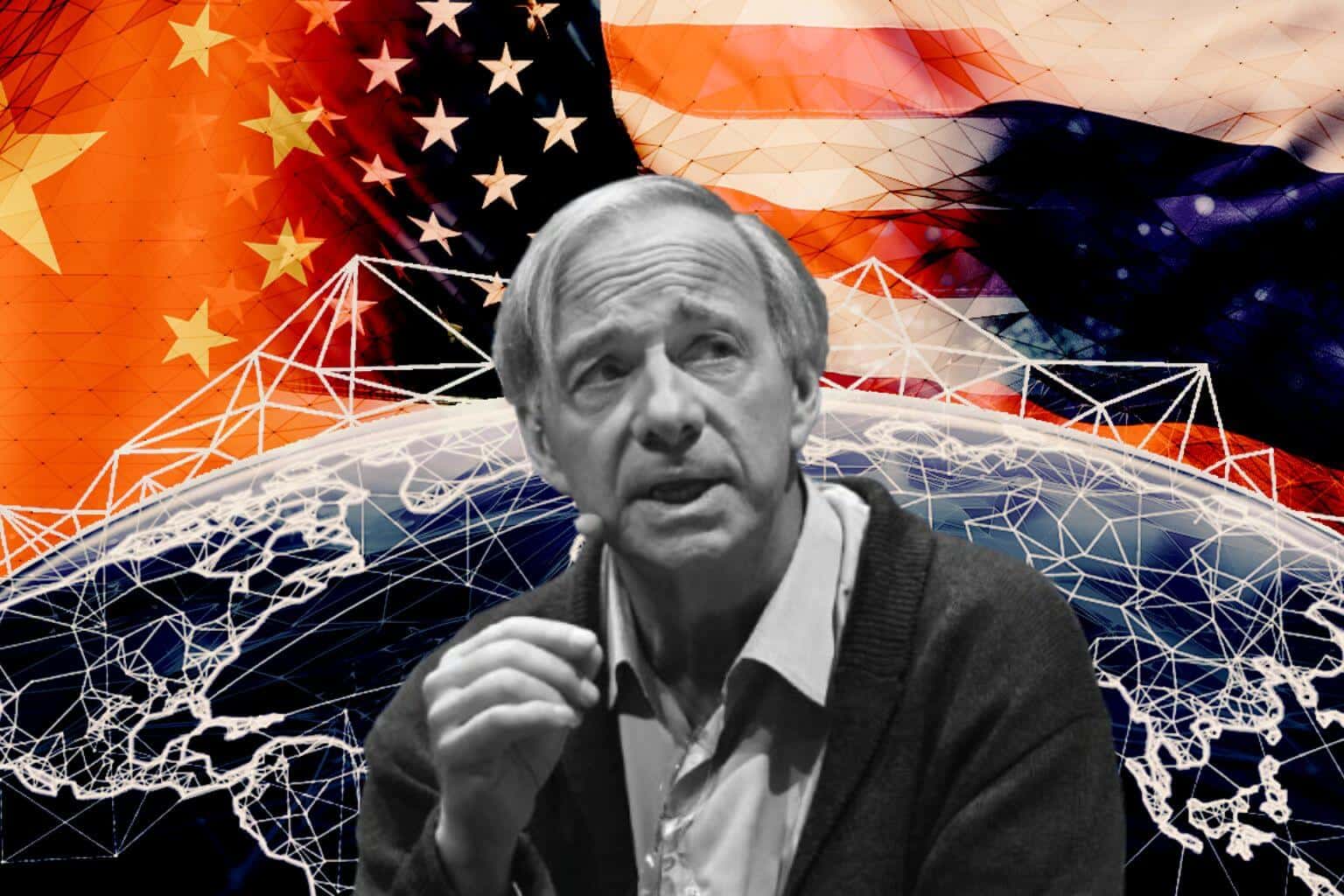
“It’s Now Happening”: Ray Dalio Says Monetary, Political, and Geopolitical Orders Are Failing
Bridgewater Associates founder Ray Dalio has issued one of his starkest warnings yet about the state of the global financial system, arguing that the existing fiat monetary order is breaking down as geopolitical distrust rises and the U.S. continues to produce debt at historic levels.
In a series of posts shared in the past 24 hours, Dalio said central banks are no longer treating fiat currencies and sovereign debt—particularly U.S. dollar-denominated debt—as reliable stores of wealth in the way they once did.
That shift, he said, reflects a deeper systemic pattern he has long described as “The Big Cycle,” a framework charting the rise and decline of major powers across centuries.
“When I say that the monetary order is breaking down, I mean that fiat currencies and debt as a storehold of wealth are not being held by central banks in the same way they were in the recent past,” Dalio wrote. “That reality is largely being driven by the same forces that drive The Big Cycle.”
Growing Distrust Between the U.S. and Foreign Holders of Its Debt
Dalio argues that the stability of the U.S. dollar system increasingly depends on a fragile relationship: America produces large volumes of debt, while foreign governments—especially in Asia and the Middle East—historically buy and hold that debt.
Today, that balance is fraying.
“We know that both the holders of U.S. dollar-denominated debt (other countries) and those who need it (the U.S.) are worried about each other for geopolitical reasons,” Dalio said. “That becomes a big problem when you’re producing a lot of debt — which the U.S. continues to do.”
Meanwhile, China has continued reducing its U.S. Treasury exposure, and geopolitical tensions—from trade restrictions to military posturing—have accelerated a move among several large economies to diversify away from the dollar where possible.
Dalio: All Three Global Orders Are “Breaking Down”
For additional context, Dalio linked his comments to his broader thesis on historical cycles of power, which he laid out in his book Principles for Dealing with The Changing World Order and an accompanying video.
In the earlier post, he warned that the world is now seeing the simultaneous breakdown of the fiat monetary order, the domestic political order, and the international geopolitical order.
“It’s now happening,” he wrote. “The existing fiat monetary order, the domestic political order, and the international geopolitical order are all breaking down, so we are at the brink of wars.”
His framework draws on research tracing the rise and fall of major empires—including the Dutch, British, and American systems—alongside China’s historical dynastic cycles. In the video, Dalio outlined the key forces he uses to measure the strength of an empire, including innovation, education, competitiveness, trade dominance, military capability, and currency reserve status.
Dalio’s research shows that empires typically follow 250-year arcs with 10–20-year turbulent transition periods, often marked by internal conflict, wealth inequality, money printing, and external wars before a new global order emerges.
Signs of a System Entering Its Late Stage
According to Dalio’s framework, the U.S. appears deep into the late-stage phase of its cycle. He described how rising debt burdens, widening wealth gaps, and political turmoil tend to coincide with the declining portion of an empire’s arc.
In those periods, he said, countries often face internal strife, eroding trust in institutions, and heightened external rivalry—all of which create pressure on the reserve currency.
“Eventually, the financial bubble bursts, which leads to the printing of money and increased internal conflict between the rich and the poor,” the transcript notes, describing a pattern observed repeatedly across centuries.
Dalio argues that current U.S. conditions increasingly fit that pattern: debt expansion, domestic polarization, and intensifying strategic competition with China.
A Warning for Policymakers
While Dalio stopped short of forecasting an imminent collapse, his tone suggested that policymakers are running out of room to maneuver. Persistently high fiscal deficits, large Treasury issuances, and softening foreign demand could create destabilizing feedback loops—especially if geopolitical tensions worsen.
Dalio has long urged governments to study past cycles and take early action to avoid repeating historical failures. But his latest comments imply that the world may already be entering the most volatile part of the transition.
“Leading powers don’t decline without a fight,” he said in the video—a point Dalio echoed as he warned that the breakdown of monetary, political, and geopolitical orders often precedes major global conflict.
As the U.S., China, and other major economies navigate this precarious period, Dalio’s message is clear: the foundations of the global order are shifting, and the risks of miscalculation are rising.