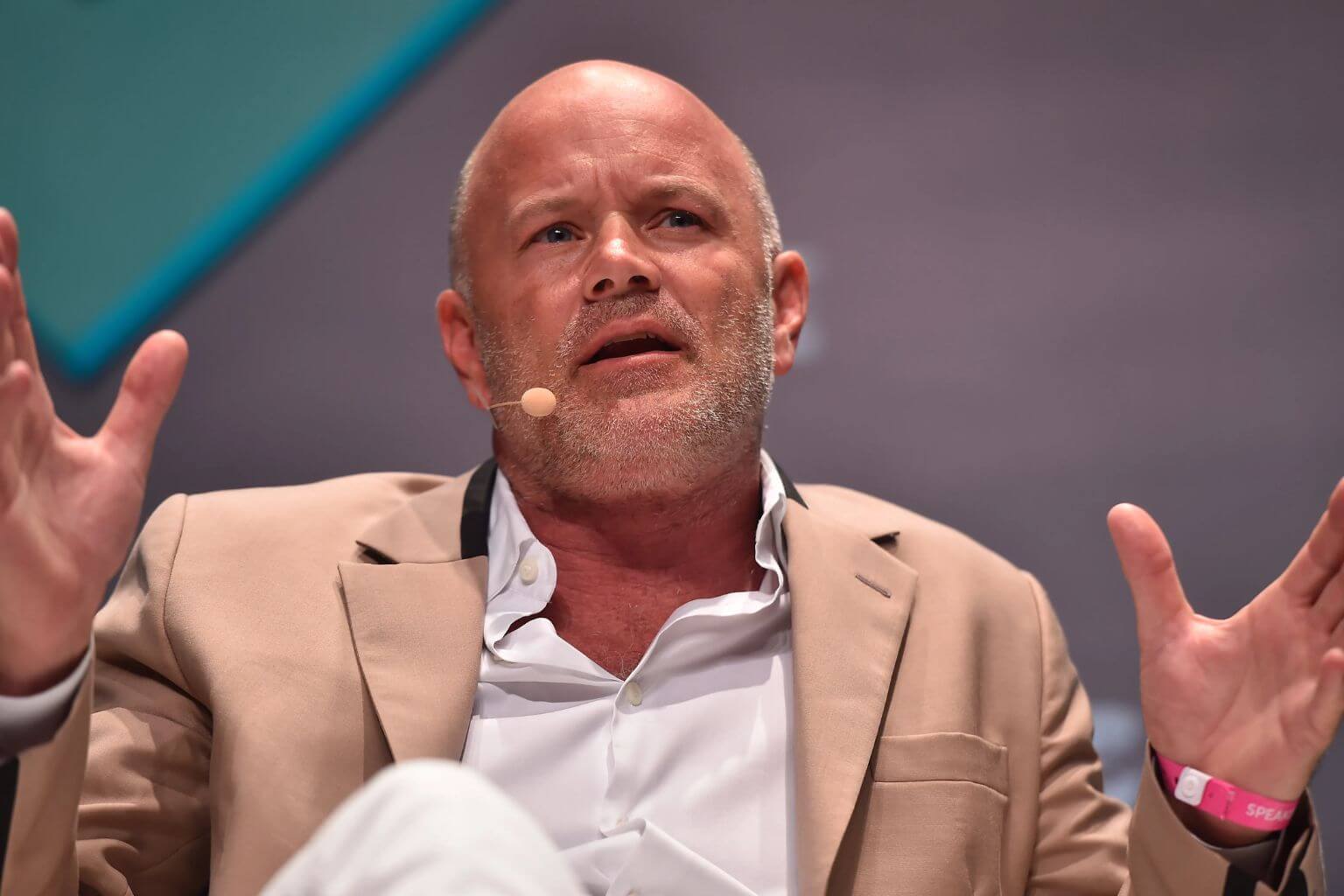
Galaxy CEO Warns Gold’s Surge Signals Faster Erosion of U.S. Reserve Currency Status
Galaxy CEO Mike Novogratz issued a sharp macro warning on Tuesday, arguing that gold’s relentless surge to new all-time highs may signal that the U.S. is losing its reserve currency status at a faster pace than policymakers acknowledge.Â
In a post on X, he said the price action has become “an accelerating†indicator of fading confidence in the dollar and long-term fiscal stability.
“The gold price is telling us we are losing reserve currency status at an accelerating rate,†the Galaxy CEO wrote. He added that the continued sell-off in long-dated U.S. Treasuries—particularly the 30-year long bond—should also be a concern.Â
Rising yields on those bonds are widely viewed as a sign that global buyers are becoming more cautious about holding U.S. debt, pushing borrowing costs higher for the government and adding pressure to an already strained fiscal outlook.
Gold’s breakout in the past few weeks has coincided with a weakening dollar as investors reassess geopolitical risk, rising deficits, and upcoming political uncertainty heading into the 2026 mid-term election cycle.
While such conditions typically benefit alternative hard assets, Novogratz noted Bitcoin has so far failed to capitalize.
Bitcoin’s Struggle to Break Higher Despite Macro Tailwinds
In the same post, Novogratz expressed frustration with Bitcoin’s muted performance even as gold and Treasuries flash signals of shifting global confidence.
“$BTC is disappointing as it is still being met with selling,†he said.
Bitcoin has struggled to reclaim the $100,000 to $103,000 range, which is an area Novogratz described as critical for resuming the broader upward trend.
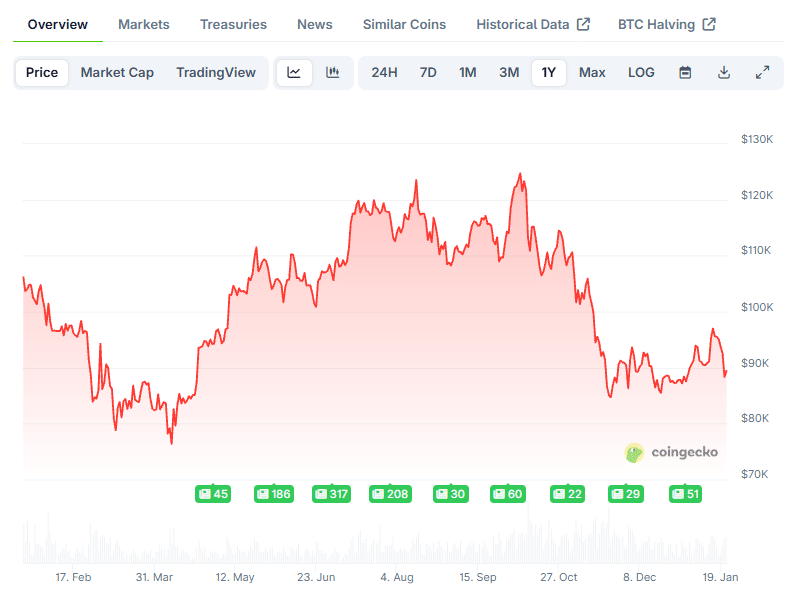
Bitcoin price performance over the past year (Source: CoinGecko)
Heavy profit-taking, miner selling, and lingering volatility from earlier liquidations have weighed on price momentum since the start of the year as well.
Despite those headwinds, Novogratz said he remains confident the breakout will come. “I will reiterate it has to take out 100–103k to regain its upward trend. I think it will in time.â€
Analysts note that while Bitcoin has historically surged when gold reaches new highs or U.S. debt markets weaken, the current consolidation phase may reflect the lingering effects of last year’s rapid institutional inflows and structural repositioning across trading desks.
Stablecoin Yield Fight Becomes a Political Roadblock: Galaxy CEO
Beyond markets, Novogratz aimed strong criticism at Washington, where lawmakers remain stuck in a deadlock over yield provisions in the emerging federal stablecoin regulatory framework.
The debate, centered on whether issuers and platforms can offer yield or rewards on stablecoin deposits, has become a major sticking point between traditional banks and crypto companies.
“The dynamics of yield in the stable coin bill are fascinating and might cost the bill,†Novogratz warned. “Banks don’t want the crypto platforms to be able to give rewards to users (Genius which is law allows that). If the bill is killed, status quo is what they seem to fear.â€
Current language in the GENIUS Act explicitly bans stablecoin issuers from offering rewards directly to holders, but does not extend this ban to third-party platforms.
Banking lobbyists have pushed back, arguing that the “loophole†gives crypto platforms a competitive advantage. Several senators in both parties have aligned with those concerns, threatening the broader negotiation process.
Risk of CLARITY Act Collapse Sparks Industry Concern
The Galaxy CEO warned that if the stablecoin yield fight derails the bill, responsibility will fall squarely on the banks backing the opposition and the lawmakers supporting them.Â
“If this is what sidetracks the market structure bill, blame will be spread on plenty but mostly the banks and the Republican and Democratic senators supporting them,†he said. “The big loser will be the US consumer.â€
Industry analysts fear that without an agreement on yield rules, the larger CLARITY Act, which would define federal oversight for stablecoins, exchanges, and digital-asset custody—could stall. The concern is mounting that Congress may miss a rare bipartisan window, leaving regulatory uncertainty in place for another year or longer.
Novogratz closed with a plea for rational compromise: “Hoping cooler heads prevail.â€
As macro pressures intensify and policy negotiations grow more fragile, crypto markets are watching both Washington and the bond market closely. The direction of each may determine whether Bitcoin’s next move is the long-awaited breakout—or another period of waiting.


