U.S. May Start Buying Bitcoin for Its National Reserve, Cathie Wood Predicts
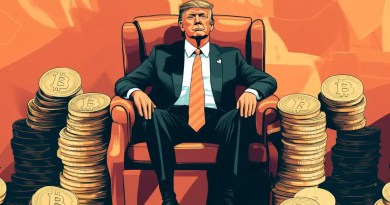
ARK Invest founder Cathie Wood believes President Donald Trump’s political calculus ahead of the 2026 midterm elections could accelerate a historic shift in U.S. crypto policy, including the federal government directly purchasing Bitcoin to bolster the newly created national strategic reserve.
Speaking on a recent episode of the “Bitcoin Brainstorm” podcast, Wood said crypto remains politically salient for the president as he works to avoid a weakened post-midterms presidency, and that this dynamic bodes well for the U.S. Bitcoin Reserve.
The reserve was created by executive order less than a week into Trump’s second term, formalizing confiscated BTC as a strategic national asset.
Wood: U.S. May Soon Buy Bitcoin for Its Strategy Reserve
While the reserve currently holds only forfeited Bitcoins — assets seized in criminal cases and pledged by Trump never to be sold — Wood argued that the administration is likely to begin outright purchases.
“It seems as though there has been reticence about actually buying Bitcoin for the strategy reserve. So far, it’s confiscated [Bitcoins],” she said. “The original intent was to own 1 million Bitcoins, so I actually think they will start buying.”
Such a move would be unprecedented for the U.S., effectively marking BTC as a strategic commodity akin to gold held at Fort Knox.
Trump’s order directed the Treasury and Commerce Departments to explore “budget-neutral” ways to expand the reserve, but no government purchases have yet taken place.
Political Incentives Driving Crypto Support
Wood suggested that Trump’s motivations are not just economic — they are deeply political.
“The most important one is that he doesn’t want to be a lame duck,” she said. “He wants to have another one or two productive years, and I think he sees crypto as a path to the future.”
She added that the crypto community was part of the reason he won the presidency, pointing to the increasingly organized political influence of the digital asset sector.
During the last election cycle, crypto-aligned PACs such as Stand With Crypto poured millions into races nationwide, while high-profile executives — including Wood herself — backed Trump directly.
Crypto firms have also been deeply involved with the administration.
Coinbase, Tether, and Ripple are among the companies helping to fund construction of the new White House ballroom, and top executives have offered policy recommendations to the president’s inner circle.
A Crypto-Forward Presidency
Since taking office, Trump has pushed a sweeping crypto agenda.
He signed two executive orders: one to create the Bitcoin strategic reserve and another to establish a federal crypto stockpile managed by the Treasury Department. He also formed a high-level working group led by Special Advisor for AI and Crypto David Sacks, which released a detailed policy report this summer.
The report urged Congress to grant the Commodity Futures Trading Commission explicit authority to regulate spot markets for non-security digital assets — a long-sought objective for the industry.
It also outlined how the Bitcoin reserve and federal stockpile would be governed, noting that both were initially intended to be “capitalized by forfeited digital assets.”
While those actions positioned BTC alongside traditional national assets, they stopped short of authorizing government purchases — a step Wood believes is now more likely as Trump seeks to strengthen his political standing heading into the midterms.
Policy Moves Still in Play
Beyond Bitcoin accumulation, Wood expects the administration to push for a de minimis tax exemption for small crypto transactions, removing capital gains obligations on everyday purchases. Industry advocates have long argued that such rules are essential for mainstream crypto payments.
U.S. states are also moving in parallel. Florida, Texas, and others have already introduced legislation to establish their own Bitcoin reserves or crypto stockpiles, mirroring the federal approach.
For Wood, the combination of political urgency, industry influence, and emerging state-level momentum creates a clear path forward.