
Ethereum Stablecoin Volumes Explode to $8 Trillion as On-Chain Payments Hit New Highs
Stablecoin transfer volume on Ethereum surged to a record-breaking $8 trillion in the fourth quarter of 2025, showing the network’s growing role as the backbone of on-chain global payments.
Data published Monday by Token Terminal shows the Q4 figure nearly doubled from just over $4 trillion in the second quarter, marking the largest quarterly jump in transfer activity for the tokens ever recorded on Ethereum.
“This isn’t speculation. This is global payments happening on-chain,” wrote X user BMNR Bullz in response to the data.
“This is before SWIFT-style integrations, full RWA tokenization, and institutional rails going live. The rails are already built. Adoption is catching up.”
Stablecoin Issuance Accelerates in 2025
The surge in transfer volume coincided with a sharp expansion in stablecoin supply on Ethereum.
According to data from DefiLlama, stablecoin issuance on the network climbed roughly 43% over the course of 2025, rising from $127 billion at the start of the year to $181 billion by December.
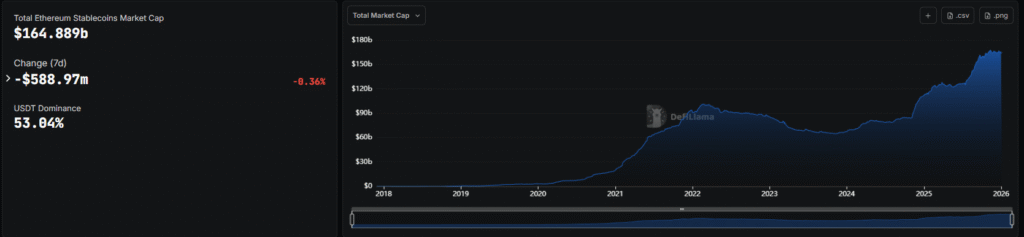
Stablecoin supply on Ethereum (Source: DefiLlama)
The growth shows Ethereum’s entrenched position as the preferred settlement layer for dollar-pegged assets used in trading, remittances, decentralized finance, and increasingly, institutional payment flows.
As issuance expands, the velocity of stablecoins on the network has followed, pushing transaction volumes to new highs.
Ethereum Activity Hits Record Levels
The $8 trillion quarterly transfer figure arrived alongside a broader surge in on-chain activity.
According to Etherscan, Ethereum’s total daily transactions reached an all-time high of 2.23 million in late December. This represents a 48% increase compared with the same period a year earlier.
Token Terminal data also shows that monthly active Ethereum addresses climbed to a record 10.4 million in December, reflecting growing participation across users, applications, and institutions.
The daily number of unique active addresses—counting wallets that sent or received transactions—crossed the one-million mark toward the end of the year as well.
Together, the figures suggest that Ethereum’s stablecoin growth is being driven by genuine network usage rather than short-term bursts of trading activity.
Analysts note that stablecoins are increasingly used as a base layer for payments, treasury management, and cross-border transfers, particularly in regions facing currency volatility or limited access to dollar liquidity.
Ethereum Maintains Lead in RWA Tokenization
Beyond stablecoins, Ethereum continues to dominate the rapidly expanding real-world asset (RWA) tokenization sector.
Data from RWA.xyz shows Ethereum accounts for around $183.2 billion of the tokenized RWA market.
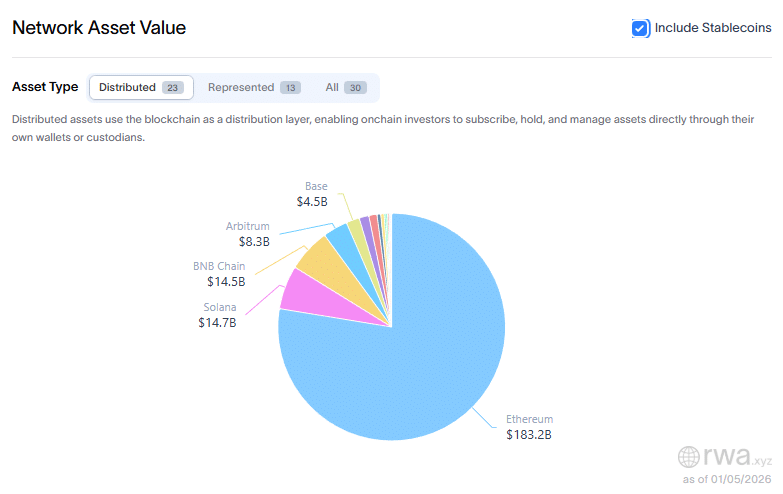
RWA breakdown by blockchain (Source: RWA.xyz)
The network’s dominance extends to stablecoin issuance as well. Ethereum currently hosts about 57% of all stablecoins in circulation, while Tron ranks second with a 27% share.
Market leadership remains firmly in the hands of Tether’s USDT, which boasts a total supply of roughly $187 billion—around 60% of the entire stablecoin market. More than half of USDT’s circulating supply resides on Ethereum as well, reinforcing the network’s position as the primary settlement layer for dollar-backed digital assets.
Payments Rails Come Into Focus
The latest data reinforces a broader narrative taking shape across crypto markets: Ethereum is increasingly functioning as financial infrastructure rather than a speculative platform.
With stablecoin volumes scaling rapidly and network activity hitting record levels, observers say the groundwork is being laid for deeper integration with traditional financial systems.
As institutional payment rails, tokenized securities, and cross-border settlement solutions continue to move on-chain, Ethereum’s role at the center of the stablecoin economy appears set to expand further—potentially pushing transaction volumes even higher in the year ahead.


