Bitcoin Breaks $90K as Markets Price In Venezuela Oil Shock
Bitcoin and the broader cryptocurrency market rallied sharply this weekend following the arrest of Venezuelan President Nicolás Maduro by U.S. forces, as traders moved to price in the potential economic fallout from one of the most dramatic geopolitical events in recent years.
Bitcoin rose nearly 5% over the past three days to trade above $90,000, according to figures cited by Forbes, while the total crypto market added roughly $100 billion in value.
The gains come as investors brace for what analysts describe as a potential oil price shock that could reverberate through global markets and reshape expectations for inflation, monetary policy, and the U.S. dollar in 2026.
The sudden move followed confirmation that U.S. forces had detained Maduro amid escalating political and economic turmoil in Venezuela.
In a statement issued shortly after the arrest, U.S. President Donald Trump said the United States would “run the country†until a “judicious transition†could be achieved, signaling a more assertive U.S. role in the oil-rich nation.
Oil Shock Looms Over Global Markets
At the center of the market reaction is Venezuela’s vast oil sector, which holds some of the world’s largest proven crude reserves.
Trump later outlined plans to seize control of those reserves and encourage U.S. energy companies to invest billions of dollars into Venezuelan production. Analysts argue that such a move, if executed swiftly, could flood global markets with additional supply.
Equity fund manager Grant Cardone told Forbes that the impact could be immediate. “U.S. oil prices should be sub $50 a barrel by Monday opening,†Cardone said, pointing to the prospect of sharply lower energy costs.
Some market watchers estimate the broader dislocation across energy, currency, and equity markets could amount to a $17.3 trillion oil price shock.
While such a figure remains speculative, the possibility alone has been enough to shift risk sentiment, particularly in crypto markets that tend to react quickly to macro uncertainty.
Inflation, Dollar Pressure, and Bitcoin’s Appeal
Lower oil prices typically translate into reduced inflationary pressure, both in the U.S. and globally.
For Bitcoin investors, that creates a complex but potentially favorable backdrop. On one hand, easing inflation could reduce the urgency for aggressive interest rate cuts. On the other, a sharp repricing of energy markets and increased geopolitical risk could undermine confidence in fiat currencies, including the U.S. dollar.
That tension has historically benefited Bitcoin, which many investors view as a hedge against currency debasement and systemic shocks. The rally above $90,000 suggests traders are positioning for a scenario in which dollar volatility and geopolitical uncertainty outweigh the dampening effect of lower inflation.
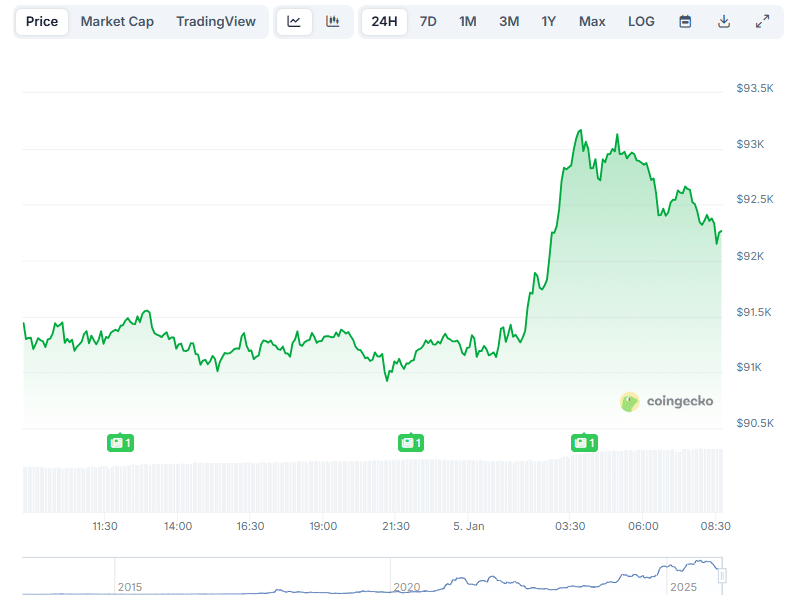
BTC price (Source: CoinGecko)
The broader crypto market has followed Bitcoin higher, reflecting renewed risk appetite as well as speculative positioning around potential policy shifts.
Trump’s media company has also teased an unspecified crypto surprise, adding another layer of intrigue to an already volatile news cycle and fueling short-term bullish sentiment.
A Rapidly Evolving Situation
Despite the market’s upbeat reaction, analysts caution that the situation remains highly fluid. The logistics of controlling Venezuela’s oil infrastructure, the response from OPEC members, and potential retaliation from geopolitical rivals could all alter the outlook in the coming weeks.
Still, the immediate response shows how sensitive crypto markets have become to global political developments. Bitcoin’s swift climb and the $100 billion surge in total crypto market capitalization highlight the asset class’s growing role as a macro barometer during periods of uncertainty.
As traders digest developments in Venezuela and await further clarity from Washington, markets are likely to remain volatile.
For now, Bitcoin’s move above $90,000 signals that investors see opportunity — or protection — in crypto as the world adjusts to a rapidly changing geopolitical and economic landscape.


