Suspicious Polymarket Bets Nailed Maduro’s Arrest Hours Before It Happened
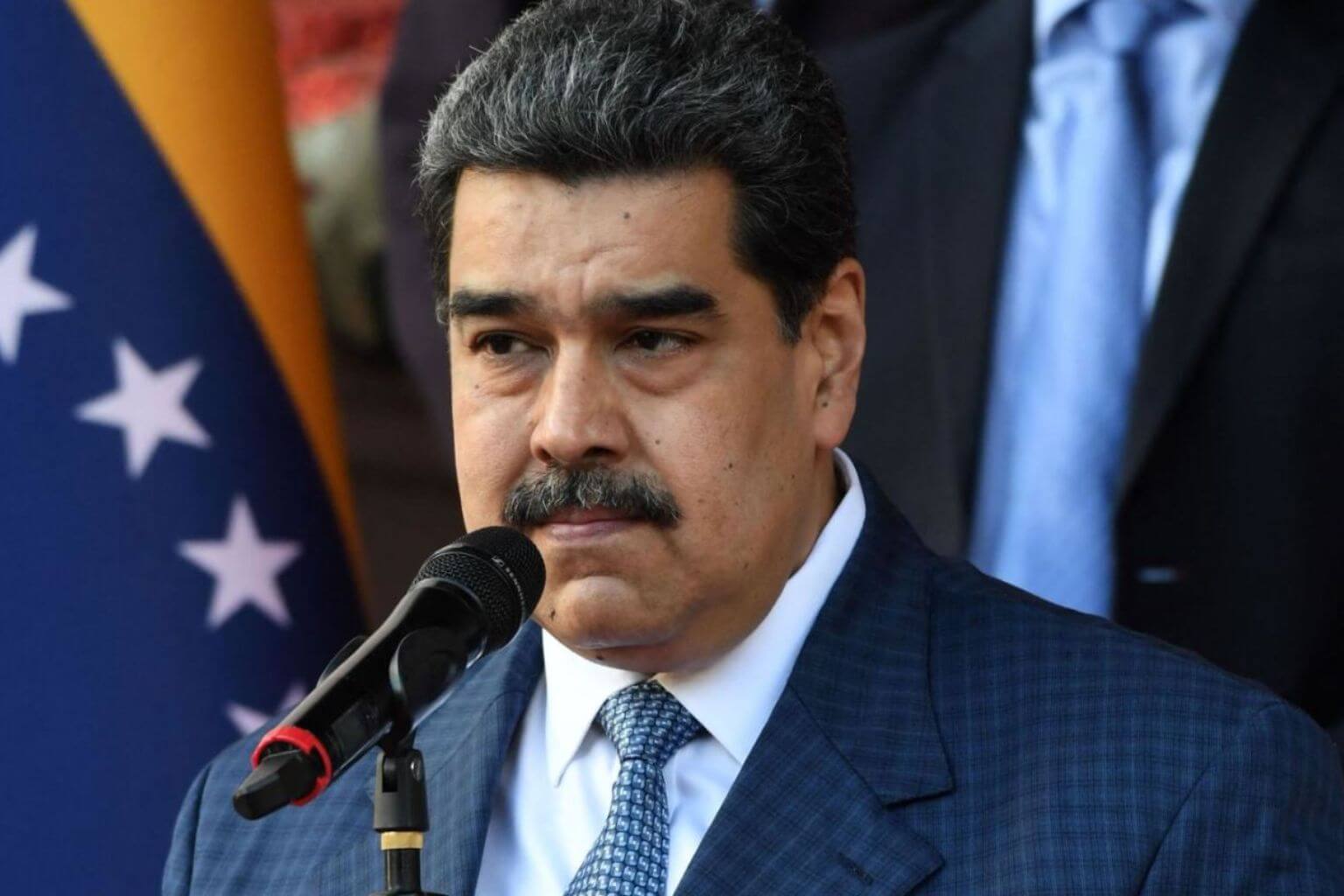
A cluster of suspicious bets on Polymarket is drawing scrutiny after three newly created wallets wagered heavily on Venezuelan President Nicolás Maduro being removed from office just hours before his dramatic capture by U.S. forces—earning a combined profit of more than $630,000.
Blockchain analytics firm Lookonchain flagged the activity on Sunday, describing it as a “clear case of insider trading.”
According to the firm, the three wallets were created and pre-funded days in advance, then lay dormant until shortly before Maduro’s arrest, when they placed large, directional bets on outcomes tied exclusively to Venezuela and Maduro. None of the wallets had a history of betting on unrelated markets.
One wallet, identified as 0x31a5, invested roughly $34,000 and walked away with $409,900 in profit. A second wallet, 0xa72D, turned a $5,800 stake into $75,000, while a third account, SBet365, netted $145,600 from a $25,000 bet.
All three accounts placed their wagers within hours of the arrest, Lookonchain said, and showed no activity before or after the Venezuela-related markets.
The timing has fueled allegations that the traders had advance knowledge of a closely guarded U.S. military and intelligence operation—an episode that has sent shockwaves through both geopolitical circles and the fast-growing world of crypto-based prediction markets.
A Market Built on Information—And Its Abuse
Polymarket allows users to trade on the probability of real-world events, from elections to geopolitical outcomes, using blockchain-based smart contracts. The platform has surged in popularity over the past year as traders seek exposure to news-driven volatility outside traditional financial markets.
But the Maduro bets highlight a core vulnerability: prediction markets are only as fair as the information available to participants. When traders act on non-public intelligence—particularly related to national security—the line between savvy speculation and illegal insider activity becomes dangerously thin.
While Polymarket positions itself as a neutral venue and typically warns users against trading on material non-public information, enforcement remains challenging. Transactions are pseudonymous, global, and often routed through self-custodied wallets, complicating oversight even when suspicious patterns are publicly visible on-chain.
The episode echoes past controversies involving prediction markets, including wagers placed ahead of election calls or court rulings that later raised questions about leaks and privileged access.
In this case, the magnitude and precision of the bets—combined with their exclusive focus on Maduro—have intensified calls for clearer rules and stronger monitoring.
Maduro’s Capture Shocks Markets—and Traders Cashed In
The bets coincided with one of the most consequential foreign policy actions of Donald Trump’s second term.
Speaking from his Mar-a-Lago estate in Florida, Trump confirmed that U.S. forces had captured Maduro in a nighttime operation near Caracas and said Washington would temporarily administer Venezuela until a leadership transition could be organized.
“We’re going to run the country until such time as we can do a safe, proper and judicious transition,” Trump told reporters, adding that U.S. oil companies would eventually be deployed to repair Venezuela’s crippled energy infrastructure, even as an embargo on Venezuelan oil remains in effect.
According to Trump, Maduro and his wife, Cilia Flores, were taken into U.S. custody without American casualties and are being transported to New York to face indictments related to alleged drug trafficking, weapons charges, and conspiracy offenses.
U.S. Attorney General Pam Bondi said the charges include narco-terrorism conspiracy and possession of machine guns and destructive devices.
The operation, detailed by Joint Chiefs Chairman Dan Caine, involved more than 150 aircraft, including F-22s, F-35s, F-18s, and B-1 bombers, as well as drones and helicopter units. Intelligence work stretched back months, with CIA teams monitoring Maduro’s movements, according to officials familiar with the planning.
Fallout in Caracas—and on Capitol Hill
The arrest has plunged Venezuela into further uncertainty. Vice President Delcy Rodríguez denounced the operation as a “kidnapping” and vowed resistance, while smoke and explosions were reported near Fort Tiuna, the country’s main military garrison, during the overnight assault.
International reaction was swift. Russia condemned the operation as an act of armed aggression and called for restraint, while Colombia’s President Gustavo Petro urged an emergency meeting of the United Nations Security Council. Trump allies, including Argentina’s President Javier Milei, praised the move.
In Washington, lawmakers split along familiar lines. Senate Democratic Leader Chuck Schumer labeled Maduro an illegitimate dictator but warned that launching military action without congressional authorization was “reckless.” Republican Senate Majority Leader John Thune called the capture “an important first step” and said he expected further briefings from the administration.
Trump dismissed criticism, arguing that involving Congress would risk leaks. “They knew we were coming at some point,” he said, referencing the visible buildup of U.S. naval forces in the region.


