
Inflation Check Looms: Markets Brace for First CPI Read Since US Shutdown
US inflation data due for release Thursday is expected to show that price pressures remained above the Federal Reserve’s 2% target in November, marking the final major economic report published on an altered schedule following this year’s prolonged government shutdown.
The November Consumer Price Index (CPI) report is scheduled for release at 8:30 a.m. ET and is forecast to show headline inflation rising 3.1% year over year, according to Bloomberg consensus estimates. Core CPI, which strips out food and energy prices and is closely monitored by policymakers, is also expected to come in at 3.1%.
If confirmed, the data would represent a slight uptick from September, the most recent month with official inflation figures, when both headline and core CPI rose 3% from a year earlier.
First Inflation Read Since September
Thursday’s report will be the first official update since September after the Bureau of Labor Statistics canceled the October CPI release due to the 43-day US government shutdown earlier this year. As a result, November’s figures will not include the typical month-on-month comparisons for headline or core inflation, limiting visibility into short-term price trends.
The release is also expected to be the final major economic dataset published on a modified schedule tied to the shutdown. Beginning in early 2026, key indicators such as inflation and employment data are set to return to their normal release cadence.
Labor Market Sends Mixed Signals
The inflation report follows a mixed November jobs update released earlier this week. Data showed US employers added more jobs than economists had expected, pointing to continued strength in hiring. However, the unemployment rate climbed to a four-year high, reinforcing signs that the labor market is gradually cooling.
The December jobs report is scheduled for Jan. 9, 2026, returning to its traditional Friday release, and is expected to provide clearer insight into whether softer labor conditions are translating into reduced wage and price pressures.
Economists See Temporary Inflation Pressure
While inflation remains above the Fed’s target, some economists argue the persistence may be short-lived as demand continues to slow.
“Inflation is still above target, but this should be temporary,†said Jeffrey Roach, chief economist at LPL Financial. “As demand cools in the coming months, pricing pressures should ease, giving investors some breathing room.â€
Others highlight uneven trends within the inflation data. Economists at Bank of America said in a report ahead of the CPI release that goods inflation is likely to “remain sticky owing to tariffs,†while services inflation should soften, driven in part by slower increases in health insurance costs.
The divergence between goods and services prices has complicated the Fed’s task, as easing in some categories has been offset by persistent pressures in others.
Fed Likely to Stay on Hold
The push and pull within data is expected to keep the Federal Reserve on the sidelines at its January policy meeting. Futures markets are currently pricing in roughly a 25% chance of a rate cut next month, reflecting skepticism that inflation has cooled sufficiently to justify near-term easing.
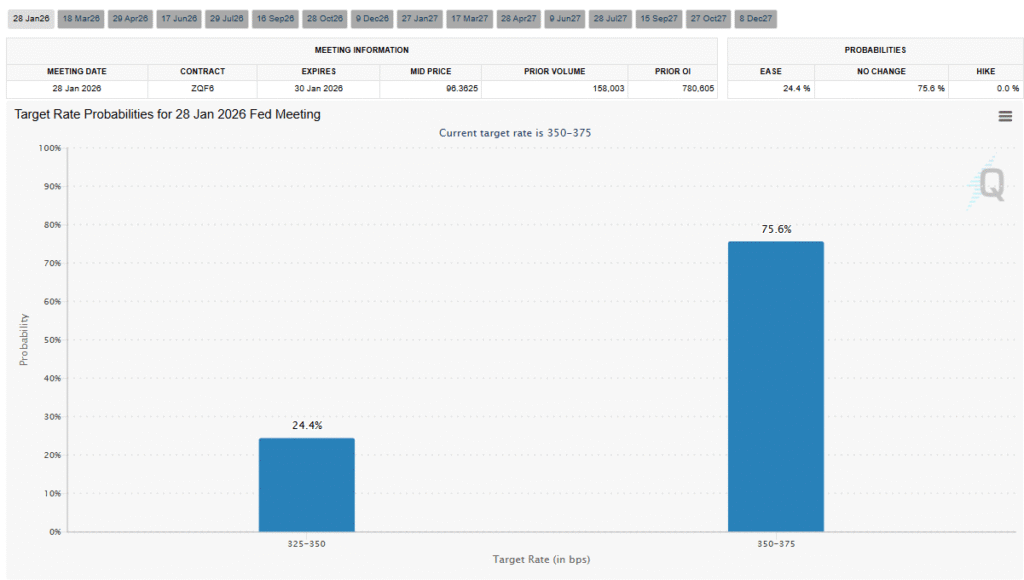
Chances of a rate cut in January (Source: CME FedWatch)
Last week, updated Fed projections indicated policymakers expect to cut rates only once more in 2026. That outlook followed three consecutive 0.25 percentage point rate cuts at the end of 2025, signaling a more cautious approach than markets had anticipated earlier in the year.
Officials have repeatedly emphasized that they want to see sustained progress toward the 2% target before accelerating the pace of rate cuts.
Market Implications Heading Into 2026
Financial markets have remained highly sensitive to surprises and Fed guidance, with higher-than-expected readings typically weighing on risk assets by reinforcing the case for higher-for-longer interest rates. Conversely, signs of easing inflation have tended to support equities and digital assets, including cryptocurrencies.
With inflation still above target and economic indicators sending mixed signals, today’s CPI report is unlikely to trigger a major shift in policy expectations. Instead, it is expected to reinforce the Fed’s cautious, data-dependent stance as the US economy heads into 2026 and normal economic reporting schedules finally resume.


