IMF Warns Stablecoins Could Erode Monetary Sovereignty Worldwide
Stablecoins may widen financial access for millions worldwide — but at a potential cost to the authority and effectiveness of central banks, according to a new report from the International Monetary Fund (IMF).
In a 56-page analysis released Thursday, the IMF flagged “currency substitution†as a growing risk posed by foreign currency–denominated stablecoins, particularly those tied to the U.S. dollar.
The organization warned that as stablecoins penetrate economies rapidly through smartphones and the internet, they could gradually erode nations’ control over domestic liquidity, interest rates, and ultimately, monetary sovereignty.
Also read: IMF: Tokenization Boosts Efficiency but Raises Volatility and Smart-Contract Risks
IMF Flags Risk of ‘Currency Substitution’
The report outlines a fundamental shift in how individuals can gain exposure to stronger or more stable foreign currencies.
Historically, people seeking access to the U.S. dollar needed physical cash or a bank account. Now, the IMF notes, stablecoins allow anyone with a mobile device to hold digital dollars instantly, without relying on local banking systems.
“The use of foreign currency–denominated stablecoins, especially in cross-border contexts, could lead to currency substitution and potentially undermine monetary sovereignty, particularly in the presence of unhosted wallets,†the IMF said.
If a significant share of economic activity migrates away from a country’s sovereign currency, the central bank’s ability to control liquidity or adjust interest rates meaningfully diminishes. The IMF also cautioned that once foreign stablecoins become entrenched in payments and savings behavior, even a well-designed central bank digital currency (CBDC) could struggle to compete.
CBDCs, unlike private stablecoins, are issued and governed by central banks — but their adoption hinges on consumer trust, infrastructure, and incentive structures. If stablecoins take root first, national digital currencies may find themselves at a competitive disadvantage.
Global Stablecoin Use Rising in Inflation-Strained Regions
The IMF found that stablecoin holdings across Africa, the Middle East, Latin America, and the Caribbean are rising relative to foreign exchange deposits, a trend that directly affects how central banks influence monetary policy.
That growth reflects both convenience and necessity: in countries plagued by chronic inflation or currency instability, citizens increasingly turn to digital dollars to protect their savings.
At present, the stablecoin market is overwhelmingly dollar-dominated. Coins pegged to the U.S. dollar account for 97% of the $311 billion global stablecoin sector, according to CoinGecko. Euro-pegged stablecoins total just $675 million, while yen-linked tokens amount to roughly $15 million.
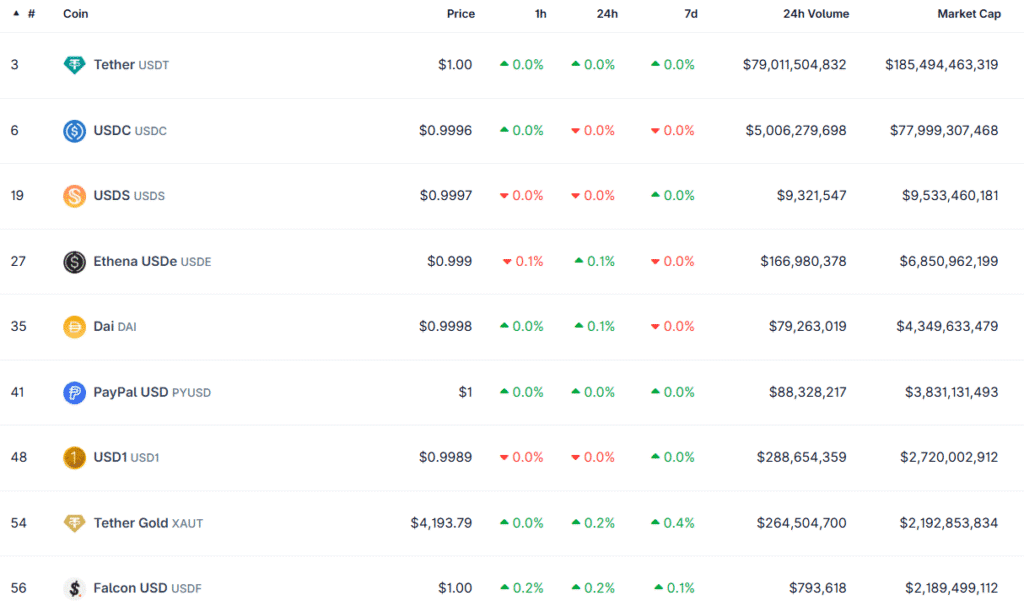
Top stablecoins by market cap (Source: CoinGecko)
Regulators Split on the Impact
The IMF’s concerns echo warnings from other policymakers.
In November, the European Central Bank cautioned that widespread use of dollar-backed stablecoins could drain retail deposits from banks, reducing a core source of funding and exposing financial institutions to higher volatility.
“Significant growth in stablecoins could cause retail deposit outflows, diminishing an important source of funding for banks and leaving them with more volatile funding overall,†the ECB said in a recent blog post.
To protect monetary sovereignty, the IMF recommends that countries establish clear legal frameworks preventing privately issued digital assets from being treated as official currency or legal tender.
Such rules would ensure that businesses and individuals retain the right to refuse stablecoins as payment.
A Different Perspective in the U.S.
While global regulators focus on risks, U.S. officials have highlighted potential benefits.
When Congress passed stablecoin legislation earlier this year, Treasury Secretary Scott Bessent argued that growing demand for fully backed stablecoins could strengthen U.S. government finances.
“This newfound demand could lower government borrowing costs and help rein in the national debt,†Bessent said. He also emphasized the opportunity to onboard millions of people worldwide into the dollar-based digital asset ecosystem — reinforcing the dollar’s international relevance rather than weakening it.
BlackRock, too, has framed stablecoins and tokenized assets as part of the “mega forces†reshaping global financial markets, noting their potential to modernize payments, settlement, and capital flows.
A Transformative Yet Contested Future
The IMF’s latest warning highlights a core tension at the heart of the stablecoin debate: digital dollars and other foreign-denominated tokens offer tangible economic utility, especially in unstable economies — but their adoption may weaken the very institutions responsible for maintaining monetary order.
As stablecoins continue to expand across borders at unprecedented speed, central banks face mounting pressure to develop competitive CBDCs, craft robust regulatory frameworks, and adapt to a digital monetary landscape where sovereignty is no longer guaranteed by geography alone.
Whether stablecoins ultimately empower individuals or destabilize national monetary systems may depend on how quickly — and how effectively — policymakers respond.


