Israel Signals Major Shift on Stablecoins as Digital Shekel Plans Accelerate
The Bank of Israel is preparing to significantly escalate its oversight of stablecoins, with Governor Amir Yaron declaring the asset class a force within global finance that regulators can no longer treat as a peripheral phenomenon.
The announcement came during the Bank of Israel’s “Payments in the Evolving Era” conference in Tel Aviv, where discussions also highlighted the accelerated roadmap for the country’s proposed central bank digital currency (CBDC), the digital shekel.
Central Bank Governor Declares Stablecoins Systemic
Governor Yaron’s address shed light on a pivotal shift in the Bank of Israel’s perspective on stablecoins, which are cryptocurrencies designed to maintain a stable value, typically pegged to an external reference such as the U.S. dollar.
These digital assets have become integral to the broader cryptocurrency ecosystem, offering a bridge between volatile digital assets and traditional fiat currencies, and facilitating efficient cross-border transactions and trading.
Speaking to an audience of financial experts and policymakers, Yaron emphasized the deep embedding of stablecoins in global money flows. He cited compelling figures, noting the sector’s market capitalization exceeding $300 billion and a monthly transaction volume surpassing $2 trillion.
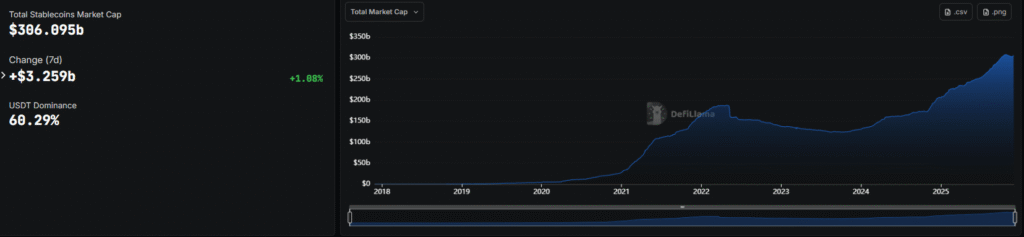
Stablecoin market cap (Source: DefiLlama)
“Given adoption among the public, it cannot be said that this is a marginal phenomenon,” Yaron stated, illustrating the scale by comparing the stablecoin market’s balance sheet to that of a mid-sized global commercial bank.
Also read: Stablecoins Pose Little Threat to Europe, ECB Finds — But Warns Rapid Growth Needs Watching
The Scale and Scope of Stablecoin Penetration
The rapid expansion of stablecoins has captured the attention of central banks worldwide.
Their primary utility lies in mitigating the price volatility often associated with other cryptocurrencies like Bitcoin and Ethereum, making them practical for daily transactions, remittances, and as a stable store of value within the digital asset space. The substantial volume of transactions and the sheer amount of capital flowing through stablecoins suggest they are no longer niche instruments but a critical component of the evolving global payment landscape.
That growth, while indicative of innovation and utility, also presents a new set of challenges for financial stability, consumer protection, and monetary policy. The Bank of Israel’s stance reflects a growing international consensus among regulators that the unique characteristics and widespread adoption of stablecoins necessitate a proactive and comprehensive regulatory response.
Addressing Concentration Risks and Regulatory Gaps
A key concern raised by Governor Yaron was the significant concentration risk within the stablecoin market.
He pointed out that approximately 99% of stablecoin activity is controlled by just two dominant issuers: Tether (USDT) and Circle (USDC).
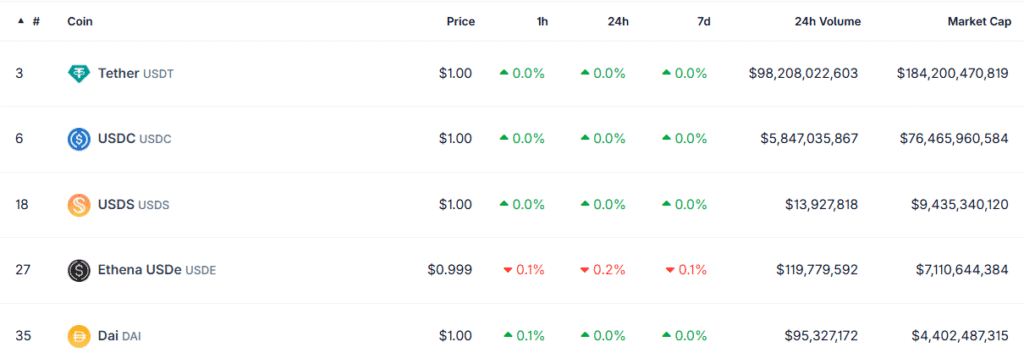
Top 5 stablecoins by market cap (Source: CoinGecko)
That high level of centralization, Yaron argued, amplifies systemic vulnerabilities. The potential failure or mismanagement of even one of these major issuers could have cascading effects across the broader financial system, impacting liquidity, market stability, and public trust in digital assets.
Such concentration necessitates clear and robust regulatory frameworks to mitigate risks associated with operational failures, governance issues, and the stability of reserve assets.
The absence of comprehensive and internationally harmonized regulations has been a persistent concern for financial authorities, creating an environment where risks could propagate without adequate safeguards.
Also read: Stablecoins Near a Breakout in Emerging Markets, Says Exodus CFO
Key Pillars for a Robust Stablecoin Framework
To address the vulnerabilities, Governor Yaron outlined a series of foundational pillars that both private stablecoin issuers and regulatory supervisors must prioritize.
These include:
Fully 1:1 Reserve Backing: Ensuring that every stablecoin in circulation is backed by an equivalent amount of high-quality, liquid assets. This is crucial for maintaining the stablecoin’s peg and ensuring that holders can redeem their tokens at par value, even during times of market stress.
Liquid Reserve Assets: Requiring stablecoin reserves to be held in highly liquid assets that can be easily converted to fiat currency without significant loss of value. This contrasts with past concerns where some stablecoins were found to hold less liquid or riskier assets.
Creation of a Scalable Regulatory Framework: Developing regulatory guidelines that can adapt to the evolving nature of the stablecoin market and the broader digital asset ecosystem. Such a framework would need to address issues of consumer protection, anti-money laundering (AML), combating the financing of terrorism (CFT), and interoperability.
Those principles aim to foster a stable and secure environment for stablecoin operations, aligning them more closely with the standards expected of traditional financial institutions that handle public funds.
Advancing the Digital Shekel Initiative
Beyond regulating private digital currencies, the Bank of Israel is also actively progressing its own central bank digital currency project.
At the same conference, Yoav Soffer, head of the Israeli digital shekel project, provided an update on the initiative. Soffer articulated the ambitious vision for the digital shekel, stating it would become “central bank money for everything.â€
The project team released a new roadmap for 2026, signaling a determined path towards implementation. A key milestone in this roadmap includes the intention to provide official recommendations regarding the digital shekel by the end of the year.
Future Outlook for Digital Payments in Israel
The pronouncements from the Bank of Israel’s conference show a dual strategy: establishing robust oversight for existing private digital currencies while simultaneously developing a sovereign digital alternative.
That comprehensive approach reflects a recognition that digital payments are not merely an emerging trend but a fundamental shift in the financial landscape.
As Israel moves forward with both its regulatory framework for stablecoins and the development of the digital shekel, it positions itself at the forefront of countries grappling with the complexities and opportunities presented by the digital transformation of money.


