Trump Partners With Dar Global on First-of-Its-Kind Tokenized Hotel Development
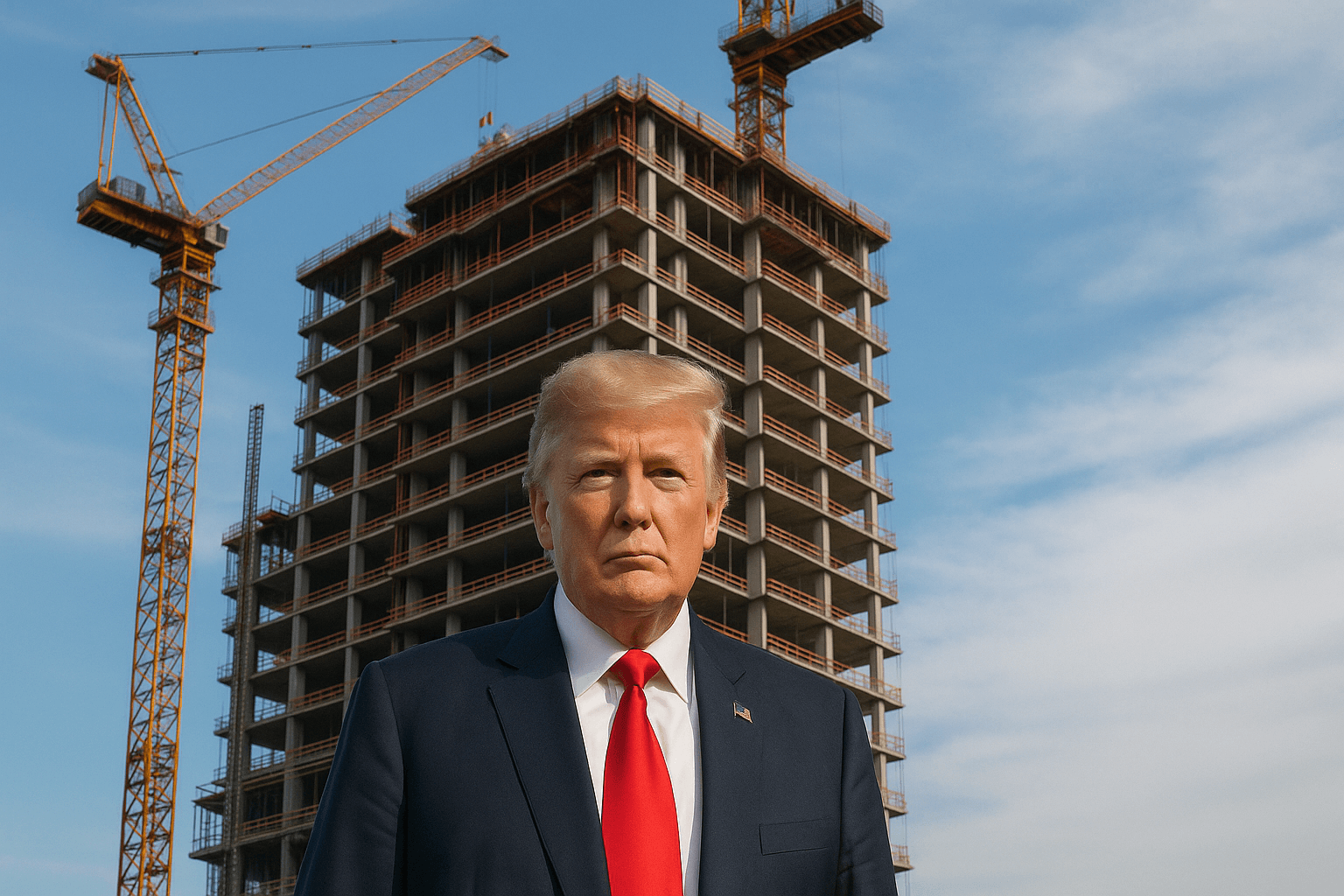
The Trump Organization is taking one of its biggest steps yet into blockchain-based property development, partnering with London-listed luxury developer Dar Global to launch a tokenized real estate project tied directly to a resort still under construction.
The companies on Monday revealed plans for the Trump International Hotel Maldives — alongside what they describe as the world’s first tokenized hotel development that allows investors to buy into a pre-completion project.
The move signals a significant shift in how high-end hospitality projects may be financed in the future. Rather than tokenizing ownership of finished buildings, the model Dar Global is rolling out tokenizes the development phase itself, offering digital investment units linked to the resort long before guests check in.
The property is slated to open by the end of 2028.
A New Investment Model for Luxury Hospitality
The resort will be located a short distance from Malé and include approximately 80 beach and overwater villas aimed at affluent travelers.
Eric Trump, executive vice president of The Trump Organization, said the Maldives project represents “a new chapter†for the family’s global real estate portfolio. He added that the tokenization model introduces “a fresh way for investors to participate in a project from day one.â€
Dar Global CEO Ziad El Chaar said the company intends for the Maldives launch to be the beginning of a broader tokenized real estate pipeline.
Tokenized Real Estate Surges as RWA Sector Expands
The announcement comes at a pivotal moment for the tokenized assets sector. According to data from rwa.xyz, the total value of real-world asset (RWA) tokenized on-chain sits at roughly $35.78 billion.
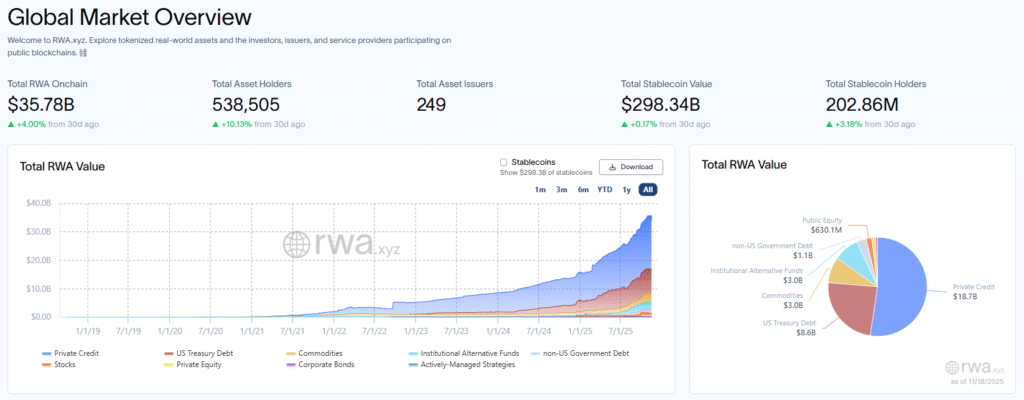
Total assets tokenized on-chain (Source: RWA.xyz)
Monthly active addresses in the category have climbed more than 53% in the past month, and total holders have surpassed 538,000. Although transfer volumes have slowed in recent weeks, interest continues to rise as institutions explore tokenized settlement rails and new forms of asset-backed financing.
Dubai, Tokenization, and Trump’s Broader Crypto Expansion
The Trump Organization’s embrace of blockchain-linked real estate has accelerated throughout 2025.
Earlier this year, the company announced that buyers could pay in cryptocurrency for units in its $1 billion Trump Tower project in Dubai — a development that includes a branded hotel, residential units, a private clubhouse, and a pool complex expected to be part of one of the tallest structures in the world. Condos begin at around $1 million, while penthouses exceed $20 million.
Dubai has simultaneously positioned itself as a global digital-asset hub and faced scrutiny over how its property market can be used to move illicit capital. Yet regulators in the emirate are leaning further into tokenization. In May, the local property authority launched Prypco Mint — the first government-backed platform for tokenized real estate — with a plan to digitize up to $16 billion worth of property by 2033.
Fractional ownership on the platform will be recorded on the XRP Ledger.
Global Push Toward Tokenized Finance Accelerates
The broader financial landscape is also racing toward tokenization.
Singapore’s central bank is preparing a pilot for tokenized government bills settled via a central bank digital currency, calling asset-backed tokens “past the experimental phase†but still early in adoption.
Europe is simultaneously testing tokenized sovereign debt and shaping frameworks for long-term digital trading infrastructure under its DLT Pilot Regime.
Institutional participation is climbing as well. A recent study by global custodian State Street found that digital assets now make up around 7% of institutional portfolios — a share expected to double within three years.
That report identified tokenized private markets as one of the strongest growth areas, particularly as firms seek more efficient ways to handle historically illiquid assets such as real estate, private credit, and infrastructure.
A High-Profile Test Case for Tokenized Hospitality
With the Trump Organization now entering one of the world’s most exclusive tourism markets through a blockchain-driven development model, industry observers say the project could serve as a high-profile case study for tokenized hospitality.
If successful, the partnership may signal how luxury property deals are financed and sold in the years ahead — with digital investment units becoming as common as traditional real-estate presales.


