Google CEO Sundar Pichai Warns No Tech Giant Is Safe If the AI Bubble Bursts
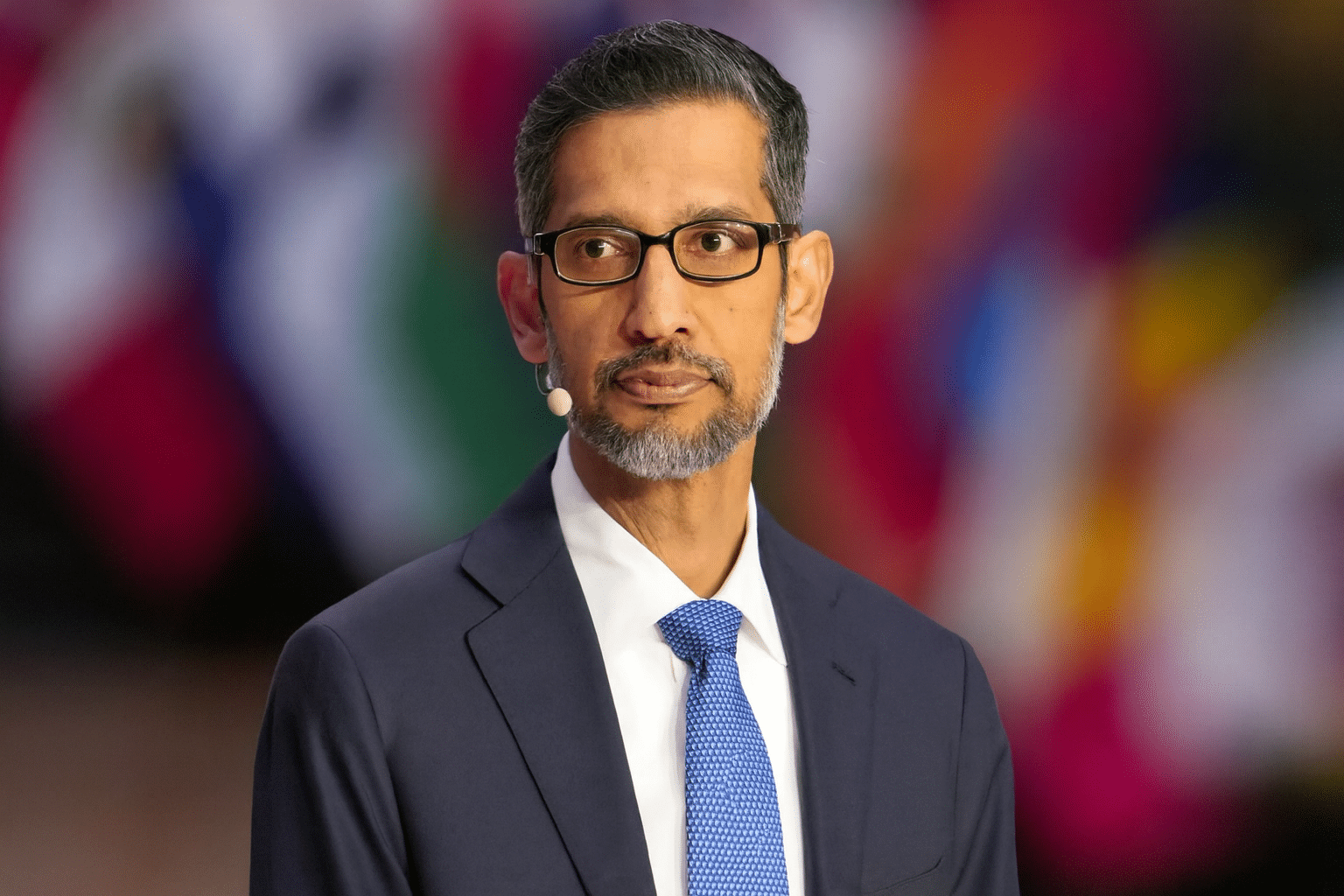
Alphabet CEO Sundar Pichai has issued one of his starkest warnings yet about the overheated state of the global artificial intelligence industry, saying that no company — not even Google — would escape unscathed if the current AI investment boom were to collapse.
His comments, published Tuesday in an interview with the BBC, come as valuations for AI firms soar, capital inflows accelerate, and analysts increasingly question whether the sector is entering bubble territory reminiscent of the dot-com era.
Pichai described the moment as “extraordinary,” citing rapid breakthroughs and historic levels of investment, but said the environment also contains “elements of irrationality.”
The comments echo the “irrational exuberance” narrative that fueled the late-1990s tech mania, raising new questions about sustainability across AI markets, from foundational model developers to chipmakers and data-center operators.
Concerns Grow Over AI Market Froth
The warning comes amid mounting debate on Wall Street and in policy circles over whether the explosion in AI valuations is detached from fundamentals. In the United States, concerns about overheating have begun weighing on broader equity markets, while UK officials have similarly signaled alarm over speculative behavior.
Asked directly whether Alphabet could withstand an AI-sector correction, Pichai was candid: “I think no company is going to be immune, including us.” Still, he expressed confidence that Google’s diversified businesses and long-term AI investments would position it to ride out volatility should investor sentiment shift abruptly.
Alphabet shares have surged roughly 49% this year as investors place outsized bets on Google’s ability to rival OpenAI — now widely viewed as its most formidable competitor following the explosive rise of ChatGPT and the rapid commercialization of AI assistants and developer tools.
Also read: Berkshire Hathaway’s $4.93B Alphabet Bet Sparks Debate Over AI Spending
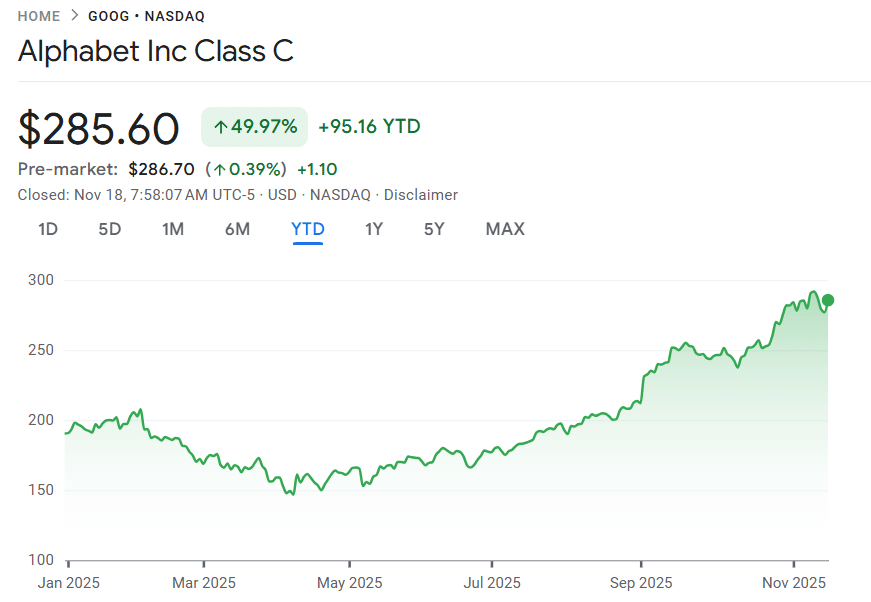
Alphabet share price (Source: Google Finance)
Major Investments in the UK and Europe
Pichai’s comments also arrive as Alphabet deepens its commitments to artificial intelligence infrastructure in Europe.
In September, the company pledged £5 billion over two years for UK-based AI facilities and research. The package includes a new hyperscale data center and expanded investment in DeepMind, Google’s London-based AI subsidiary and one of the world’s leading AI research labs.
In the BBC interview, conducted at Google’s headquarters in California, Pichai confirmed that Google will begin training AI models in Britain. UK Prime Minister Keir Starmer has said the shift is a critical step toward making the UK the world’s third AI “superpower,” behind only the United States and China.
Energy Costs and Environmental Pressure
But alongside the upbeat message about innovation, Pichai acknowledged a less comfortable reality: the surging energy demands of AI are forcing Alphabet to rethink its environmental commitments. The company’s net-zero targets will be delayed, he said, as training and deploying increasingly large models require vast amounts of computing power.
Also read: Bitfarms Says AI Could Outperform Bitcoin Mining as It Begins 2026–2027 Wind-Down
AI’s energy footprint has become a growing flashpoint for regulators and environmental advocates, especially as hyperscale data centers proliferate across Europe and the United States.
Pichai described the challenge as “immense,” noting that the company must balance sustainability goals with the competitive pressures of the AI arms race.
The Question Hanging Over Silicon Valley
Pichai’s warnings reflect a broader shift in tone among some tech leaders who, while bullish on AI’s long-term potential, fear the pace of investment and speculation is unsustainable.
The rapid expansion of capital into model development, semiconductor manufacturing, and cloud infrastructure has pushed valuations to historic highs and left policymakers debating how to manage risks.
Whether the AI surge marks the beginning of a durable, transformative technological cycle — or the prelude to a painful correction — remains one of the defining economic questions of the decade.
For now, Pichai says Google is prepared for both scenarios. But the message is clear: if an AI bubble bursts, no one escapes untouched.