
Tokenized Funds Take Center Stage in Britain’s New Crypto Strategy
Britain’s top financial regulator is taking a major step toward modernizing the country’s investment industry by prioritizing tokenized funds.Â
The Financial Conduct Authority (FCA) announced on Tuesday plans to allow asset managers to “tokenise†their funds on public blockchains such as Ethereum — a move that could redefine how traditional finance interacts with digital assets.
The initiative, part of a broader consultation launched by the FCA, aims to make fund management more efficient and attract a younger, tech-savvy investor base.
Under the proposed framework, UK asset managers would be permitted to issue crypto tokens that represent shares in regulated investment funds. Previously, fund tokenization in the UK was restricted to private blockchains, limiting accessibility and interoperability.
Tokenization Gains Momentum Amid Global Revival
The renewed push for tokenized funds comes amid a global resurgence of interest in blockchain-based finance. Tokenization — the process of converting traditional financial assets into digital tokens on a blockchain — has gained traction this year, fueled by rising crypto prices and growing political support for digital assets, including from U.S. President Donald Trump.
Proponents argue that tokenized funds could significantly lower administrative costs, improve transparency, and speed up transactions compared to traditional fund structures. As investors increasingly demand real-time settlement and fractional ownership, blockchain-based funds could mark a turning point for asset management efficiency.
Britain’s Bid to Lead in Digital Assets
“Tokenisation has the potential to drive fundamental changes in asset management, with benefits for the industry and consumers,†said Simon Walls, executive director of markets at the FCA.
He emphasized that the consultation represents a forward-looking approach to integrating blockchain technology into the UK’s financial ecosystem.
The initiative aligns with Britain’s broader ambitions to become a global hub for digital assets. Just last month, the UK Treasury said it would work more closely with U.S. regulators to align crypto-related policy frameworks — a sign that the government sees cross-border cooperation as essential to nurturing the next phase of financial innovation.
Stablecoins and the Next Step in Digital Finance
As part of its consultation, the FCA is also seeking feedback on whether stablecoins — cryptocurrencies pegged to fiat currencies like the U.S. dollar or British pound — should be permitted as settlement instruments for tokenized funds.
However, Nike Trost, interim director of the FCA’s buy-side division, noted that the benefits of tokenized funds might take time to materialize as firms update their technology infrastructure and compliance processes.
The regulator’s data shows that nearly half (47%) of trading app users in the UK are aged 18–34 — a demographic increasingly comfortable with digital assets and micro-investing. Tokenized funds could therefore bridge the gap between traditional investing and crypto-native behavior, offering an entry point for younger investors.
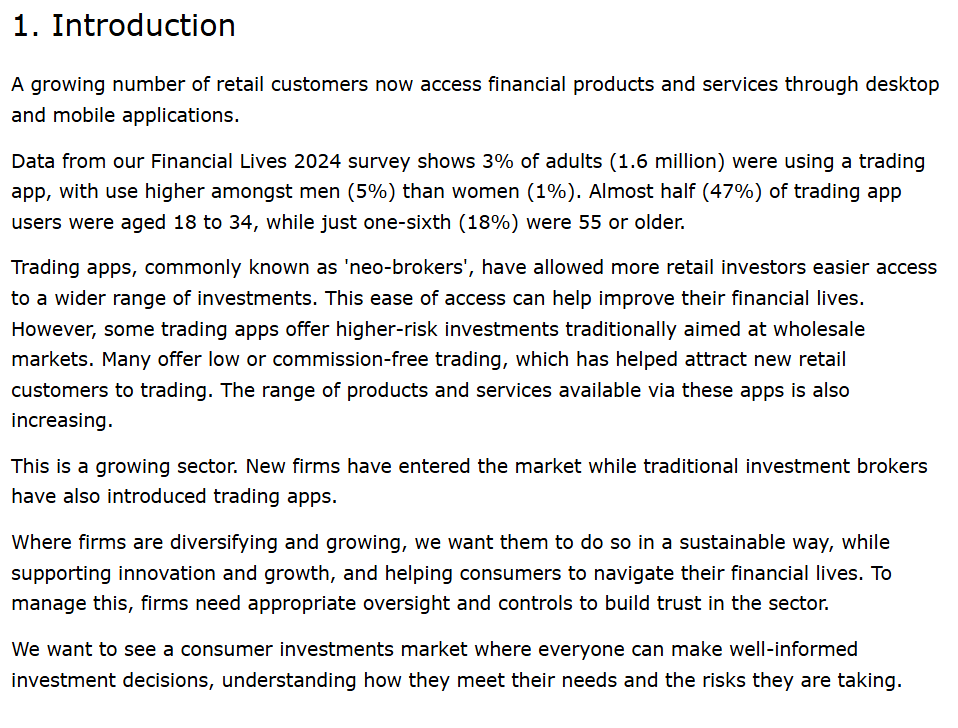
FCA trading app data (Source: FCA)
The FCA also confirmed that the possibility of allowing regulated funds to directly invest in cryptocurrencies would be reviewed at a later stage — signaling that the door remains open for deeper integration between traditional finance and crypto markets.
A Gradual Revolution in Fund Management
The UK’s embrace of tokenized funds reflects a growing recognition that blockchain technology could transform how capital markets operate.
While the transition may be gradual, the move positions the country at the forefront of tokenization — potentially giving London’s financial sector a new edge in the race to modernize global finance.


