
Garrett Jin Denies Being the Hyperliquid Whale Behind $735M Bitcoin Short
Garrett Jin, the former CEO of the now-defunct crypto exchange BitForex, has denied claims linking him to a massive short position that coincided with a steep drop in Bitcoin’s price following U.S. President Donald Trump’s recent tariff announcement.
In a post on X on Monday, Jin refuted allegations by pseudonymous crypto researcher Eye, who claimed he controlled a wallet that shorted Bitcoin less than an hour before Trump revealed a “100% tariff on China†last Friday. The timing of the trade — which reportedly contributed to Bitcoin’s sharp fall to around $102,000 — raised suspicions of insider trading and sparked a wave of online speculation.
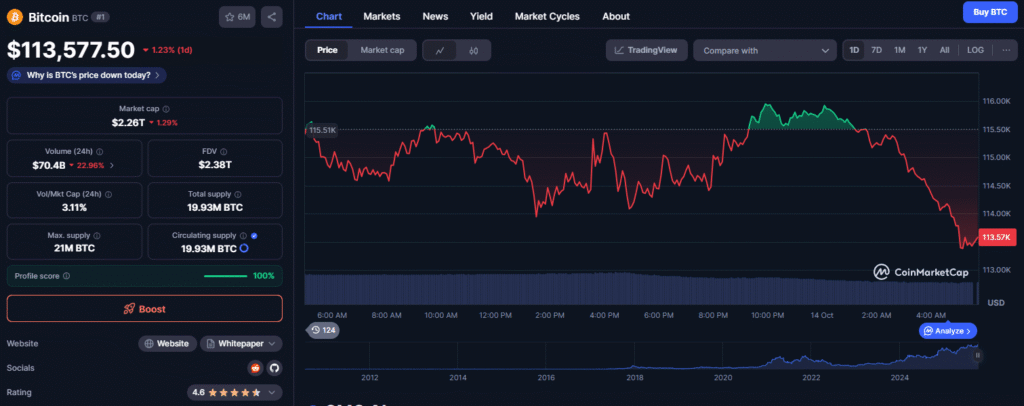
BTC price (Source: CoinMarketCap)
Garrett Jin Pushes Back Against Claims
Jin dismissed the allegations, stating that he had “no connection with the Trump family†and that the wallet in question belonged to a client, not him.
He also accused former Binance CEO Changpeng “CZ†Zhao of amplifying misinformation by retweeting Eye’s post to his more than 10 million followers, saying it exposed “personal and private information.â€
Eye’s post had labeled Jin as a “Hyperliquid whale†who allegedly controlled more than 100,000 BTC, a staggering position worth over $11 billion at current prices. However, Jin maintained that he had no involvement in the trades that rattled markets.
The $735 Million Short That Shook Bitcoin
Blockchain data revealed that the wallet in question opened a $735 million short on Bitcoin via the decentralized exchange Hyperliquid, just minutes before Trump’s tariff comments sent markets tumbling.
While Bitcoin briefly recovered after Trump softened his stance on Sunday — writing, “Don’t worry about China†— the episode has renewed concerns over market manipulation and insider trading in crypto.
Community Divided Over ‘Hyperliquid Whale’ Allegations
Not everyone is convinced of Jin’s guilt. Well-known blockchain investigator ZachXBT suggested that the trades may have been made by “a friend of Jin,†while analyst Quinten Francois called the evidence linking Jin to the wallet “too convenient.â€
The controversy shows how anonymous trading and pseudonymous identities in decentralized markets can blur accountability — a recurring issue in the crypto sector.
Insider Trading Concerns Persist in Crypto
Claims of insider trading have long plagued the industry. Earlier this year, an unidentified trader made $482,000 from timely Bubb (BUBB) memecoin trades, while a wallet linked to Trump’s own memecoin, Official Trump (TRUMP), made headlines after purchasing $6 million worth of the token seconds after its launch.
As the so-called Hyperliquid whale saga unfolds, the crypto community remains sharply divided — with some seeing it as another example of opaque market behavior, and others warning against what they call a “witch hunt†based on circumstantial on-chain data.


