
BNB Chain Launches $45M Binance Airdrop to Rescue Memecoin Traders
BNB Chain has announced a $45 million “reload airdrop†to compensate users who suffered heavy losses trading memecoins during last Friday’s market meltdown — the largest single-day wipeout in crypto history.
According to the network’s Monday update, the Binance airdrop will distribute BNB tokens — worth around $1,275.23 each — to more than 160,000 eligible addresses. The rollout begins this week and is expected to conclude by early November.
BNB Chain, a blockchain originally developed by Binance and now run by a decentralized community, powers the BNB token and a wide range of decentralized finance (DeFi), gaming, and digital asset applications.
Random Rewards and Ecosystem Partners
Former Binance CEO Changpeng “CZ†Zhao said the rewards will be distributed randomly, with help from ecosystem partners including Four Meme, PancakeSwap, Binance Wallet, and Trust Wallet. The initiative aims to restore confidence among traders after a chaotic weekend that saw widespread liquidations and technical disruptions.
Despite the turmoil, BNB surged to a new all-time high of $1,370 on Monday morning, according to CoinMarketCap — signaling renewed optimism even as Binance faced criticism over its role in the flash crash.

BNB price (Source: CoinMarketCap)
What Triggered the Chaos
The crash began after U.S. President Donald Trump posted on Truth Social threatening a 100% tariff on Chinese imports, triggering a global sell-off that rippled through digital asset markets.
Within hours, crypto prices plunged, leading to $20 billion in liquidations across futures and spot markets. Binance, the world’s largest exchange by trading volume, was hit particularly hard. Some users reported that the platform froze during the crash, preventing them from closing positions.
One trader, posting under the handle SleeperShadow, claimed on X that Binance “shut down their system during a major market crash,†calling it “unacceptable.â€
Binance’s Explanation
In response, Binance issued a statement saying its core futures platform remained operational and that the temporary “zero-price†glitches seen on certain spot pairs were caused by old limit orders being triggered in thin liquidity conditions, not systemic failures.
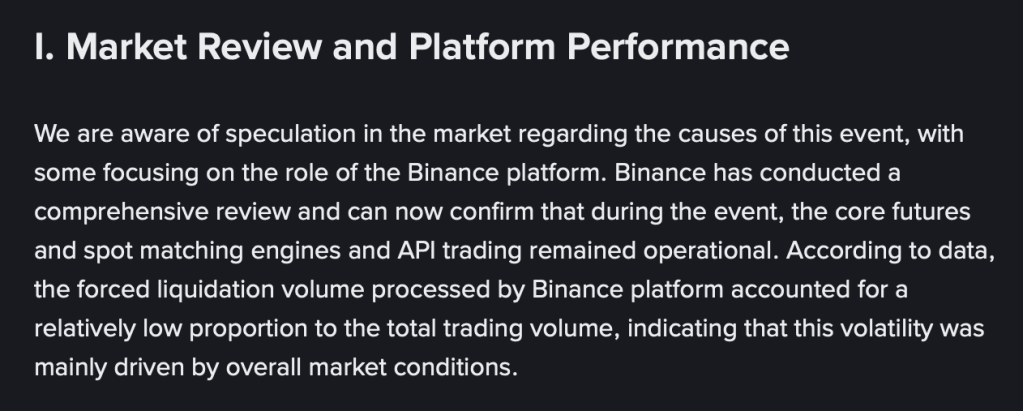
The exchange’s statement (Source: Binance)
The exchange also addressed the depegging of Ethena’s synthetic stablecoin (USDe), which fell to $0.65 on Binance while trading near $1 elsewhere. Ethena Labs founder Guy Young attributed the issue to Binance’s reliance on internal oracle data rather than external feeds.
Binance acknowledged that some collateralized positions tied to USDe, BNSOL, and WBETH were liquidated due to the volatility. To cover those user losses, Binance said it reimbursed $283 million, in addition to the new $45 million BNB Chain airdrop initiative.
Rebuilding Trust After the Crash
The “reload airdrop†marks one of the most extensive user compensation campaigns in Binance’s history.
While some users remain skeptical, BNB’s rapid rebound suggests traders may view the initiative as a strong signal of the exchange’s resilience and willingness to support its community during turbulent times.


