
Coinbase vs Gemini: A Beginner-Friendly Comparison
Coinbase and Gemini are two popular crypto exchanges with strong security and regulation, but they differ in fees, available coins, and user experience.Â
This guide compares their key aspects in an easy-to-understand way. We’ll look at trading fees, supported cryptocurrencies, and platform usability to help new users decide which one fits their needs.
Trading Fees
Both Coinbase and Gemini use a maker-taker fee model for their advanced trading interfaces.
In general, Coinbase’s base fees are slightly higher than Gemini’s. For small-volume trades, Coinbase charges up to 0.60% taker / 0.40% maker fees, while Gemini’s ActiveTrader starts at 0.40% taker / 0.20% maker.
At high volumes, Coinbase’s lowest taker fee can drop to 0.05%, comparable to Gemini’s best rates (Gemini’s lowest taker fee is about 0.04% at very high volume).
When using the simple buy/sell apps, fees differ more. Coinbase’s standard buy/sell transactions typically incur a spread plus a convenience fee (often around 0.5%–1.5% of trade size, depending on payment method).
Gemini’s regular web/mobile trades carry a 1.49% flat fee for transactions over $200 (with small fixed fees under $200). In practice, this means a $1,000 trade would cost about $15 on the exchange’s basic interface, versus roughly $10–$15 on Coinbase’s (Coinbase’s fee structure is somewhat more complex, but broadly comparable for casual trades).Â
In short, both charge a few percent for one-off buys, but Gemini’s simple-trade fee is fixed 1.49%, whereas Coinbase’s can vary by region and payment method.
According to experts, Coinbase’s fees are generally higher for beginners (due to those spreads) than some competitors. Gemini’s ActiveTrader platform offers somewhat lower trading fees at the entry level.
For example, at low volumes Gemini’s maker/taker (0.20%/0.40%) are lower than Coinbase’s (0.40%/0.60%). Both platforms offer tiered discounts for higher volumes.
Supported Cryptocurrencies
Coinbase supports hundreds of cryptocurrencies – on the order of 250–300+ coins. Its listings include all major coins (Bitcoin, Ether, etc.) and many newer tokens, giving users a wide range to choose from.Â

In fact, Coinbase users can trade “more than 300 cryptocurrencies†according to recent data. This breadth can be handy if you want to explore altcoins or new DeFi tokens.
Gemini’s selection is more modest: about 80–100+ cryptocurrencies are available. These cover the well-known coins (Bitcoin, Ether, Litecoin, etc.) but fewer niche or experimental tokens. The upside is that Gemini tends to list only well-vetted, compliant assets. So if you only need the big-name cryptocurrencies, Gemini has them, but Coinbase will give you many more options for altcoin exploration.

User Interface & Experience
Both exchanges aim to be beginner-friendly, but they have different strengths:
- Ease of Use: Coinbase is often praised for its simple, sleek interface designed for new users. It offers intuitive mobile and web apps, and even a basic vs. advanced mode. Many educational resources (like Coinbase Learn/Earn) and a comprehensive help center make it easy to get started and learn on the platform. For example, beginners can easily buy crypto with a few taps and explore guided learning content. One reviewer notes that Coinbase’s design “appeals to novice…traders†with its clean UI and learning tools.
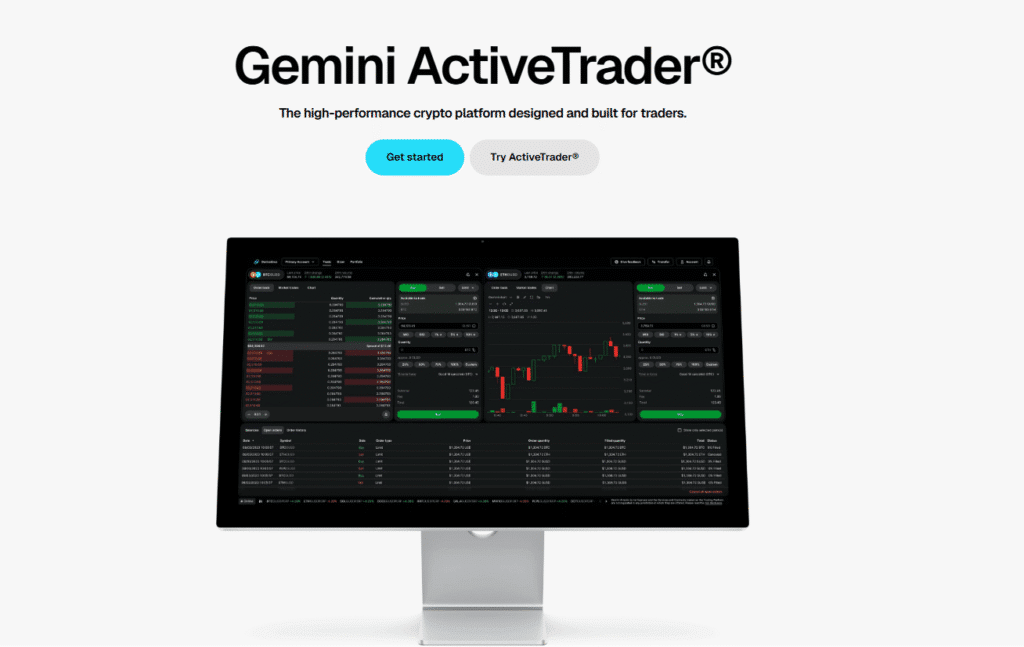
- Gemini’s Interface: Gemini also has a clean, simple default interface geared to beginners. It clearly shows prices and a one-click buy/sell form. The platform supports both web and mobile apps, and users can quickly set up recurring buys or transfers. For those wanting more, Gemini offers an “ActiveTrader†interface (with advanced charts and order types) for experienced users. In short, Gemini’s design is friendly for newcomers (a streamlined default view) yet unlocks professional tools if needed.
- Security & Trust: Both exchanges emphasize security. Coinbase is a publicly traded company in the U.S., subject to strict controls. It keeps most user funds offline in cold storage and insures digital assets in hot wallets. It also enforces two-factor authentication (2FA) and has never lost customer funds in a hack. Gemini is a New York trust company under NYDFS regulation, with SOC 2 Type 2 compliance and strong protocols. Gemini too stores the majority of crypto offline and uses address whitelisting, 2FA, etc. Both are among the safest places to keep crypto, giving beginners extra peace of mind.
- Support & Resources: Coinbase offers 24/7 support in many regions (live phone and chat) and extensive self-help articles. Gemini provides email, chat, and help-center support as well. User reviews note that Coinbase’s customer service has improved to offer timely help, whereas Gemini’s support can be slower or more mixed in response times. On the upside, each platform has FAQs and tutorials for common beginner questions.
Coinbase vs Gemini: Summary Table
| Aspect | Coinbase | Gemini |
| Trading Fees | Maker 0.00%–0.40%, Taker 0.05%–0.60% (30-day volume tiers). Simple trades cost ~0.5–1.5% (varies by payment method). | Maker 0.00%–0.20%, Taker 0.03%–0.40% (tiers). Simple web/mobile trades cost 1.49% (above $200). |
| Supported Cryptos | Hundreds of coins (about 250–300+ available). Very broad selection of altcoins and tokens. | Dozens of coins (around 80–100+ supported). Covers major cryptos; fewer niche tokens. |
| User Interface & UX | Extremely beginner-friendly. Sleek web/mobile apps with educational guides and Coinbase Earn. Good customer support. | User-friendly default interface, plus an “ActiveTrader†mode for pros. Strong emphasis on security and compliance. Mixed feedback on support times. |
Which Platform Suits You?
For most new crypto investors, Coinbase is often the go-to choice. Its intuitive interface, helpful tutorials, and large coin selection make learning easy. You can quickly buy a handful of coins, use Coinbase Earn to learn crypto basics, and later graduate to its advanced trade view with lower fees as you grow.
Gemini appeals especially to users who prioritize security and regulation. It’s fully US-regulated and known for rigorous compliance. If you plan to stick with major cryptocurrencies and value a platform built with safety-first practices, Gemini is a solid pick. Its dual-interface (simple mode + ActiveTrader) means beginners won’t be overwhelmed, yet advanced traders have the tools they need.
In summary, both exchanges are beginner-friendly. Coinbase gives you more coins and easy features right away, while Gemini offers a streamlined experience with an extra security focus. Consider your priorities – wider crypto choices vs. maximum regulatory safety – to decide which platform better fits your needs. Regardless of choice, learning about fees and supported assets will help you start confidently in the crypto world.


