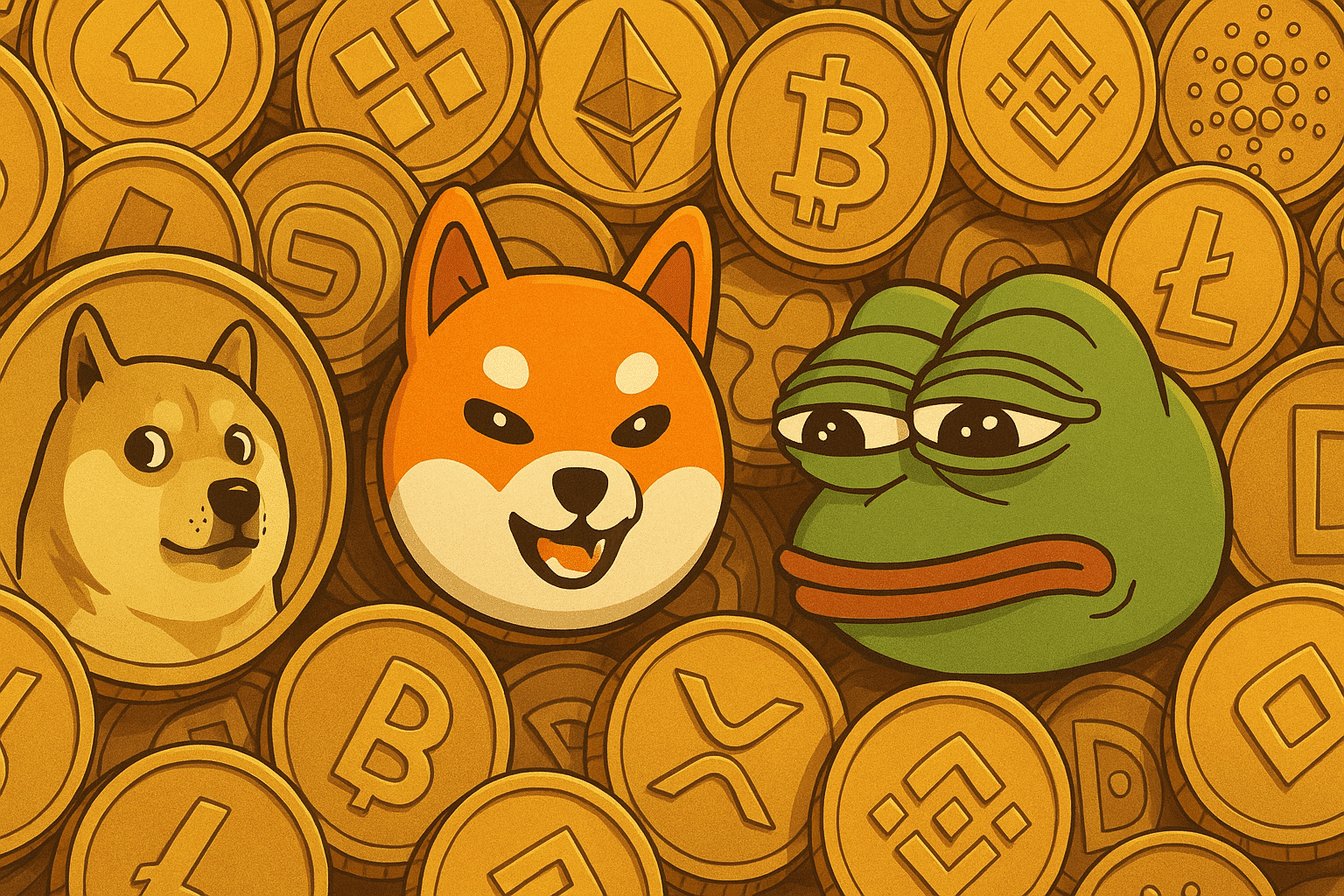
Memecoins vs Utility Tokens – The Fun vs Function Debate Explained
Cryptocurrency isn’t all serious finance – it also has its fair share of internet humor and innovation. Two terms you’ll hear a lot are “memecoins†and “utility tokens.†If you’re new to crypto, these might sound like jargon, but fear not.
In this friendly guide, we’ll look at memecoins vs utility tokens, how they differ, and why each has its own appeal (and risks).
By the end, you’ll understand how a coin inspired by a dog meme differs from one fueling a high-tech blockchain platform. Let’s dive in!
What Are Memecoins?
Memecoins are cryptocurrencies that originate from jokes or internet memes.
In other words, they’re the class clowns of the crypto world. These coins often start with no serious purpose or clear use case – their value comes largely from people on the internet buying into the joke and hyping them up.
A classic example is Dogecoin (DOGE), which was created in 2013 as a parody of Bitcoin featuring the popular Shiba Inu “Doge†meme. Dogecoin’s creators never intended it to be taken seriously; it was “originally formed as a joke†by two software engineers just having fun.
Despite their tongue-in-cheek origins, memecoins can gain real market value through community support, viral trends, and social media buzz.
They thrive on platforms like Reddit, Twitter (X), and TikTok where internet culture can send a joke currency “to the moon†overnight. Often, there’s an infectious community spirit around memecoins – holders rally together with memes, slogans, and sometimes charitable stunts, all of which further fuel the hype.
For example, Dogecoin’s online community became known for generous and quirky gestures (from sponsoring NASCAR drivers to funding Olympic teams) purely for the meme of it. This community-driven popularity is typically the main driver of value for a memecoin, rather than any fundamental utility or technology.
It’s important to note that most memecoins lack intrinsic utility. They usually don’t give access to any service or platform – they exist mostly to be bought, sold, and joked about. As one analyst bluntly put it, many memecoins have “no backing… other than belief, hype, speculation, and hope,†meaning they aren’t tied to productive assets or cash flows. In short, a memecoin’s price is only as strong as the community’s enthusiasm. This can lead to explosive gains when a meme catches on – but it can also mean spectacular crashes when the joke gets old.
A Brief History of Memecoins
Memecoins have a short but wild history. The phenomenon began with Dogecoin in late 2013. Created by Billy Markus and Jackson Palmer, Dogecoin was a lighthearted spin on cryptocurrency that unexpectedly caught fire on the internet.
Within weeks of launching, Dogecoin’s website had over a million visitors, and a vibrant community formed around this “fun and friendly†coin featuring the Doge dog.
Early on, Dogecoin found usage as a tipping currency on forums – people would send small amounts of DOGE to each other as a way to say thanks or just spread goodwill online. (A popular tool called Dogetipbot let Reddit and Twitch users tip others in Dogecoin for good posts or content.) The Dogecoin community also made headlines in 2014 by fundraising for real-world causes: they raised $50,000 in Dogecoin to send the Jamaican bobsled team to the Winter Olympics, built a clean water well in Kenya, and even sponsored a NASCAR race car with the Doge logo. All of this was done in a spirit of fun and generosity – a testament to the community culture that memecoins can create.
For a while, Dogecoin was mostly a niche internet currency trading for fractions of a penny. However, during the 2020–2021 crypto boom, memecoins roared into the mainstream. In early 2021, Dogecoin’s price skyrocketed by thousands of percent, fueled by a frenzy of Reddit speculation and tweets from celebrities like Elon Musk. At one point in May 2021, DOGE reached an all-time high around $0.50–$0.70 and snagged a market value over $50 billion, briefly making it one of the top 5 cryptocurrencies by market cap.
This incredible rally – for a coin originally worth virtually nothing – was driven almost entirely by social media hype and fear of missing out. It demonstrated both the power and the irrationality of memecoin mania. After peaking in 2021, Dogecoin did crash hard (dropping almost 30% in one day during Musk’s much-anticipated “Saturday Night Live†appearance), reinforcing how volatile these coins can be.
The success of Dogecoin inspired a proliferation of new memecoins. Perhaps the most famous imitator is Shiba Inu (SHIB), an Ethereum-based token launched in 2020 and dubbed the “Dogecoin killer.â€
Shiba Inu rode the Doge hype wave and, astonishingly, muscled its way into the top 10 cryptocurrencies by late 2021. SHIB’s price rocketed by over 160% in a week at one point, giving it a market capitalization of around $42 billion in October 2021. This was despite the project having “barely any practical use,†as Reuters dryly noted.
In fact, Shiba Inu’s own website branded it a “decentralized meme token†part of a vibrant ecosystem – but many analysts warned that the sky-high valuation was hard to justify without real utility. Essentially, people were buying SHIB in hopes of catching the next Dogecoin-like jackpot, illustrating the “get rich quick†appeal that drives memecoin speculation.
The memecoin trend didn’t stop with Doge and Shib. New viral coins keep emerging whenever crypto markets heat up. In 2023, for example, Pepe (PEPE) – based on the Pepe the Frog meme – burst onto the scene.
Pepe launched in April 2023 with no intrinsic value (the project openly stated it has “no intrinsic value†or expectations of financial return), yet within a year it had soared by over 7,000% and at one point in 2024 reached a market cap above $11 billion. This frog-themed coin became a trader’s favorite purely on speculative momentum, even briefly surpassing the market value of some serious DeFi (decentralized finance) project tokens. Such episodes show that memecoin mania tends to come in waves: during bull markets or viral moments, these coins can explode in popularity, often outpacing rationality.
However, most memecoins are here today, gone tomorrow. For every Dogecoin or Shiba Inu that captures lightning in a bottle, thousands of others fade into obscurity (or never take off at all).

Top memecoins by market cap (Source: CoinMarketCap)
The barriers to creating a new token are very low – by late 2024, one crypto site reported over 5.3 million new memecoins had been launched within a year (averaging an astonishing 15,000+ new meme tokens per day on that single platform).
Many of those are blatant pump-and-dump schemes or scams aiming to capitalize on memecoin fever. In other words, the meme coin space is crowded and risky: few coins maintain long-term value unless they manage to sustain a community or evolve some utility beyond the meme.
Examples of Popular Memecoins
To put things in context, here are a few well-known memecoins and what they’re about:
- Dogecoin (DOGE): The original memecoin, created as a parody of Bitcoin with the Doge dog meme.

Dogecoin’s value has been driven by its lighthearted community and periodic celebrity endorsements (Elon Musk famously called it the “people’s cryptoâ€). It’s used primarily for online tipping and as a fun medium of exchange, though not backed by any formal project or utility.
- Shiba Inu (SHIB): An Ethereum-based token launched in 2020, inspired by Dogecoin’s dog theme.

Marketed as the “Dogecoin killer,†SHIB gained a massive following and even built an ecosystem with DeFi and NFT aspects. Despite the hype that took it briefly into the top crypto rankings, Shiba Inu has minimal real-world use and remains mostly a speculative, community-driven token.
- Pepe (PEPE): A frog-themed meme token that went viral in 2023.

Pepe openly admits it has no fundamental utility or value backing it – it’s purely a memetic, tradeable asset. Nevertheless, that didn’t stop traders from pumping its market value into the billions during its peak frenzy. Pepe’s rapid rise (and fall) underscores the rollercoaster nature of memecoins.
- Other Memes: The meme coin universe is vast and constantly evolving. There have been coins themed after Doge variants (Baby Doge, Floki Inu), celebrities (e.g. coins named after Elon Musk or popular influencers), and even absurd concepts (from squid game tokens to joke food coins). Most of these flare up and crash quickly. As a newcomer, it’s wise to approach any brand-new meme coin with extreme caution – chances are it’s riding temporary hype or could be a scheme to enrich insiders.
What Are Utility Tokens?
In contrast to memecoins, utility tokens are the workhorses of the crypto world.
A utility token is a digital token designed to have a specific use-case or function within a blockchain platform or application. In plainer terms, it’s like a key or fuel that lets you access a service, play a role in a network, or unlock features in a crypto ecosystem. These tokens aren’t created as jokes – they’re created with a purpose, often as part of a project’s technology or business model.
Think of utility tokens as the arcade tokens of a blockchain platform: you buy the token not for the shiny look, but because you need it to do something (whether it’s to play a game, vote on a decision, or use a service).
For example, if you want to run a smart contract or use a decentralized app on the Ethereum blockchain, you need to pay a fee in Ether (ETH) – that’s Ethereum’s native token, which acts as “gas†to power computations on the network.
Ether thus has real utility: without it, the whole Ethereum ecosystem of decentralized finance, NFTs, and apps wouldn’t run. This gives Ether a form of intrinsic value tied to the demand for Ethereum’s services. In general, utility tokens derive their value from the useful functions they enable, rather than from meme appeal. Their price can still go up and down on the market, but there’s an underlying reason people might want to hold them: to actually use them for something.
Utility tokens came to prominence with the rise of smart contract platforms (like Ethereum, Binance Smart Chain, Solana, etc.) and the ICO boom of 2017. Projects would issue their own tokens to raise funds and then encourage people to use those tokens within their new platform – whether for accessing software features, paying fees, or participating in governance.
Unlike a security (stock) which represents ownership, a pure utility token does not confer ownership or dividends; it’s more like a software license or loyalty points for a platform. For this reason, genuine utility tokens are generally not meant to be investments in the traditional sense – their primary role is to be useful within a specific ecosystem. (Of course, if that ecosystem becomes popular, the token can appreciate in value due to supply and demand, but that’s a byproduct rather than the core design.)
Another way to look at it: utility tokens are typically backed by technology and development. There’s usually a team and a project continuously improving the platform in which the token is used. This means utility tokens often have roadmaps, updates, and real technical communities behind them (developers, users, businesses), rather than just meme fanfare. In practice, many of the top non-Bitcoin cryptocurrencies can be considered utility tokens or have utility token aspects – they power blockchains that do more than simple payments.
Examples of Utility Tokens and Their Uses
There are countless utility tokens serving different purposes. Here are a few prominent examples to illustrate how they work in real life:
- Ethereum (ETH): The second-largest cryptocurrency, Ether is the native token of the Ethereum blockchain.

Its primary utility is to pay for transaction fees and computational services on Ethereum – every time you send an ETH transaction or execute a smart contract, you spend a bit of ETH as gas. ETH also is used in Ethereum’s proof-of-stake system (holders can stake ETH to help secure the network and earn rewards). Because Ethereum supports thousands of decentralized applications (from DeFi protocols to NFT marketplaces), Ether is in constant demand to fuel these activities. This real usage underpins ETH’s value.
- Binance Coin (BNB): BNB is the utility token for the Binance ecosystem.

Originally created by the Binance exchange, BNB’s flagship utility was discounted trading fees – users who pay their exchange fees in BNB get a discount. BNB also powers the Binance Smart Chain (BSC) as its gas token (similar to ETH for Ethereum). As Binance’s platforms grew, BNB became more valuable due to its wide usage (trading, DeFi on BSC, etc.). It’s a good example of a token that started with one utility (fee reduction) and expanded to others as the ecosystem evolved.
- Chainlink (LINK): LINK is the native token of Chainlink, a decentralized oracle network.

Chainlink’s technology connects smart contracts to real-world data and APIs. LINK tokens are used to pay the node operators who provide and verify external data for smart contracts (for example, feeding live weather or price data into a blockchain). If someone wants to use Chainlink’s oracle service in their dApp, they need to compensate the providers in LINK. Thus, LINK’s value ties to the demand for oracle services in the blockchain world.
- Filecoin (FIL): Filecoin is a decentralized storage network where users can rent out their computer storage space or pay to store data.

FIL is the utility token used as payment within this network – customers pay FIL to storage providers for saving files, and providers earn FIL for their hard drive space and retrieval services. In short, Filecoin tokens facilitate a marketplace for cloud storage, giving them a concrete use case (the ability to store/retrieve data on the Filecoin network).
- Uniswap (UNI): UNI is a governance and utility token for Uniswap, a popular decentralized exchange (DEX).

Holding UNI gives users the ability to vote on proposals that shape the future of the Uniswap protocol (like fee structures or new features). In that sense, UNI’s utility is governance power – it lets the community manage the decentralized platform. While UNI doesn’t fuel transactions (Ethereum does that), it plays a crucial role in the decentralized governance of a widely-used DeFi platform.
- Basic Attention Token (BAT): BAT is used in the Brave browser ecosystem.

Brave is a privacy-oriented web browser that blocks ads, but with BAT, users can choose to view privacy-respecting ads and get rewarded in BAT tokens. Those tokens can then be used to tip content creators or pay for premium services. In essence, BAT’s utility is to measure and reward user attention in digital advertising – creating a new kind of marketplace for ads where users hold the token that has value within that system.
Each of these examples highlights a different angle of utility, but the common theme is: the token is needed to make something happen. Without the token, the service either wouldn’t function or wouldn’t have the same incentive model.
Benefits of Utility Tokens
Utility tokens bring several advantages (especially when compared to purely speculative coins):
- Real-world use: By definition, utility tokens have actual use cases. This means there is a built-in demand for the token when the underlying platform or service is popular. For instance, if millions of people are using the Ethereum network for apps and transactions, there will be consistent demand for Ether to pay gas fees. This utility-driven demand can provide a more stable value foundation compared to memecoins that rely on hype alone=. In other words, a utility token’s value is linked to the success of a project’s technology – its intrinsic value grows as the platform’s adoption grows.
- Long-term potential: Utility tokens often have more long-term upside if the project is successful. Since they are integrated into functional ecosystems, they can appreciate over time as those ecosystems expand. For example, Ether’s significant rise over the years correlates with the explosion of DeFi apps, NFTs, and other uses on Ethereum – people needed more ETH to do more things. Unlike memecoins (which can fizzle out after a trend), utility tokens benefit from continuous development and innovation. Active development teams are constantly improving these platforms, which can drive sustained value and adaptability to market needs. Essentially, utility tokens are tied to innovation cycles rather than meme cycles.
- User engagement and incentives: Utility tokens can cleverly align incentives between a project and its users. By holding the token, users often gain benefits – like voting rights (governance tokens), fee discounts, or rewards for participation (through staking or usage rewards). This encourages early adoption and loyalty. For example, holding UNI gives you a say in Uniswap’s future, and holding BAT rewards you for browsing; these create a feedback loop where using the platform can directly benefit you as a token holder.
- Legitimacy and maturity: Broadly speaking, utility tokens are taken more seriously by investors and developers. They’re seen as integral parts of blockchain infrastructure or applications, not just internet jokes. This can attract partnerships and institutional interest that memecoins typically don’t get. Utility tokens also have a somewhat clearer path with regulators, since a token that genuinely powers a product (and isn’t marketed as an investment contract) is easier to argue as a commodity or utility rather than a security. (Regulators like the SEC look at whether a token has a consumptive use in determining if it’s a security.) While regulation is complex, a token with a defined utility may be viewed more favorably than one that exists only for speculative trading.
Of course, none of this guarantees that a given utility token will succeed – it simply means they have fundamental drivers of value beyond community hype, which can be a healthier dynamic for longevity.
Risks and Challenges of Utility Tokens
Utility tokens aren’t risk-free either. If you’re a beginner, here are some caveats to keep in mind:
- Reliance on project success: A utility token’s fate is directly tied to the success of its project or platform. If the platform fails to gain users or falls out of favor, the token’s utility (and value) can plummet. For instance, if a “next big thing†blockchain platform doesn’t live up to its promise, its token might languish despite all the intended utility. In the ICO era, many projects issued utility tokens that never found real adoption – those tokens became virtually worthless because nobody needed them. So, investing in a utility token often means you’re implicitly betting on the project’s future usage and growth.
- Complexity and learning curve: Utility tokens typically involve more complexity than a simple coin like Bitcoin. To really benefit from them, you might need to use the platform or understand the technology. For a beginner, concepts like staking, governance voting, or using decentralized apps can be daunting at first. This complexity can be a barrier – some people buy utility tokens without understanding how to use them, which is a bit like buying arcade tokens and never playing the games. Over time, as you learn, utility tokens become more interesting, but there’s a learning curve that isn’t present with just buying a meme coin on a whim.
- Volatility and market risk: Although utility tokens may be more grounded than memecoins, they are still cryptocurrencies – meaning they can be volatile and speculative. Their prices can swing due to overall crypto market sentiment, not just actual usage. And if a particular sector (say, decentralized finance) goes cold, its related tokens might drop in value even if the tech still works. In short, having real utility helps stability but doesn’t guarantee it. These tokens can and do experience bubbles and crashes too, just usually with a bit more fundamental basis to eventually catch them.
- Regulatory scrutiny: The regulatory landscape for crypto is evolving, and even utility tokens have to tread carefully. If a token is sold to the public in a way that resembles an investment (e.g. promising future profits), regulators might label it a security regardless of its utility. Several projects have faced legal challenges for their token sales. Moreover, even bona fide utility tokens can attract regulators’ attention if they become very widely held or if fraud is involved in the project. Regulatory action can hurt token value (at least in the short term) because it might restrict trading or usage. For example, utility tokens have been subject to U.S. SEC scrutiny to ensure they’re not unregistered securities. For users, it’s something to be aware of – the rules can change, and tokens tied to certain services might face compliance hurdles in different jurisdictions.
- No intrinsic guarantee of value: Just because a token has utility doesn’t automatically make it a good investment. Some utility tokens might never accrue much value even if the platform is decent, especially if the token economics aren’t well-designed. If the platform can be used without actively holding a lot of tokens (or if the token supply is too large), there might not be much upward pressure on price. In other cases, a platform could succeed but then change its model or use a different token, etc. So while utility tokens have potential advantages, you still need to evaluate each one individually – what the token does, how demand for it might grow, and what limitations it has.
Memecoins vs Utility Tokens: Key Differences
Now that we’ve looked at both sides, let’s compare memecoins vs utility tokens head-to-head. Both are types of cryptocurrencies, but they serve very different roles. Here are the key differences in purpose, functionality, and investor appeal:
- Purpose and Origin: Memecoins are usually created for entertainment or as a joke – their primary purpose is to be a fun, community-driven token (often with parody origins). For example, Dogecoin’s raison d’etre was literally to poke fun at crypto. Utility tokens, on the other hand, are created with a functional purpose in mind: they’re tools designed to solve real problems or enable specific features on a platform (like paying for services or governing a project). The intent behind a utility token is serious and goal-oriented from day one.
- Underlying Value Drivers: A meme coin’s value is driven largely by hype, community sentiment, and pop culture trends. Social media buzz, memes going viral, and even celebrity endorsements can send these coins soaring or crashing on very short notice. In contrast, a utility token’s value tends to be driven by adoption and demand for the underlying service. If the platform is widely used (say a lot of people need the token to do things), that real demand can support the price. In simple terms, memecoins thrive on perception and virality, whereas utility tokens derive value from usage and technological relevance.
- Functionality and Use Cases: Memecoins typically have very limited functionality. You can trade them or use them as a (volatile) currency, and sometimes they’re used for tipping or community donations, but that’s about it. They don’t power any applications — if you hold a meme coin, it doesn’t give you access to special tech or rights (aside from maybe community clout). Utility tokens, by definition, have specific use cases on a platform. Holding or spending them lets you do something: e.g. run a smart contract, store data, vote on governance, etc. This fundamental difference is like night and day — it’s the difference between holding a souvenir versus a tool.
- Community vs. Development: Memecoins often have strong, meme-driven communities that rally around the coin’s cultural identity. This community can be great for morale and viral marketing – Dogecoin’s fandom, for instance, is known for its lightheartedness and charity drives. However, memecoins usually lack formal development; there might not be a dedicated team improving the coin’s technology (Dogecoin’s code changed little for years). Utility tokens usually come with an active developer community and team backing the project. There are often upgrades, new features, and technical improvements happening. The community around utility tokens includes not just holders, but developers, businesses, and users of the platform – a more diverse stakeholder group focused on utility, not just price.
- Volatility and Risk Profile: Both types are volatile, but memecoins are generally more wildly volatile. Since their price is based on sentiment, they can pump 100% one day and dump the next on a whim or a tweet. This can lead to huge short-term gains or massive losses – it’s closer to gambling or riding internet trends. Utility tokens also face volatility (crypto markets are never stable), but their ties to real usage can act as an anchor of sorts. They tend to be volatile in line with broader crypto or tech sector trends, and if their platform is in demand, that can cushion falls or drive more organic growth. In summary: memecoins are high-risk, high-reward swings; utility tokens are still risky but often a bit more grounded in fundamentals.
- Investor Appeal: For investors (or speculators), memecoins and utility tokens might scratch different itches. Memecoins appeal to those looking for excitement, quick flips, or to be part of a fun community experiment. The low price per coin (often fractions of a cent) and viral nature give a lottery-ticket vibe – you’ll often see newcomers buying a bag of some dog-themed coin hoping it “goes 100xâ€. There’s also a psychological appeal in memes; it’s entertaining, and being in on the joke feels good. On the flip side, utility tokens attract people who believe in the project’s technology or long-term value. These might be investors with a more fundamental approach – they evaluate the project’s use case, team, and adoption prospects. Utility token holders are often okay holding for longer periods, expecting the token’s value to grow as the network grows. To put it simply, buying a memecoin is like joining a social media trend, while buying a utility token is more like investing in a tech platform’s future. (Of course, many crypto traders dabble in both for diversification.)
- Longevity: Memecoins have a questionable track record on longevity. Unless they achieve sustained cultural relevance, many fade away after the initial hype dies down. Only a handful (like Dogecoin) have shown some staying power, largely by continuously refreshing their meme appeal and community. Utility tokens, in contrast, have a better shot at enduring because they evolve with their platforms. As long as the underlying blockchain or application remains useful, the token can remain relevant. We’ve seen utility tokens like Ether or LINK remain in use year after year because the services they support are still in demand. In essence, a memecoin must constantly entertain to survive, whereas a utility token just needs to remain useful to stick around.
It’s worth noting that the line can blur in a few cases – occasionally, a memecoin tries to add some utility later on (for example, Shiba Inu’s team developed a decentralized exchange and other tokens in its ecosystem to give SHIB more use). Conversely, some utility tokens gain meme-like status if a community rallies around them humorously. But generally, understanding these differences will help you quickly evaluate new coins you come across: ask “Is this mainly driven by hype, or does it have a real function?â€
Market Trends and Future Outlook
Memecoins trend to flourish in speculative frenzies. When the crypto market is hot and retail money is flowing, memecoins often lead absurd rallies as people look for the next coin that will make millionaires overnight. We saw this in 2021 with Dogecoin and Shiba Inu, and again in mini-cycles like 2023’s Pepe boom.
The pattern is usually similar: a meme catches fire on social media, prices go parabolic, then reality eventually sinks in and a crash follows. Despite their volatility, memecoins aren’t going away – they have become a fixture of crypto culture. As long as “get rich quick†remains a powerful motivator and internet communities enjoy a good meme, new memecoins will continue to pop up and occasionally catch the world’s attention.
Future memes might be based on new viral content, celebrities, or trends we can’t predict. However, whether any given memecoin maintains value is a coin toss. For long-term viability, a meme coin almost has to transcend the joke and build an ecosystem or sustained community (Dogecoin did this to an extent with years of community bonding). Many others will simply be fads.
Regulators have also started paying more attention to memecoins, especially when scams or market manipulation are suspected – for instance, some meme tokens have been associated with pump-and-dump schemes, drawing warnings from authorities. This could introduce more oversight in the future, but stopping the creation of memes is like trying to stop people from making jokes – nearly impossible on a decentralized internet.
Utility tokens, on the other hand, follow the trajectory of the technology they’re tied to. Their future outlook is tied to the growth of blockchain applications in finance, gaming, supply chain, social media, and beyond. If blockchain tech continues to mature and integrate into mainstream industries, utility tokens could see widespread use beyond just crypto circles.
For example, if decentralized finance (DeFi) becomes a common part of the global financial system, tokens like ETH, UNI, or others could be in steady demand. We’re also seeing trends like Layer 2 networks (which help blockchains scale), interoperability between blockchains, and the tokenization of real-world assets – all of these involve utility tokens in some fashion. These trends might increase the practical necessity for certain tokens, potentially stabilizing and boosting their value as they become akin to fuel for a new digital economy.
That said, utility tokens face their own market pressures. The space is competitive: there are many platforms and not all will win. We may see consolidation where only a few blockchains and their tokens capture most of the usage, while others languish. Additionally, user experience improvements (like wallets handling gas fees behind the scenes, or cross-chain technology) could make the awareness of utility tokens less visible to end-users over time, even if the tokens are working in the background. Regulation will also play a role – clear frameworks could encourage more businesses to adopt tokens (good for utility value), whereas harsh regulations could dampen usage or restrict token economies.
One interesting trend is the emergence of hybrid models – projects attempting to blend the viral appeal of memecoins with real utility. For instance, some new projects launch with meme-worthy branding but also incorporate features like staking or gaming elements to give the token actual use. The idea is to hook people with the meme, then keep them around with utility. It’s too early to say how successful these hybrid tokens will be, but it shows how the lines can sometimes blur and how creative the crypto space is at experimenting.
In summary, expect memecoin crazes to come and go (especially in bull markets), and treat them as speculative, high-risk rides. They’re a fun part of crypto, but not where you’d put savings you can’t afford to lose. Utility tokens will likely evolve alongside blockchain technology – as that technology finds real adoption, the tokens fueling it could gain value and stability, but picking which ones will thrive is akin to evaluating startups in the tech world.
For beginners, a good rule of thumb is: understand what you’re buying. If it’s a meme coin, recognize you’re essentially betting on social media buzz. If it’s a utility token, try using the platform or at least understand the real-world problem it aims to solve. This perspective will help you navigate the crypto market’s wild swings more rationally.
Conclusion: Fun vs Function in Crypto
Cryptocurrencies come in all flavors, from goofy memecoins to fundamental utility tokens, and both play a role in the diverse crypto ecosystem. Memecoins like Dogecoin and Shiba Inu show the power of community and the fact that finance can sometimes be fun. They’ve onboarded many new people into crypto with their lighthearted appeal and crazy stories of gains (and losses). However, they are largely driven by collective sentiment – essentially, by memes – and thus carry a lot of risk and unpredictability.
Utility tokens, in contrast, represent the more serious side of crypto – the part that’s trying to build new tech infrastructures and solve real problems. These tokens derive value from what you can do with them, whether it’s running applications, accessing services, or governing decentralized networks. They tend to attract those interested in the technology’s long-term potential and real-world use cases.
For a beginner, it’s crucial to discern between hype and utility. Ask yourself: Does this coin do anything useful, or are people mostly excited because it’s funny/cheap/viral? Neither route is “wrong†– some folks enjoy the thrill of memecoins, others prefer the project-driven nature of utility tokens. It all depends on your goals and risk tolerance. You can even partake in both worlds (many crypto enthusiasts hold a mix of “fun coins†and “function coinsâ€). Just remember that with memecoins, you’re essentially joining an internet cultural phenomenon, which could evaporate as quickly as it started, whereas with utility tokens, you’re aligning with a project’s adoption journey, which could take time to mature.
In the end, the world of crypto is broad enough to encompass Doge memes and decentralized dreams all at once. By understanding the differences outlined above, you’ll be better prepared to navigate this landscape. Whether you’re laughing along with a Shiba Inu coin or evaluating the latest smart contract platform token, always do your research, stay safe, and never invest more than you can afford to lose – especially on those wild and wacky memecoins. Crypto is an exciting frontier where innovation meets pop culture; knowing the spectrum from joke coins to utility tokens will help you appreciate the full picture. Happy exploring, and may your crypto journey combine the best of both fun and function!


