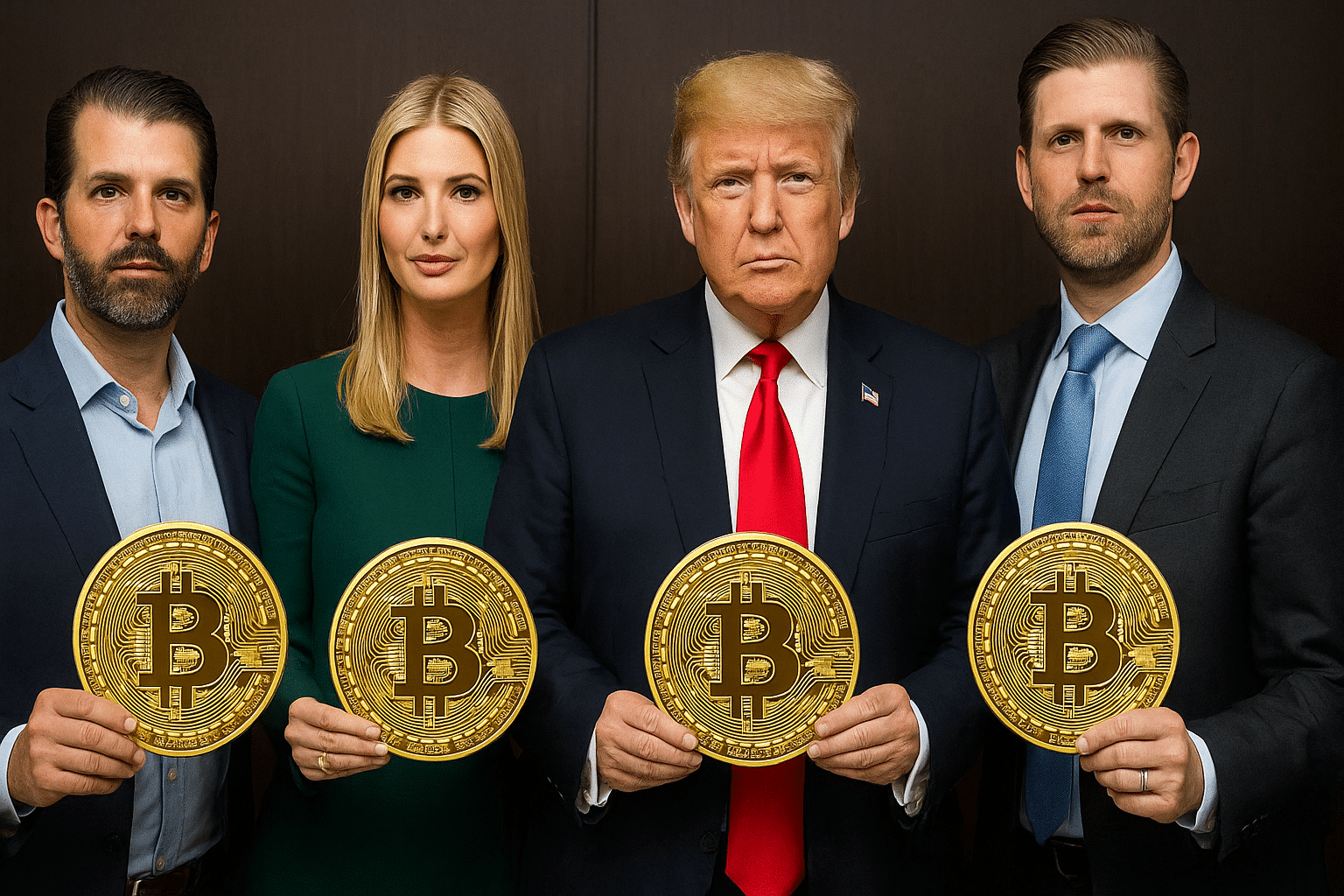
Trump Family’s Crypto Ties Complicate U.S. Push for Digital Asset Regulation, Says Rep. Craig
Despite mounting bipartisan momentum behind crypto legislation in Washington, Rep. Angie Craig (D-Minn.) warned that one major obstacle remains: President Donald Trump and his family’s deep involvement in the digital asset sector.
Speaking at the SALT conference in Jackson Hole on Wednesday, Craig said many Democrats are wary of advancing legislation while the sitting president and his relatives remain active participants in the market.

Angie Craig speaking at SALT conference
“It’s no secret that my side of the aisle would prefer not to see any sitting President — I won’t name one — participating in this market while a sitting president unless those assets are in a sealed trust,†Craig said.
Trump Family’s Growing Presence in Crypto
Since returning to office in January, Trump has aggressively expanded his footprint in the industry. He has launched a series of meme coins tied to his name, while Truth Social — his social media platform — has filed applications for several exchange-traded funds.
Meanwhile, Eric Trump, who was also present at the conference, co-founded American Bitcoin, a mining firm that merged with American Data Center earlier this year. The company is majority-owned by Hut 8, with the Trump family retaining a 20% stake.
Craig argued that those ventures complicate congressional negotiations, particularly among Democrats skeptical of potential conflicts of interest.
“The elephant in the room here is the President’s family’s participation in this marketplace and that’s a stumbling block to get more Democrats to support the legislation,†she said.
Legislative Stalemate
Craig, the ranking Democrat on the House Agriculture Committee, spoke alongside Rep. Bryan Steil (R-Wis.) about the Digital Asset Market Clarity Act, which the House passed last month in a sweeping bipartisan vote. The Senate Banking Committee is now drafting its own version of crypto market structure legislation.
Republicans remain broadly supportive, but many Democrats hesitate — citing the Trumps’ activities as a core concern. Craig noted that while the bill contains some provisions to mitigate conflicts of interest, stronger safeguards may be necessary.
“If we could find some language that would allow or prevent conflicts of interest to occur, from our perspective, I think you would see a whole lot more Democrats support it,†Craig explained.
Previous Warnings
This is not Craig’s first time highlighting the issue. During a June committee hearing, she said Trump’s involvement in crypto was “making this debate more difficult†and suggested Congress consider restrictions on how U.S. presidents can engage with markets regulated by the CFTC, including cryptocurrencies.
Despite her misgivings, Craig ultimately voted to advance the Clarity Act without the addition of such language — underscoring the tightrope Democrats are walking as they balance regulatory goals with concerns over presidential conflicts of interest.


