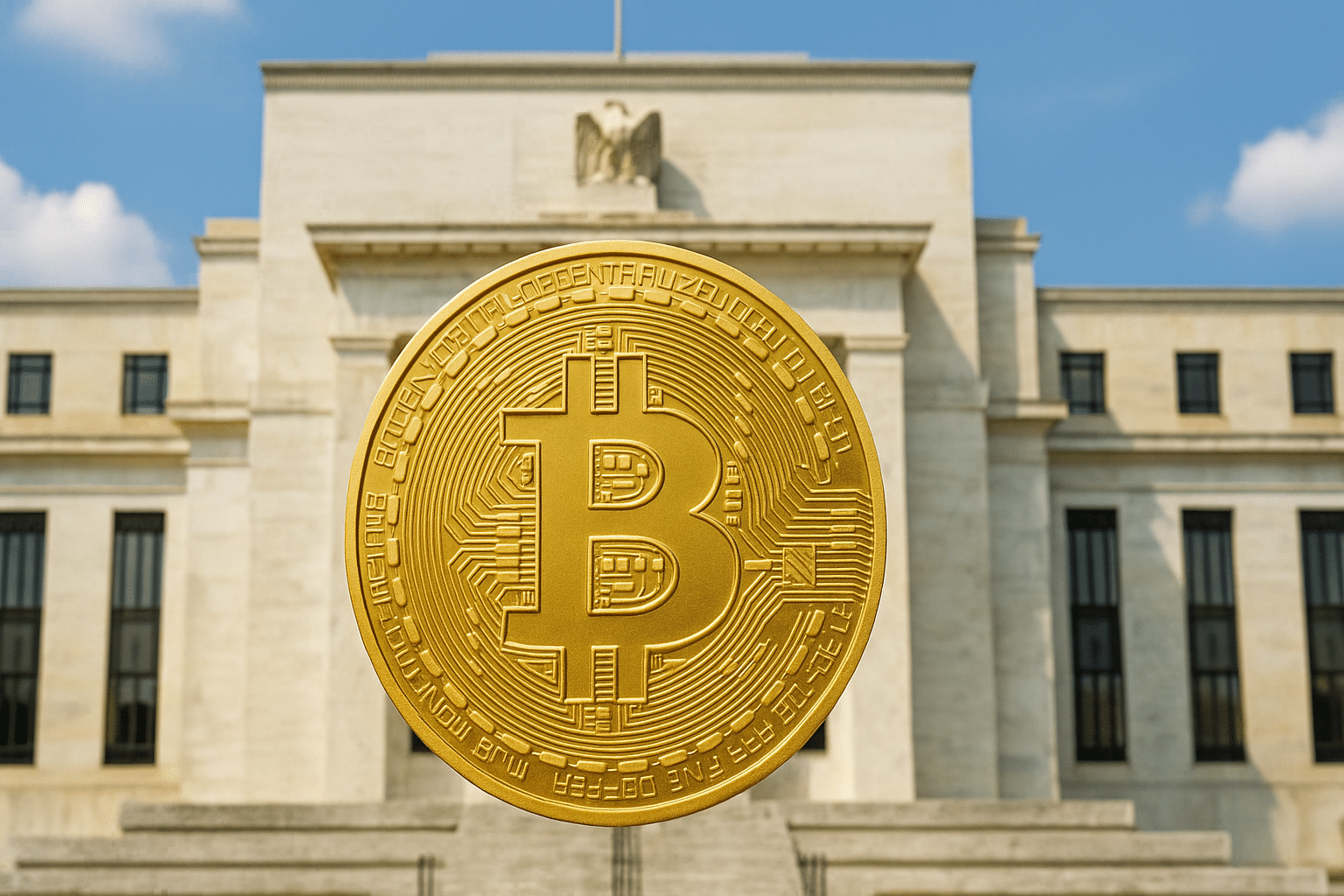
Market Rotation Ahead? Fed Shift May Spark Move From Mega-Caps to Crypto and Tokenized Assets
For much of the last decade, the story of U.S. equities has been one of concentration — a handful of the largest companies driving outsized returns.
But Bank of America strategists suggest this era could be nearing its end if the Fed starts to cut rates, raising the possibility that the next rotation might not just favor small-cap and value stocks, but also digital assets and tokenized markets.
A Decade of Mega-Cap Dominance
According to Bank of America’s head of U.S. equity and quantitative strategy, Savita Subramanian, the 50 largest stocks in the S&P 500 have outperformed the broader benchmark by 73 percentage points since 2015.

S&P 500 chart (Source: Google Finance)
That run, she noted in a client note, rivals the late 1990s surge that ultimately gave way to the dot-com crash and a subsequent period where small-cap and value names took the lead.
The concentration has been especially stark in recent years. Since the market bottom in October 2022, mega-cap tech companies — from Nvidia to Microsoft and Apple — have powered the rally, with AI-linked growth stories pulling the index higher. Nvidia alone has nearly doubled in price since April.
But recent weeks have shown signs of cracks in the narrative. The Russell 2000, a small-cap index, has outpaced the S&P 500 in August, hinting at a broadening of market leadership.
The Fed, the Regime Indicator, and What Comes Next
Bank of America’s “regime indicator,” which tracks markets through four phases — Recovery, Mid Cycle, Late Cycle, and Downturn — suggests equities are transitioning from Downturn to Recovery. Historically, this phase has aligned with Federal Reserve easing and with large-cap stocks lagging the broader market.
“[Fed] easing has been accompanied by Mega caps lagging more than leading, and higher inflation should support a broadening of the S&P 500 beyond defensives/secular growth,” Subramanian wrote.
If rate cuts do materialize, the dominance of the Magnificent Seven and other large-cap leaders may begin to fade, opening space for sectors that have lagged during the megacap era.

Polymarket odds for Fed rate cuts in September (Source: Polymarket)
Could Rotation Extend Into Crypto and Tokenized Stocks?
That raises a bigger question: if traditional markets are entering a new regime, does the shift also create an opening for digital assets and tokenized equities?
In the late 1990s, the bursting of the dot-com bubble pushed capital into undervalued small-cap and value stocks. Today, a similar reallocation of risk could see investors exploring crypto markets and blockchain-based tokenized stocks as alternatives.
Tokenization — the process of turning equities, bonds, and real-world assets into blockchain-based instruments — has already gained momentum, with institutional products from BlackRock, Franklin Templeton, and others crossing billions in tokenized assets.
At the same time, crypto has proven increasingly correlated with liquidity cycles. If the Fed cuts rates and broadens monetary conditions, capital could rotate not only within equities but also into Bitcoin, Ethereum, and tokenized financial products. For investors hunting yield and diversification, these digital markets could provide an outlet reminiscent of the early-2000s shift into small-cap equities.
A Narrative Shift in Motion
Whether the rotation stops at small caps and value stocks or extends further into crypto and tokenized markets, the underlying story is the same: the concentration of market power in a handful of names may not be sustainable.
If Subramanian is right, the next phase of this bull market could look very different from the last — and investors ignoring the possibilities beyond mega-cap tech might be caught off guard.


