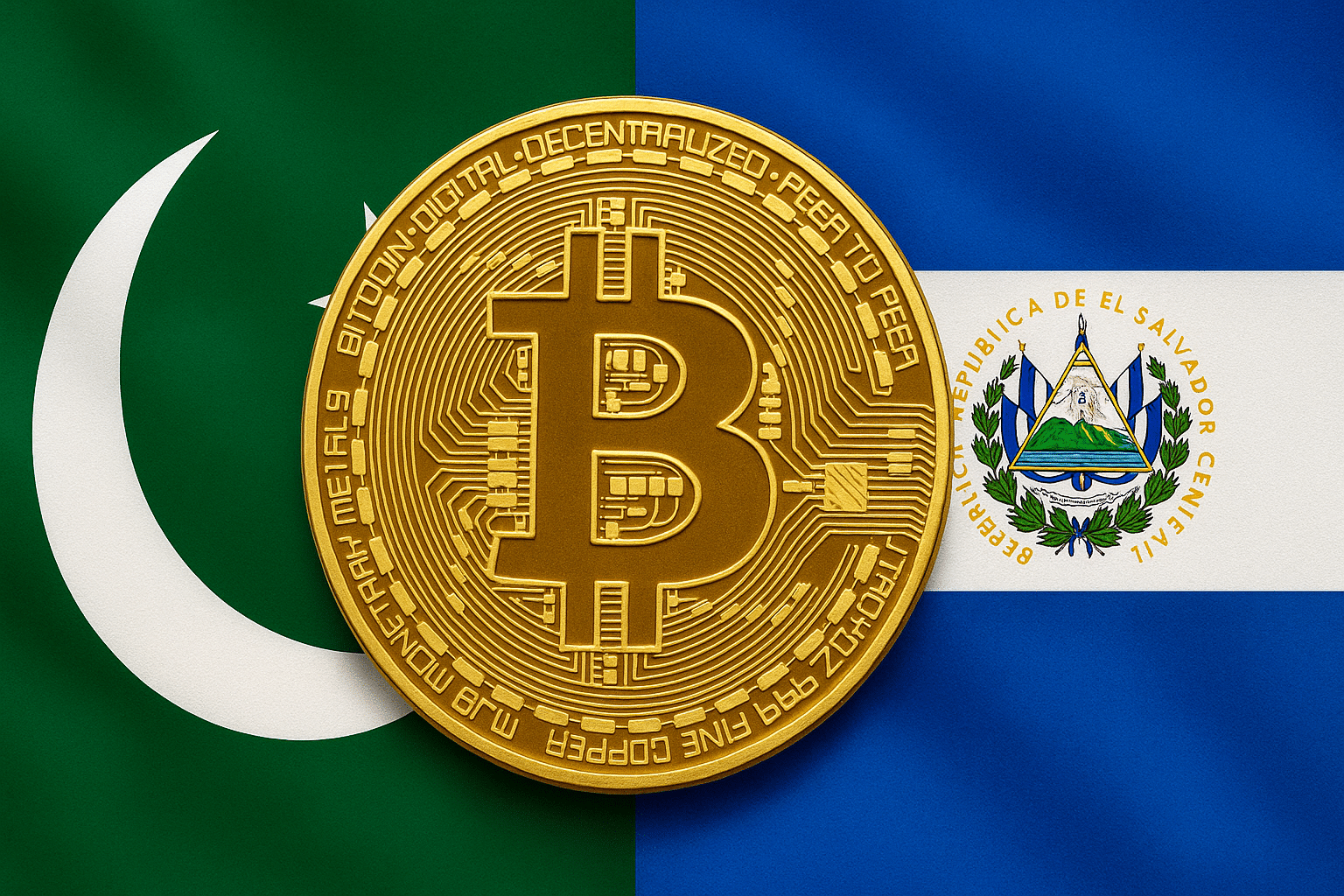
Bitcoin Bridges Nations as Pakistan and El Salvador Align Strategies
On July 17, 2025, Bilal Bin Saqib, CEO of the Pakistan Crypto Council and special assistant to Pakistan’s Prime Minister on crypto and blockchain, met with El Salvador’s President Nayib Bukele in San Salvador to discuss Bitcoin strategy and bilateral cooperation.Â
Saqib praised Bukele as “one of the most visionary leaders of our time†for adopting BTC as legal tender in 2021.Â
The meeting followed recent discussions between Saqib, Pakistan’s Finance Minister Muhammad Aurangzeb, and Bitcoin advocate Michael Saylor, a sign of Pakistan’s growing engagement with global crypto stakeholders.
The talks key breakthrough was the Letter of Intent (LOI) signed between El Salvador’s Bitcoin Office and the Pakistan Crypto Council, marking the beginning of a collaboration for public sector BTC adoption, blockchain-based financial inclusion, and policy development for emerging economies.Â
El Salvador’s Bitcoin holdings, totaling approximately 6,240 BTC valued at approximately $738 million based on BTC’s current market prices, serve as a model for Pakistan’s plan.

El Salvador BTC holdings (Source: Bitcoin Office of El Salvador)
The collaboration was described as “biplomacy†in crypto circles, positioning both nations at the forefront of digital asset utilization toward economic growth.
IMF Rejects Pakistan’s Crypto Mining Power Plan
Pakistan’s Bitcoin plan is in line with its $7 billion IMF Extended Fund Facility, extending through 2027.
In May 2025, the government announced plans for a strategic BTC reserve and allocated 2,000 megawatts of surplus electricity from a 7,000 MW capacity for Bitcoin mining and AI infrastructure.Â
These projects are intended to strengthen Pakistan’s economy at a time of inflation and energy challenges.
However, the IMF has rejected proposals for subsidized electricity—Rs 22–24 per kWh, worth approximately $0.08 USD—for mining due to risks of market distortions and the lack of a crypto regulatory framework. This brings to attention the conflict between Pakistan’s crypto ambitions and international regulation.
Saqib’s visit to El Salvador shows Pakistan’s desire to draw on global expertise in Bitcoin adoption. The LOI focuses on integrating digital assets into public sector operations and expanding financial access for unbanked populations.
With an estimated 15 to 20 million Pakistanis holding crypto, as stated by Saqib, the partnership could expand Pakistan’s role in the global digital asset ecosystem.
Pakistan and El Salvador Set Stage for Crypto Growth
The Pakistan-El Salvador agreement may prompt other emerging economies to consider Bitcoin for financial inclusion and economic resilience.
El Salvador’s strategy, including its Bitcoin City project and geothermal mining operations, offers Pakistan a framework for sustainable crypto adoption.
The LOI focuses on policy development for developing countries, which could create a model for international crypto strategies.
While these opportunities exist, there are also challenges. The IMF’s reservations on Pakistan’s crypto policies and Bitcoin’s price volatility remain major risks. Despite these difficulties, the partnership is proof of shared commitment to using blockchain to address economic challenges.


