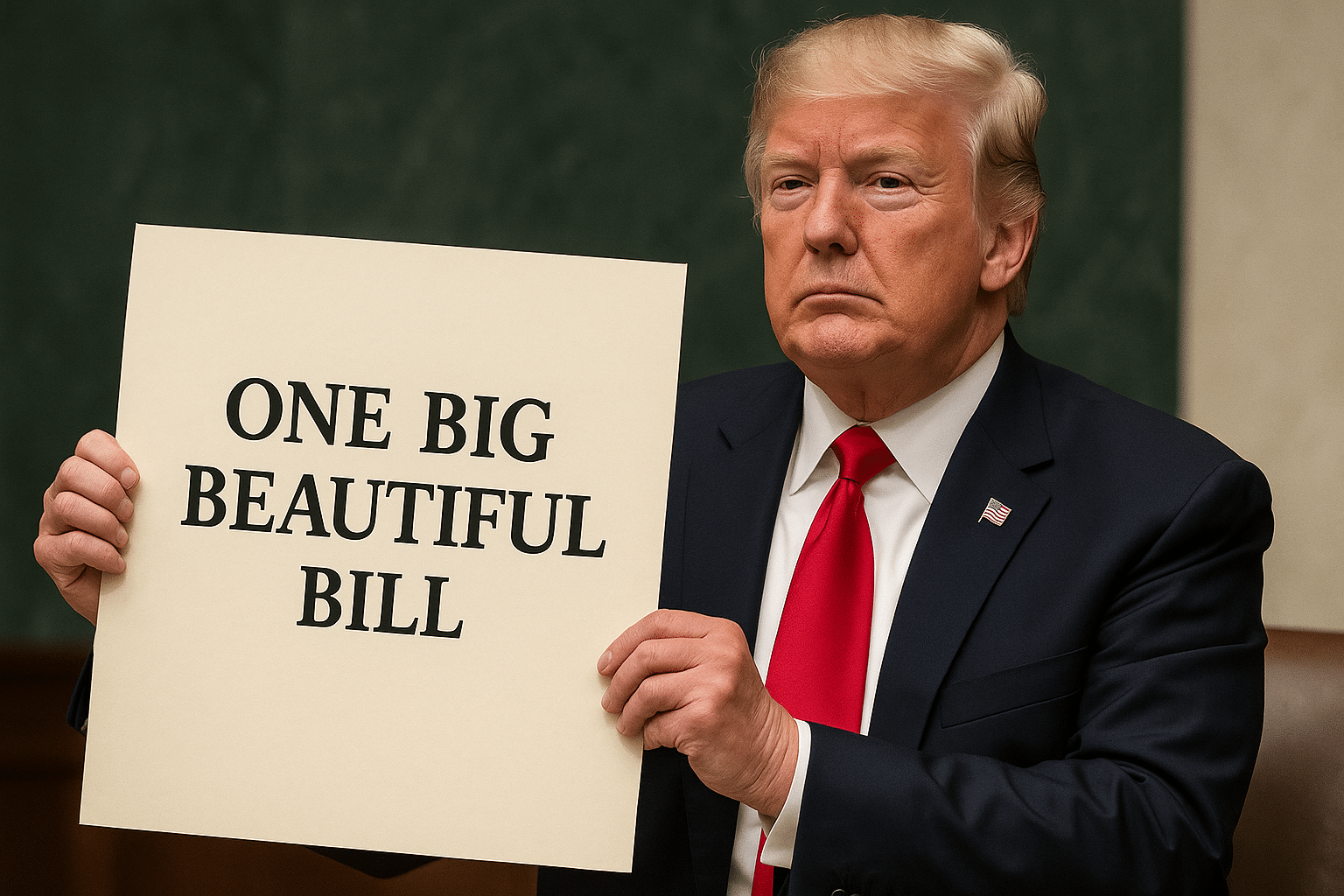
Trump’s “Big Beautiful Bill†Passes Without Crypto Tax Relief
The United States Senate passed President Donald Trump’s “One Big Beautiful Bill†on July 1, 2025, in a 50-50 vote, with Vice President JD Vance casting the tiebreaking vote.Â
The bill, which includes major tax cuts and reductions to programs like Medicaid, omitted any provisions addressing cryptocurrency taxation, to the disappointment of advocates seeking relief from complex tax requirements. All Democrats and three Republicans opposed the big beautiful bill, showing its divisive nature.Â
A $15 billion allocation to Meta drew criticism from Senator Elizabeth Warren, who stated its potential impact on healthcare funding.

Senator Warren’s remarks (Source: Instagram)
Wyoming Senator Cynthia Lummis proposed an amendment to remove double taxation for crypto miners and stakers, targeting what she described as “unfair tax treatment†for those engaged in digital asset transactions.
The amendment failed to make it into the final bill, leaving existing tax rules in place. As a result, crypto users must continue reporting all transactions, including small ones, for capital gains, a process widely regarded as administratively burdensome.
Frustrated With Trump’s Big Beautiful Bill, Crypto Sector Shifts Focus to Pending Bills
The crypto community expressed its disappointment over the exclusion of tax provisions in Trump’s big beautiful bill, with reactions across several social platforms, with comments like “Zero wins for crypto.†Despite the setback, the industry remains cautiously positive due to other pending legislative efforts.Â
The GENIUS Act, which focuses on stablecoin regulation, passed the Senate on June 17, 2025, with a 68-30 vote and is now under consideration in the House, where minimal changes are expected. President Trump has called for its quick passage, showing support for crypto-friendly policies.
The BITCOIN Act of 2025, introduced by Tennessee Representative Tim Burchett, would establish a strategic Bitcoin reserve and is anticipated to progress in late 2025 or early 2026. Burchett expressed disappointment over the budget bill’s lack of crypto provisions but pointed to potential expectations for future opportunities in must-pass legislation.
Additionally, the CLARITY Act, addressing digital asset market structure, moved from a House committee in June 2025, with the Senate Banking Committee expected to draft its version by October.
Crypto Tax Rules Stay Complex as Senate Prioritizes Budget
The exclusion of crypto tax provisions from the big beautiful bill points to a preference for overall fiscal policies over targeted crypto reforms.Â
Under current IRS rules, all crypto transactions are treated as taxable events, requiring capital gains reporting even for small transactions under a few hundred dollars—a process the industry hoped to simplify.
As the budget bill moves to the House for further review, the crypto sector is focusing on the GENIUS Act, BITCOIN Act, and CLARITY Act for potential regulatory and tax clarity.
An amendment by Senator Jeff Merkley to prohibit government officials from holding or promoting digital assets was rejected during the budget bill process, proof of ongoing divisions in Congress over cryptocurrency policy.


