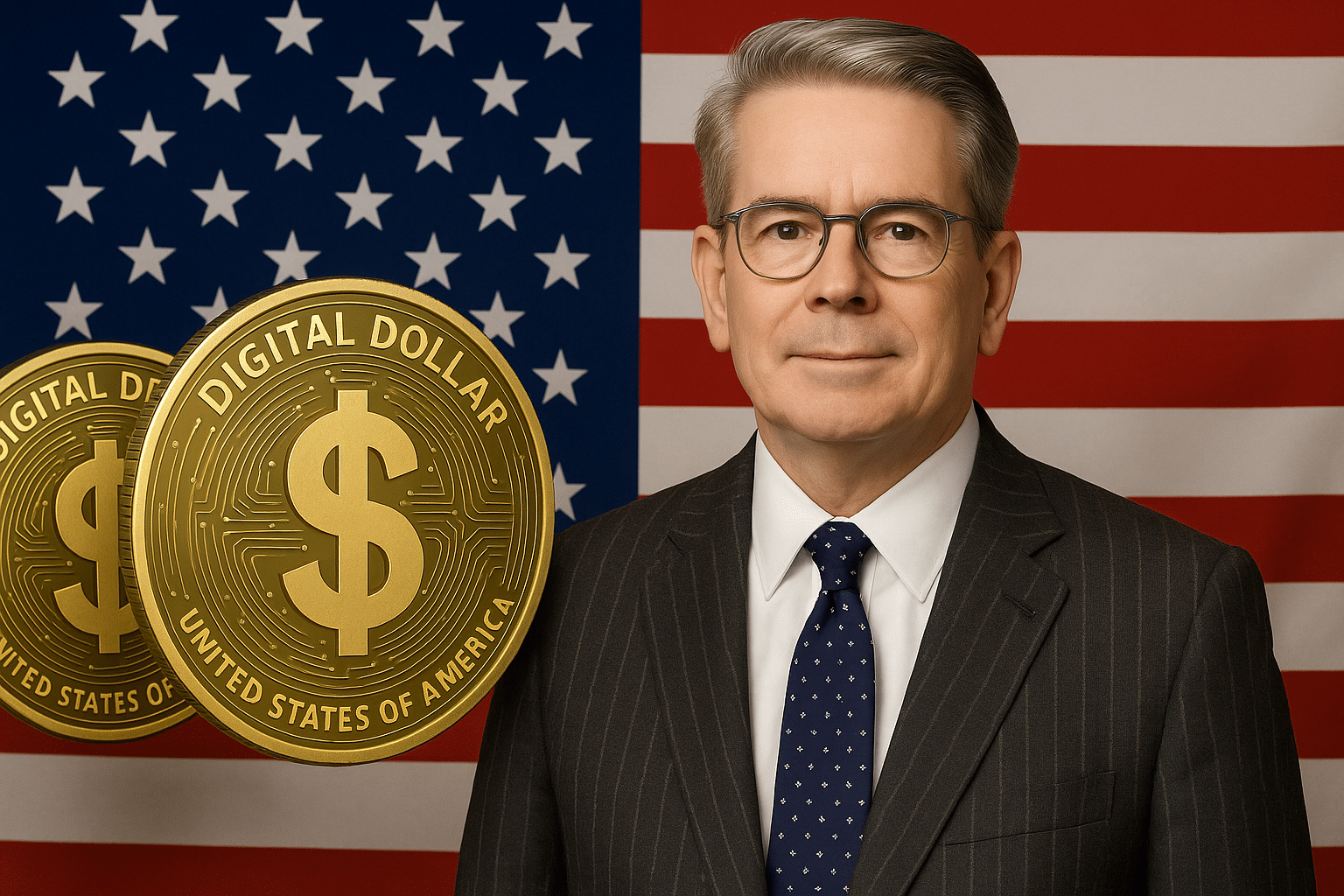
Bessent: Stablecoins Could Secure USD Supremacy, Fuel Treasury Demand
Treasury Secretary Scott Bessent has endorsed President Donald Trump’s cryptocurrency agenda, asserting that stablecoins could reinforce the supremacy of the U.S. dollar globally by increasing demand for United States Treasurys.
Speaking in an interview, Bessent stated the potential of digital assets to align with legislative efforts and market momentum that positions the United States as a leader in crypto innovation.
Stablecoins Poised to Support Dollar Supremacy
Bessent believes stablecoins are a strategic tool to secure the dollar’s supremacy. “There’s a very good chance crypto is actually one of the things that locks in dollar supremacy,” he said, noting stablecoins’ potential to become major buyers of United States Treasuries.
He predicted the dollar-backed stablecoin market could reach $2 trillion by 2028, up from approximately $220 billion currently, with others forecasting as high as $3.7 trillion by the year 2030.

Top stablecoins by market cap (Source: CoinMarketCap)
The secretary suggested stablecoins could drive up to $2 trillion in Treasury demand in the coming years, though current holdings by major issuers, such as Tether, are approximately $155 billion.
That expansion is believed to fortify the United States financial system while addressing prior concerns that cryptocurrencies would weaken the dollar’s global standing.
Senate Passes Stablecoin Bill; House Decision Looms
Bessent’s comments follow the U.S. Senate’s approval of the GENIUS Act on June 17, 2025, with a 68-30 vote, establishing a regulatory model for stablecoins. Trump has called for the House to pass the Senate’s bill soon, citing the need to maintain U.S. competitiveness in the crypto space.
The House Financial Services Committee approved its own bill regulating stablecoins in April, and lawmakers must now decide whether to adopt the Senate decision or pursue their own version.
The Treasury Secretary also criticized the Biden administration’s regulatory approach, setting it against Trump’s pro-crypto turn. “The U.S. is going big on crypto,” he said in another interview, a sign of a policy change toward promoting innovation.
Industry players warn that delays in legislation could allow competitors like China, which is moving forward with its digital currency efforts, to get ahead of the United States.
Market Growth Faces Regulatory and Political Hurdles
A $2 trillion stablecoin market by 2028 could change global finance, boosting demand for United States financial assets and strengthening the dollar’s supremacy, according to Bessent.
However, political and regulatory challenges pose a threat. Senator Jeff Merkley warns of potential conflicts of interest, while Senator Elizabeth Warren shares concerns about consumer protections and Trump’s financial ties to crypto operations, including World Liberty Financial.
Despite those concerns, the treasury secretary’s stance has gained attention, with his influence at the recent White House Crypto Summit.