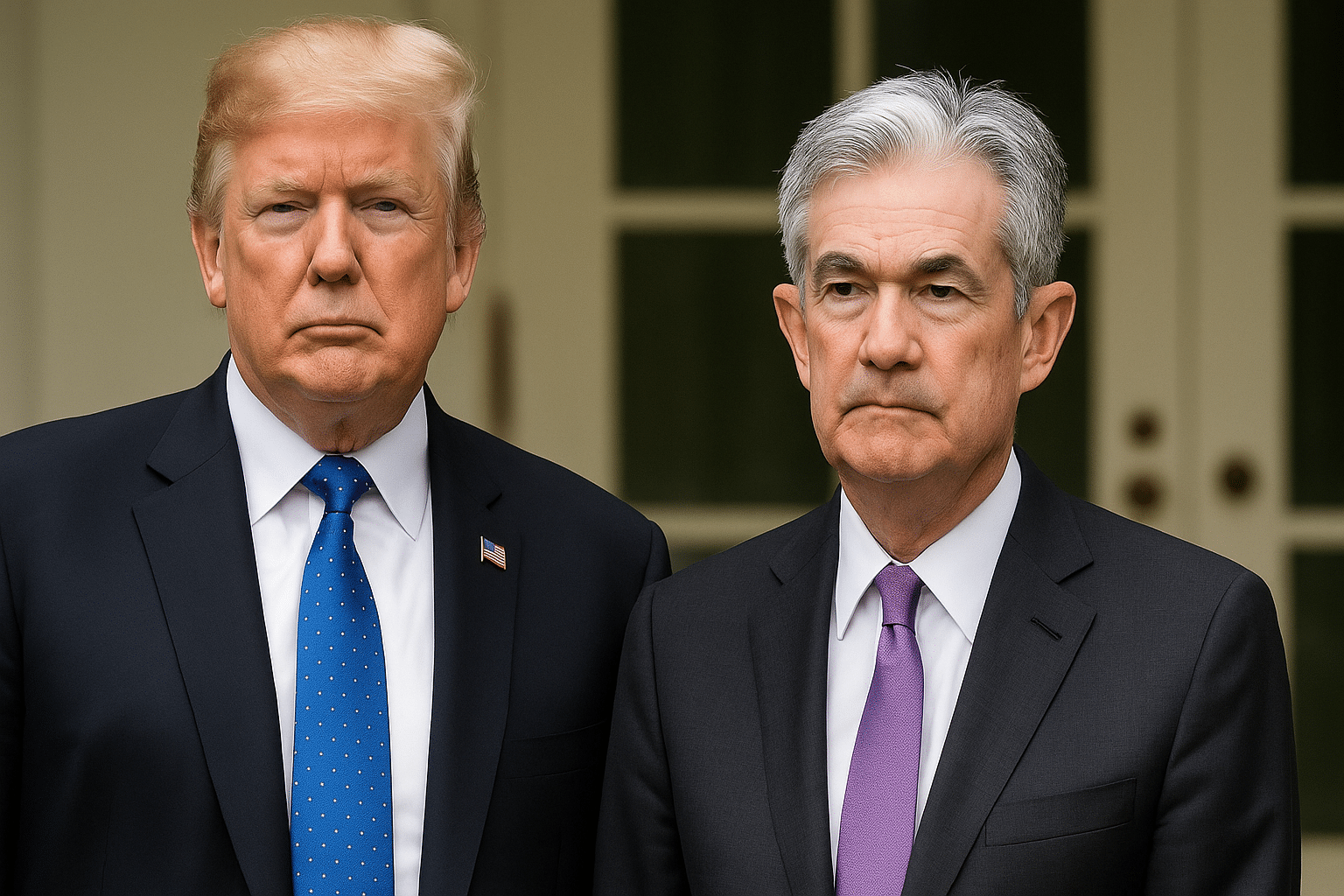
“Too Late Powell”: Trump Unleashes Fury Over Fed Decision
President Donald Trump is not backing down from his criticism of Federal Reserve Chairman Jerome Powell, calling him a “fool” and “too late Powell” following the Fed decision to maintain interest rates at 4.25% to 4.5%.
In posts on Truth Social, the President claimed rate cuts would act as “jet fuel” for markets, mentioning recent rate reductions by central banks in China, the United Kingdom, and the European Central Bank.

Trump post (Source: Truth Social)
He further stated there was “virtually no inflation,” which is inaccurate, as the country witnessed a decline in energy and grocery prices despite December 2024 inflation at 2.9% and egg prices at $6.23 per dozen.
Trump also mentioned that Powell’s refusal to cut rates came from not being “in love with me” as justification for inaction, which sounds all too familiar after his first term, when he appointed Powell in 2017 but constantly clashed with him over monetary policy.
Fed’s Powell Stands Ground, Rejects Trump Pressure on Rates
The Federal Reserve, on May 7, 2025, voted to keep rates unchanged while pointing to the risks of its dual mandate of maximum employment and price stability.
In a press conference, Powell commented on the Fed’s independence while affirming that Trump’s criticisms “will have no bearing on our task whatsoever” and that decisions are driven by economic data.
According to Powell, there are concerns about the President’s tariffs, which could increase inflation and negatively affect growth.
Inflation stood at 2.9% in December 2024, above the Fed’s 2% target, with tariffs further adding price pressures. Powell’s term as Fed chair extends to May 2026, and Trump, in a May 5, 2025, NBC “Meet the Press” interview, said that he has no plans to fire him before then, per Ecoinimist.
SPY Drops 2.4% as Trump-Fed Fight Raises Economic Uncertainty
Trump’s comments caused a market sell-off on April 21, 2025, with the S&P 500 falling 2.4% due to concerns over potential threats to the Fed’s independence, a key pillar of United States financial stability.
The Fed’s decision to hold rates shows fears that tariffs could drive inflation higher, potentially requiring sustained high rates.
With unemployment at 4.2% in March 2025, a friendly labor market might lead to future rate reductions, although this invites accusations of caving to Trump’s pressure.
The European Central Bank cut rates on April 17, 2025, and the Bank of England lowered rates by 0.25%, resulting in the global monetary policy differences Trump uses to criticize Powell.
Powell, on May 7, 2025, described the economic path as “not at all clear,” showing uncertainty as markets navigate potential tariff impacts.


