Trump’s Tariff Revenue Surges to $17.4 Billion in April Amid Bold Fiscal Vision
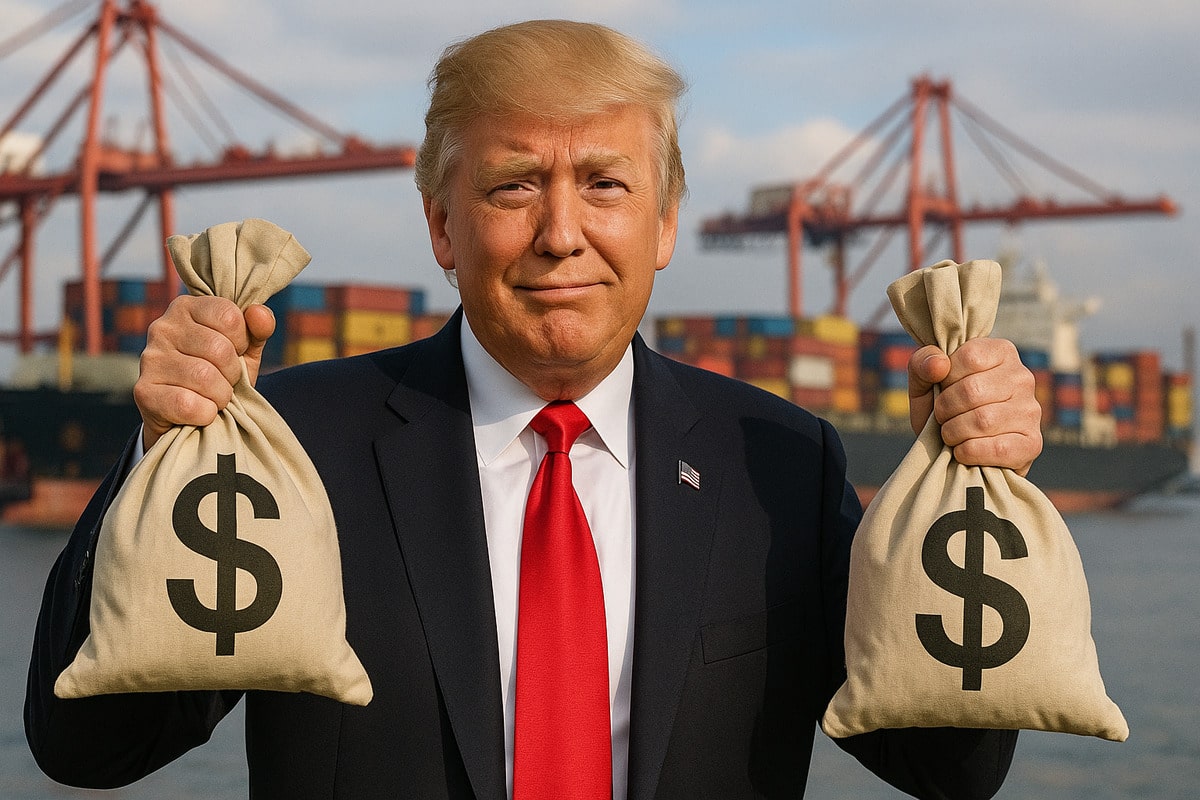
The financial impact of President Donald Trump’s aggressive tariff strategy came into sharp focus last month as U.S. Customs and Border Protection collected over $17.4 billion in tariff revenue during April — nearly double March’s total and among the highest monthly collections on record.
Also read: Trump Sued by 12 States Over “Insane†Trade Tariffs
April Marks Massive Tariff Revenue
The sudden surge dwarfs the more modest upticks seen during Trump’s first term and has brought total duties collected since Jan. 1 to over $70 billion. Trump celebrated the milestone on Truth Social, declaring that the country is “just getting started.â€

Trump Truth Social Post(Source: Truth Social)
“As Billions of Dollars pour in from Tariffs … we’re only in a TRANSITION STAGE,†he wrote on May 2.
While the $17.4 billion figure includes some excise taxes, historical data suggests the vast majority comes from customs duties, especially following the April 5 implementation of 10% blanket tariffs on nearly all imports.
More Tariffs Coming — But So Are Concessions
Trump’s administration has indicated that this is only the beginning. Additional duties targeting semiconductors, pharmaceuticals, and other key sectors are expected in the coming months.
However, the picture is complicated by April’s concessions. Trump granted a 90-day reprieve to over 100 countries and major importers in sectors like automotive and technology, delaying higher “reciprocal†tariffs until the summer.
Also read: Kevin O’Leary Urges 400% Tariffs on China Amid Escalating Trade Tensions
Despite those delays, the fiscal gains from current tariffs have already begun reshaping political rhetoric. Commerce Secretary Howard Lutnick claimed this week that “hundreds and hundreds of billions of dollars†would come in over time.
Shipping Volumes Begin to Decline
While the tariff revenue surge is significant, there are early signs of trade slowdown that could impact future collections. The Port of Los Angeles, one of the busiest in the country, is projecting a cargo volume drop of more than a third starting next week.

Source: Treasury Department
Such reductions could signal waning import activity as businesses seek to avoid the new tariffs — potentially limiting future revenue and placing more pressure on Trump’s trade team as negotiations with key partners continue.
Also read: Trump Promises ‘Make America Wealthy Again’ — Will Tariffs & Tax Cuts Backfire?
President Trump has long pointed to tariff revenue as a way to reduce or even eliminate income taxes. Speaking on April 23, he stated:
“We’re going to make a lot of money [from tariffs] and that money’s going to be used to reduce taxes. We’re going to get big, big tax breaks.â€
Echoing him, Stephen Miran, Chair of the Council of Economic Advisers, said he would be “surprised†if annual tariff revenue ends up being less than hundreds of billions of dollars, despite public Treasury data suggesting otherwise.
Fact-Checking the Numbers
While Trump has repeatedly cited figures like $2 to $3.5 billion per day, the April total — even if accepted at face value — averages about $580 million per day. Analysts also caution that the Treasury lumps excise taxes with customs duties in one category, making the exact tariff revenue unclear.
Moreover, the federal fiscal picture dwarfs these inflows. In March alone, the government spent $528 billion, while interest on the national debt exceeds $70 billion each month.
Nostalgia for McKinley’s Tariff Era
Trump’s enthusiasm for tariffs reflects his admiration for President William McKinley, under whom tariffs accounted for nearly 50% of federal revenue in the 1890s. Today, that figure is under 2%, despite April’s bump.
Whether modern tariffs can replicate McKinley-era fiscal impacts remains to be seen — but Trump appears committed to trying.


