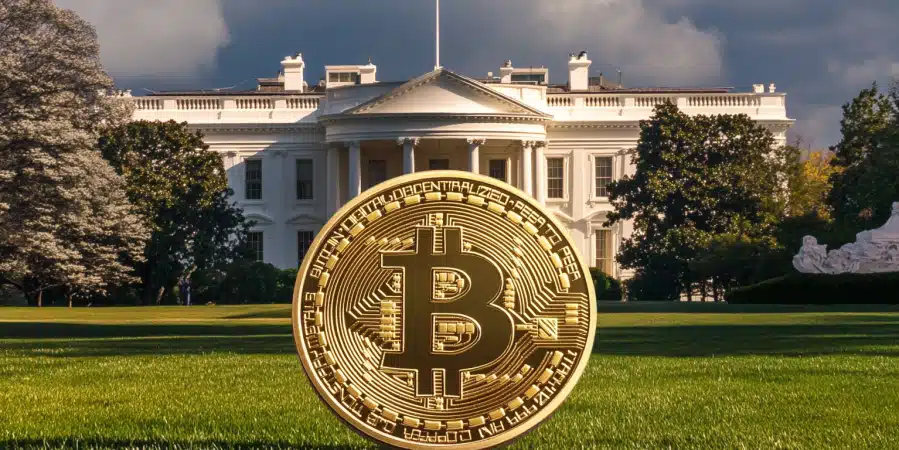
David Sacks on Bitcoin as a US Reserve: White House Crypto Summit Fallout
After the highly anticipated White House Crypto Summit, questions remain about whether the U.S. government is truly committed to integrating Bitcoin as a strategic reserve asset or if the discussions were just political posturing.
David Sacks, the administration’s crypto czar, defended the government’s stance, emphasizing Bitcoin’s long-term value and the need for a strategic digital asset stockpile. However, industry leaders and lawmakers, including Senator Elizabeth Warren, continue to scrutinize the administration’s approach, raising concerns over transparency, conflicts of interest, and the lack of a clear legislative framework.
Sacks elaborated on this stance during a March 7 interview with Bloomberg Technology, underscoring the importance of Bitcoin in the nation’s financial strategy.
“We’ve decided that Bitcoin is scarce, it’s valuable, and that it’s strategic for the United States to hold on to this as a long-term reserve asset,†Sacks stated.
The US government currently holds an estimated 200,000 Bitcoin, though Sacks acknowledged that the precise figure remains uncertain due to the lack of a comprehensive audit. In response, he announced that a full government-wide audit of digital assets is underway to ensure proper safeguarding and strategic management.

Trump’s Executive Order on Digital Assets
President Donald Trump’s March 6 executive order directed federal agencies to conduct an extensive review of cryptocurrency holdings, aiming to establish a strategic Bitcoin reserve and digital asset stockpile. Under this directive, the Secretary of the Treasury, Scott Bessent, will oversee the digital asset stockpile, with the discretion to manage, rebalance, or sell certain holdings. However, Bitcoin will be exempt from this management approach.
“The goal [with Bitcoin] is long-term preservation,†Sacks emphasized. “With the stockpile, the goal is […] portfolio management, in essence.â€
Also read: Inside Trump’s White House Crypto Summit: Key Players & Discussions
While Sacks refrained from specifying which altcoins might be included in the stockpile, he downplayed speculation regarding Trump’s March 2 remarks mentioning Ethereum (ETH), Solana (SOL), XRP, and Cardano (ADA). “The president just mentioned the top five cryptocurrencies by market cap, so I think people are just reading into this a little bit too much,†Sacks explained, suggesting that final asset selections would be determined by the government-wide audit.
Industry Reactions
Trump’s executive order and Sacks’ remarks have yet to spark a significant short-term market reaction, but industry experts believe the policy shift could have broader implications.
Joe Kelly, CEO of Bitcoin financial services firm Unchained, said in an interview, “Markets may still exercise caution until we see the scale and strategy behind this accumulation, but the bigger picture isn’t about short-term price movements.†Kelly emphasized that the long-term impact of the policy will be determined by clear regulations that support innovation. “With the right framework, Bitcoin’s long-term impact will extend far beyond price action — reshaping capital markets, financial sovereignty, and the very concept of reserves.â€
Aurelie Barthere, principal research analyst at Nansen, pointed to a specific section of the executive order that may have bullish implications for Bitcoin: “The Secretaries of Treasury and Commerce are authorized to develop budget-neutral strategies for acquiring additional Bitcoin.â€
Also read: Charles Hoskinson Calls Out White House for Ignoring Cardano in Crypto Talks
Barthere speculated that this could hint at potential asset swapping strategies, such as converting euros or Japanese yen into Bitcoin.
Beyond policy speculation, macroeconomic conditions continue to influence Bitcoin’s price action. CK Zheng, former global head of risk for Credit Suisse and founder of ZX Squared Capital, noted that recent market pullbacks were in line with his earlier forecasts, attributing them to broader financial market adjustments following Trump’s tariffs policy.
“I believe Bitcoin is currently in the process of bottoming out in the near term and will rebound through 2025 as more pro-crypto rules and regulations roll out,†Zheng stated. He further suggested that the establishment of a strategic Bitcoin reserve could serve as a catalyst for future nation-state adoption of digital assets.
Elizabeth Warren Challenges Sacks on Crypto Holdings
Massachusetts Senator Elizabeth Warren, ranking member of the Senate Banking Committee, has raised concerns over David Sacks’ involvement in the administration’s digital asset policies. In a March 6 letter, Sen. Warren questioned Sacks’ claims that he no longer holds any digital assets, calling for transparency regarding his financial interests.
Also read: David Sacks Confirms Crypto Exit but Keeps Investing in Blockchain
She expressed concerns that President Trump and “other private individuals†could personally benefit from the executive branch’s digital asset policies. Sen. Warren requested that Sacks disclose financial records to the Office of Government Ethics and clarify his status as a “special government employee.â€
Warren cited Sacks’ role in the administration since his appointment as crypto czar in December 2024 and his leadership in the working group on digital asset regulation. She pointed to Trump’s remarks during the executive order signing in January, in which he suggested Sacks would “make a lot of money†from his role, fueling speculation about potential conflicts of interest.
On March 2, Trump announced that the working group would include XRP, Solana, and Cardano in the crypto reserve, in addition to Bitcoin and Ether. Sen. Warren questioned the timing of Sacks’ reported divestment from BTC, ETH, and SOL, asking for clarity on whether he or his associates profited from recent price surges.
She further linked the administration’s actions to a February 27 SEC statement declaring that memecoins would no longer be considered securities, implying that the decision may have directly benefited Trump’s involvement in the sector.
Sen. Warren has given Sacks until March 14 to respond and has urged him to address these issues at the upcoming White House crypto summit, where industry leaders and crypto executives—including those whose firms have recently had regulatory investigations dropped—will be in attendance.
White House Crypto Summit: A Missed Opportunity or a Turning Point?
The recently concluded White House Crypto Summit has passed. However, without a clear legislative framework, many industry experts questioned whether the discussions resulted in meaningful action or were largely political signaling.
Joe Kelly, CEO of Unchained, a leading Bitcoin financial services company, shared his thoughts on the summit’s significance and Bitcoin’s evolving role in US financial strategy with Ecoinimist.
“Bitcoin’s inclusion in discussions on a US strategic crypto reserve signals recognition of its staying power, but without concrete legislative action, these conversations risk being more about optics than execution. The reality is, Bitcoin already functions as a strategic reserve — just not at the government level. Individuals and institutions are securing their own financial sovereignty through Bitcoin, with or without federal endorsement.
Also read: Trump’s Bitcoin Reserve: Everything You Need to Know About This Historic Move
Unlike other financial assets, Bitcoin has no CEO, no central entity pushing its agenda—only a growing network of individuals and organizations advocating for its role. That’s exactly why it’s become the seventh most valuable asset in the world. But in policy discussions, it’s critical that Bitcoin isn’t diluted into the broader ‘crypto’ narrative. While industry groups and institutions like the Bitcoin Policy Institute exist, Bitcoin stands apart as the dominant digital asset with unique monetary properties. The real question isn’t whether the US should integrate Bitcoin into its financial strategy, it’s whether Washington will keep up with those who already have.â€
Looking Ahead
The US government’s decision to formally recognize Bitcoin as a strategic reserve asset signals a major shift in its approach to digital finance. While uncertainties remain regarding the exact holdings and future acquisitions, the move positions Bitcoin as an integral part of national economic strategy. As regulatory clarity emerges and financial markets adjust, the broader implications of this decision could redefine the role of digital assets in sovereign financial reserves. Meanwhile, the scrutiny from lawmakers like Sen. Warren adds another layer of complexity to the evolving narrative, raising questions about transparency and potential conflicts of interest within the administration’s crypto policy.


